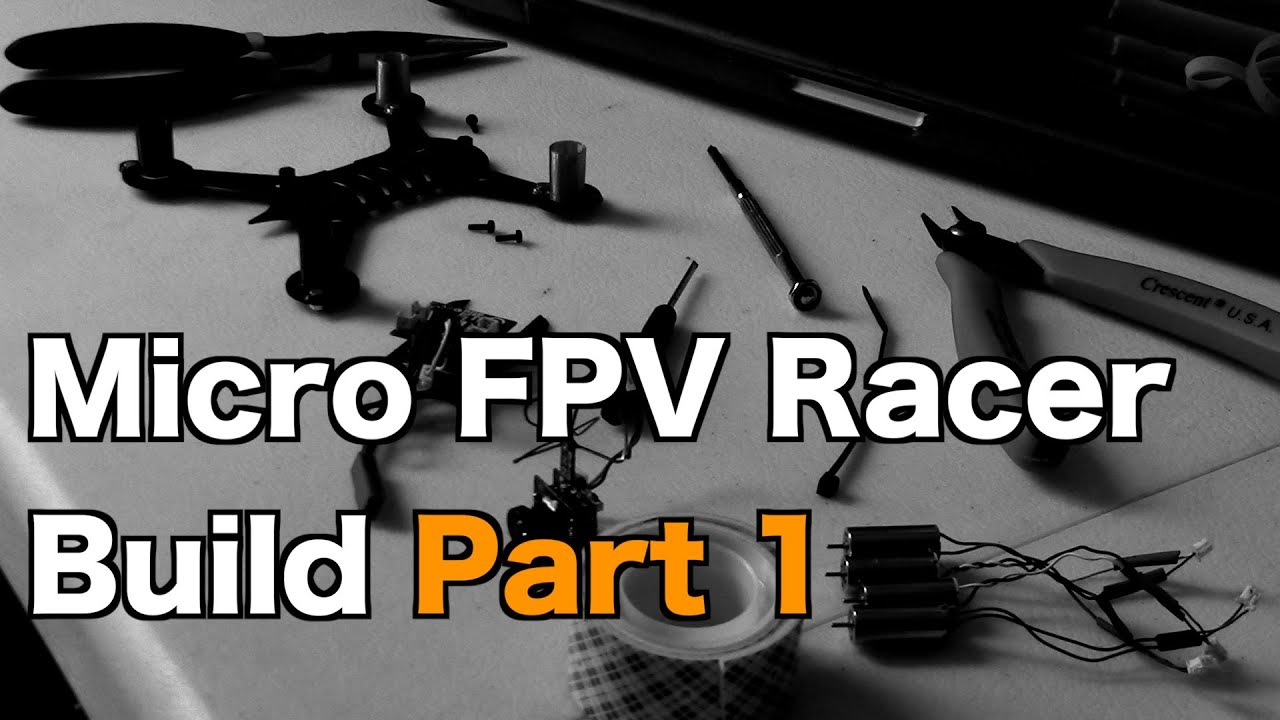
Le long-métrage sur «drone racer» est disponible en streaming sur youtube.
Un contenu exclusif signé DaddyRC autour de « drone racer ».
Regardez cette vidéo diffusée sur youtube par DaddyRC.
ayant pour thème « drone racer »:
Lorsque nous avons découvert cette vidéo récemment, elle suscitait de l’intérêt. Le compteur de Likes indiquait: 12.
Le titre de cette vidéo est Micro FPV Racer Build Pt1, sa durée est de 00:04:14 secondes, et elle a été fournie par l’auteur. La description suit ci-dessous :« La construction de quadcoptères peut être intimidante et coûteuse. Construire un coureur FPV de taille micro est un excellent moyen peu coûteux de pénétrer dans ce passe-temps amusant. Ceci est le premier d’une série en trois parties. Liste des pièces ci-dessous … Liste des pièces: cadre – Facebook.com Killaklownzfpv Contrôleur de vol – http://goo.gl/wz7asp Motors – http://goo.gl/yv4uq6 Propellers – http://goo.go.gl/0gvgo6 FPV Camera / Video Tx – Http://goo.go.gvgo6 FPV CAMER http://goo.gl/rpqajm Batteries – http://goo.gl/kslxhl ».
Cette plateforme de streaming favorise la diffusion et la découverte de vidéos inspirantes, tout en assurant une navigation sécurisée et respectueuse de la vie privée.
Pour conclure
En utilisant le drone FPV, on explore bien plus que le simple vol à distance. En intégrant une technologie avancée avec un pilotage précis, il crée des sensations fortes pour les passionnés. Que ce soit pour l’agriculture de précision, la cartographie ou les événements, ces drones redéfinissent les standards, offrant des angles de vue surprenants et une interaction sans précédent.
Piloter un drone FPV, c’est comme voler à la première personne. Grâce à un retour vidéo instantané, le pilote ressent chaque mouvement et adapte ses réactions en temps réel. Que vous soyez débutant ou expert,il existe des modèles adaptés à chaque niveau. Pour choisir le bon équipement et apprendre les meilleures techniques,explorezce site de référence.
Un Pilotage de Haute Précision
Pour réussir à piloter un drone FPV, un apprentissage rigoureux est indispensable. Le pilotage du FPV, contrairement à celui des drones à stabilisation automatique, requiert une attention manuelle particulière, surtout dans des conditions de vol difficiles. Avant de se tourner vers des modèles plus avancés, de nombreux pilotes font leurs premiers pas avec des simulateurs de vol ou des drones d’entraînement.
Personnalisation, accompagnée de Performances
Il est important de souligner que les drones FPV permettent une grande liberté de personnalisation. Chaque pilote a la capacité de modifier divers aspects, y compris la caméra, les moteurs et les contrôleurs de vol, pour personnaliser l’expérience selon ses préférences et besoins spécifiques. La performance et la qualité des prises de vue bénéficient de cette flexibilité.
Le FPV montre son Agilité
Un des points forts des drones FPV est leur capacité à évoluer rapidement. Conçus pour une réactivité accrue, ils garantissent une maniabilité qui est bien meilleure que celle des drones standards. Cette fonction est essentielle pour les compétitions et pour la capture d’images dans des espaces restreints, comme les forêts, les montagnes ou les structures urbaines complexes.
Le Drone FPV : Une Expérience de Vol Époustouflante
Avec le drone FPV (First Person View), l’expérience du vol télécommandé devient totalement immersive. Le drone FPV, contrairement aux drones conventionnels qui affichent l’environnement sur un écran de contrôle, transmet directement ce qu’il voit au pilote grâce à une caméra intégrée. Grâce à une transmission en temps réel, l’image est affichée sur des lunettes ou un écran, permettant au pilote de vivre une expérience de vol réaliste comme s’il était dans l’appareil.
Les Perspectives du Drone FPV
En matière de courses de drones, le drone FPV est très en demande. Sur des parcours complexes, ces compétitions, où la vitesse et la précision priment, exigent une maîtrise impeccable du pilotage. Par une réactivité hors du commun, les pilotes doivent éviter les obstacles, négocier des virages serrés et s’adapter rapidement aux modifications de direction.
Ces drones ne se limitent pas aux courses, ils changent aussi la photographie et la vidéographie. La souplesse de leur approche leur permet de réaliser des prises de vue spectaculaires dans des environnements inaccessibles ou dans des situations où les méthodes habituelles sont inadaptées. Ils servent principalement à filmer des séquences d’action, des sports extrêmes, ainsi que des œuvres cinématographiques et des documentaires.
Vous pouvez visionner cette vidéo directement sur youtube en suivant ce lien :
le post original: Cliquer ici
#Micro #FPV #Racer #Build #Pt1
Retranscription des paroles de la vidéo: [Music] welcome to Blue Flyer TV this is blue flyer recently I got into um micro fpv quadcopters this is a really tiny um form factor it’s about 120 uh millimet from motor to motor and just to give you an idea of the size I took a soda can here and kind of give you a size comparison here how tiny this thing is but don’t let the the size of this fool you this is really fast it’s pretty fun and it’s really inexpensive to uh to get into so I decided to put together a uh a three-part build video um of this um the first one I’ll put the uh show you the parts the second part I’ll U me and uh Dwight my buddy Dwight uh will show you how to uh do the soldering for the motors and uh the last part would be kind of how the component go together as well as a quick test of um of this thing and going so um let’s get started the first thing I look for for my build is a cool frame so um there are hundreds and hundreds of different styles out there for uh for a build and so uh this Frame is called the stingray 120 by killer clowns and and uh the guy who created it Jerry Valdez is a pretty cool guy and uh he helped me um he guided me through the process here so um I really like the way it looks and I like the way it’s the the style of it so and I had ideas how I want to put all the components together the second most important part of this whole build is the fight controller and I selected the the Nano QX fpv basically I took my old Nano QX fpv gutted it and used the the flight controller um I like it because it’s an all-in-one board that means it has the gyro the uh the fets or the field defect transistors already there uh and it’s also the biggest uh plus here is a dsm2 uh compatible which mean it works for a lot of uh different uh radi transmitters out there and so it’s basically plug andplay and you’re good to go [Music] of course you have to have Motors so um I chose the hubson um X4 h107 c motors it’s not um the fastest or the most robust out there but it’s cheap it’s simple and so I just decided to go for it and just to see uh what it’s like and I could upgrade it later if I want to I did the same thing for the props of course it won’t be complete without an fpv camera so uh I chose the uh the ultra micro um camera uh the SPM VA 1100 and this is again came from my um my Nano QX fpv um you know uh quadcopter and so it was an easy transfer of course you need tools um you’ll need long noose pliers tiny screwdrivers Philip heads and um the ones I use are the ones that’s um used for fixing uh glasses and stuff so you need those kind of small screwdrivers and of course you’ll need a a soldering iron and uh that’s going to be the next um step after this one and as far as the links uh to all these different parts and components I’m going to put it um underneath this video so you have an idea where to get them as well as the cost of each part so after this it’s going to be um the video number two [Music] .
Déroulement de la vidéo:
1.68 [Music]
1.68 welcome to Blue Flyer TV this is blue
1.68 flyer recently I got into um micro fpv
1.68 quadcopters this is a really tiny um
1.68 form factor it&;s about 120 uh millimet
1.68 from motor to motor and just to give you
1.68 an idea of the size I took a soda can
1.68 here and kind of give you a size
1.68 comparison here how tiny this thing is
1.68 but don&;t let the the size of this fool
1.68 you this is really fast it&;s pretty fun
1.68 and it&;s really inexpensive to uh to get
1.68 into so I decided to put together a uh a
1.68 three-part build video um of this um the
1.68 first one I&;ll put the uh show you the
1.68 parts the second part I&;ll U me and uh
1.68 Dwight my buddy Dwight uh will show you
1.68 how to uh do the soldering for the
1.68 motors and uh the last part would be
1.68 kind of how the component go together as
1.68 well as a quick test of um of this thing
1.68 and going so um let&;s get
1.68 started the first thing I look for for
1.68 my build is a cool frame so um there are
1.68 hundreds and hundreds of different
1.68 styles out there for uh for a build and
1.68 so uh this Frame is called the stingray
1.68 120 by killer clowns and and uh the guy
1.68 who created it Jerry Valdez is a pretty
1.68 cool guy and uh he helped me um he
1.68 guided me through the process here so um
1.68 I really like the way it looks and I
1.68 like the way it&;s the the style of it so
1.68 and I had ideas how I want to put all
1.68 the components
1.68 together the second most important part
1.68 of this whole build is the fight
1.68 controller and I selected the the Nano
1.68 QX fpv basically I took my old Nano QX
1.68 fpv gutted it and used the the flight
1.68 controller um I like it because it&;s an
1.68 all-in-one board that means it has the
1.68 gyro the uh the fets or the field defect
1.68 transistors already there uh and it&;s
1.68 also the biggest uh plus here is a
1.68 dsm2 uh compatible which mean it works
1.68 for a lot of uh different uh radi
1.68 transmitters out there and so it&;s
1.68 basically plug andplay and you&;re good
1.68 to go
1.68 [Music]
1.68 of course you have to have Motors so um
1.68 I chose the hubson um X4 h107 c motors
1.68 it&;s not um the fastest or the most
1.68 robust out there but it&;s cheap it&;s
1.68 simple and so I just decided to go for
1.68 it and just to see uh what it&;s like and
1.68 I could upgrade it later if I want to I
1.68 did the same thing for the props
1.68 of course it won&;t be complete without
1.68 an fpv camera so uh I chose the uh the
1.68 ultra micro um camera uh the SPM VA 1100
1.68 and this is again came from my um my
1.68 Nano QX
1.68 fpv um you know uh quadcopter and so it
1.68 was an easy
1.68 transfer of course you need tools um
1.68 you&;ll need long noose pliers tiny
1.68 screwdrivers Philip heads and um the
1.68 ones I use are the ones that&;s um used
1.68 for fixing uh glasses and stuff so you
1.68 need those kind of small screwdrivers
1.68 and of course you&;ll need a a soldering
1.68 iron and uh that&;s going to be the next
1.68 um step after this one and as far as the
1.68 links uh to all these different parts
1.68 and components I&;m going to put it um
1.68 underneath this video so you have an
1.68 idea where to get them as well as the
1.68 cost of each part so after this it&;s
1.68 going to be um the video number two
1.68 [Music]
.