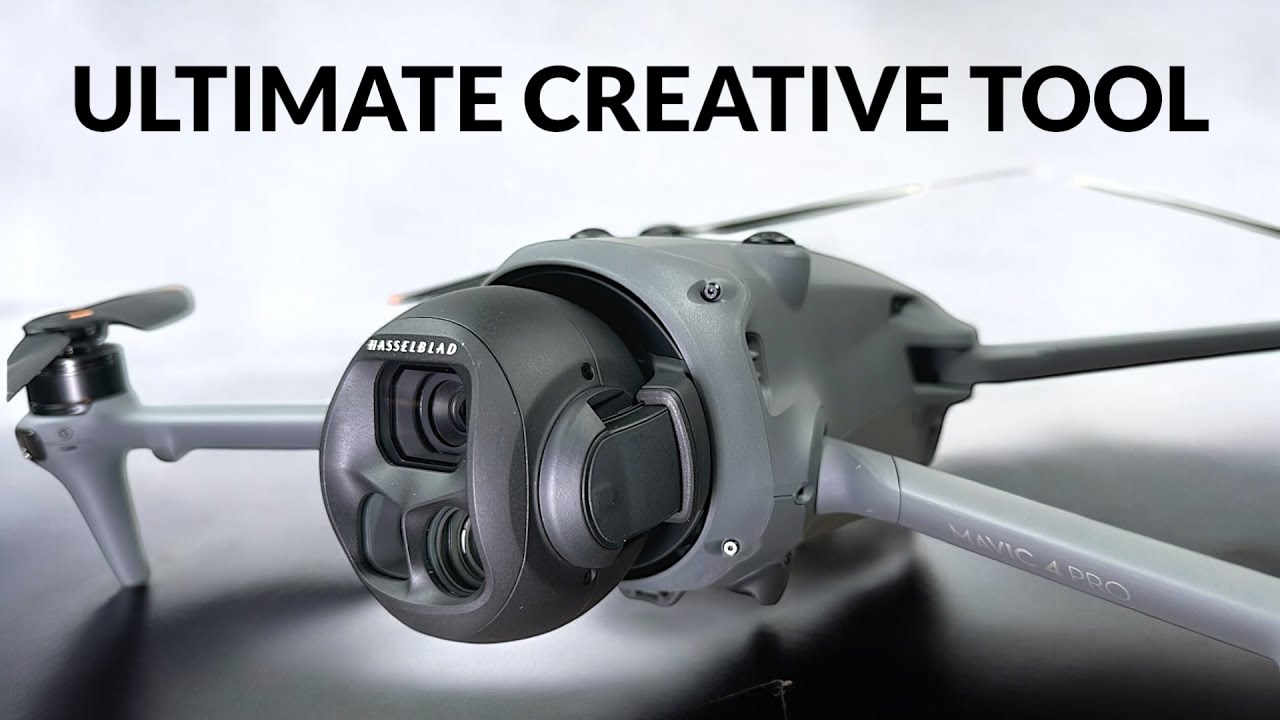
Visionnez dès maintenant ce film sur «drone» en streaming sur Youtube.
Air Photography propose une exploration de « drone ».
Une publication youtube proposée par Air Photography.
qui aborde « drone »:
Nous avons découvert cette vidéo récemment et elle bénéficiait d’une belle interaction. Le décompte de Likes indiquait: 1337.
La durée de 00:17:04 secondes et le titre DJI Mavic 4 Pro Review – The Ultimate Drone For Creators sont à prendre en compte, ainsi que les informations de l’auteur et la description qui suit :« Aujourd’hui, DJI a lancé le très attendu Mavic 4 Pro. Leur nouveau drone phare a de nombreuses nouvelles fonctionnalités et amélioration pour permettre aux créateurs de repousser les limites et d’explorer de nouvelles possibilités créatives. Il dispose d’un nouveau cardan Infinity qui peut capturer 70 degrés vers le haut, il a un spin à 360 degrés et il prend en charge la véritable capture verticale. Vitesse de vols plus rapides, temps de vol plus long, chargement plus rapide, nouvelles fonctionnalités de suivi, lidar et détection d’obstacles améliorés ne sont que quelques-unes de ses nouvelles capacités. DJI a également introduit un nouveau contrôleur professionnel Le RC Pro 2. Il dispose désormais d’un écran pliable de 7 « qui peut être tourné pour une visualisation verticale facile, 2000 Nits Peak Brightness et construit en microphone. Dans ma revue, je passe en revue tout ce qui est nouveau avec le DJI Mavic 4 Pro et démontre certaines des nouvelles capacités incroyables. Pro Fly plus combo (can) https://amzn.to/4dja0ib mavic 4 pro créator combo (can) https://amzn.to/42wis58 dji rc pro 2: https://amzn.to/43pxar5 mavic 4 props: https://amzn.to/3h0qr 4 props: https://amzn.to/3h0qr 4 props: https://amzn.to/3h0qr 4 props: https://amzn.to/3h0qr Mavic 4 Proces Guards: https://amzn.to/43l8ck7 Mavic 4 Battery: https://amzn.to/4dfwmkf mavic 4 Charge Hub: https://amzn.to/43itm8j mavic 4 240 wji sharger: https://amzn.to/3shpbhs dji sharger: https://click.dji.com/app-g-x4r7-x2i8otvk-xw?pm=Link peut contenir Amazon Associate ou d’autres identifiants d’conseil. https://www.youtube.com/channel/ucockmbuq8yejlcbnm77zl8jg/join ».
youtube offre un espace d’expression où chacun peut partager des vidéos sur des thèmes multiples, des réflexions personnelles aux idées novatrices.
Professionnelles Solutions Aériennes : Entreprise de Drone
De nombreux secteurs en France ont été révolutionnés par les drones professionnels. Que ce soit pour la collecte de données géospatiales, l’évaluation de sites ou la planification urbaine, ces outils permettent d’accéder à des perspectives uniques avec une précision et une efficacité accrues. Il est aujourd’hui crucial de faire appel à une entreprise de drone pour répondre aux besoins des particuliers, des collectivités et des entreprises.
Avec les nouvelles technologies, un drone professionnel peut réaliser des missions variées tout en garantissant une grande précision. Utilisé pour l’inspection de bâtiments, la surveillance de chantiers, la cartographie de terrains et la réalisation de films et productions audiovisuelles, cet appareil est très pratique. Assurer un travail de qualité nécessite de recourir à des pilotes formés et certifiés par la DGAC.
En toute sécurité, un drone permet de réaliser des inspections techniques. Cet outil est employé pour analyser l’état des infrastructures, pour déceler d’éventuels défauts et pour perfectionner la gestion des risques. Avec la photographie aérienne, on peut capturer des images et vidéos en haute définition, idéales pour des projets de communication, des tournages de films ou des suivis de chantiers. En recourant à la cartographie et à la modélisation, on peut obtenir des reconstructions en 3D de bâtiments et des relevés topographiques de haute précision.
Obtenir une certification de la DGAC est indispensable pour travailler en tant que pilote de drone professionnel. La formation aborde la maîtrise des réglementations, le respect des protocoles de sécurité et la gestion des vols en zones spécifiques. Ces aptitudes garantissent l’exécution de tâches dans le respect de la législation et satisfont les attentes des clients.
SupraDrone, un prestataire français, offre des services de drone professionnel. Il est implanté dans plusieurs départements et régions de France et gère l’ensemble des démarches administratives concernant les vols de drones. SupraDrone s’occupe des autorisations en collaboration avec la DGAC, les services des préfectures et les mairies, garantissant ainsi la conformité réglementaire avant chaque mission.
Une fois les formalités achevées, SupraDrone déploie ses opérateurs de drone locaux pour fournir des services en adéquation avec les attentes des clients. Un pilote qualifié est responsable de chaque projet, que ce soit une production audiovisuelle, une inspection technique ou une mission de cartographie. Avec cette structure, l’entreprise garantit une réponse rapide et efficace, tout en offrant un accompagnement adapté dans chaque région. En combinant compétences techniques et administration efficace, SupraDrone s’impose comme un acteur de référence dans le secteur du drone professionnel en France.
Basé à Paris, SupraDrone collabore étroitement avec la DGAC et les services administratifs pour gérer les autorisations de vol. Son implantation en régions lui permet d’assurer des interventions en moins de 24 heures avec des télépilotes expérimentés. Plus d’informations
Cliquez ici pour accéder directement à la vidéo sur youtube :
la source: Cliquer ici
#DJI #Mavic #Pro #Review #Ultimate #Drone #Creators
Retranscription des paroles de la vidéo: Good day folks. Sean here from Air Photography. So today DJI has introduced the highly anticipated Mavic 4 Pro. DJI also launched a brand new Pro Controller, the DJI RC Pro 2. There’s a lot of new features and enhancements with the Mavic 4 Pro, but probably one of the biggest changes is its new Infinity Gimbal. It’s really unique and its capabilities are actually pretty impressive. One of the biggest new features of the Infinity Gimbal is that it can now do a complete 360° rotation, allowing you to capture some really interesting perspectives. You can easily control the roll of the gimbal by using a dial on the back of the controller that will give you full manual control of the movement, but you can also utilize some of the other intelligent flight modes that support that roll rotation. In fact, there’s a brand new Quickshot that’s designed specifically for that new feature. You simply just have to go in and set your parameters and then you just let the drone do all the work. Some of the other intelligent flight modes such as hyperlapses and waypoint missions also support rolling the gimbal. Another new enhancement of the Infinity gimbal is that you can now film upwards all the way up to 70°. Not quite straight up, but it’s pretty close. And that’s going to allow you to get some really interesting perspectives, especially when you’re flying under a tree canopy, under a bridge, or around tall buildings. And due to the new design of the Infinity Gimbal, for the first time on a Mavic series, we can now film with true vertical. Just like we’ve seen with the Mini4 Pro, the camera can spin to film in vertical mode. While the camera’s in vertical mode, you can utilize all three cameras. Now, one important thing to keep in mind is that just due to the design of the gimbal, when you have the camera rotated and you’re filming in vertical mode, the gimbal does have some up and down limitations. But if you do want to capture in vertical mode and you want the full range of motion of the gimbal, you can go into the settings where you set your resolution and there’s a vertical mode in there as well. It’s very similar to how it’s set up on the Air3 series. It’s a cropped video. It’s already cropped for you. A preview with darkened edges around the side so you know how it’s going to be framed, but the final video will be in a vertical format. Now, unlike the R3, it actually will film in 4K. So, the nice thing about using that method for capturing vertical is that you’re going to have full range of the gimbal. Now, when it comes to a camera drone, of course, one of the most important features of it is the camera itself. And the camera on the Mavic 4 Pro got a significant update. The main Hasselblad wide-angle camera now features their next generation 4/3 sensor. The main wide-angle Hasselblad camera can now film in a resolution of 6K at 60 frames per second in HDR, and it can also capture 4K 120 slow motion. It’s capable of capturing 100 megapixel photos and it can achieve approximately 16 stops of dynamic range and that’s compared to 12.8 stops of the Mavic 3. These new upgrades are going to allow for better lowlight resolution and higher detailed images. The Mavic 4 Pro supports dual native ISO and it has a larger f.2 aperture compared to 2.8 of the Mavic 3. The nice thing about the Mavic 4 is that we actually have three cameras built into it. So, not only do we have that 4/3 Hasselblad camera, we also have a 70 mm teley camera that’s capable of 2.5 time zoom. It has a 1 over 1.3 in sensor and you can capture in 4K 60 or 4K 120 frames per second slow motion. And of course, if you even need to get closer to the action, we have the 168 mm teley lens. It’s capable of six time zoom and it features a brand new 1 over 1.5 in sensor. Just like previous models, you can switch back and forth on the main screen between the different cameras. I’ll just show you some examples here of footage captured on all three cameras. I kept the drone at the same distance and that way you can see the zoom level and the quality of each camera. The first shot I’m showing you is from the main 4/3 Hasselblad camera. Looks really good. Nice wide angle. And for a lot of people that will be their workhorse, their everyday camera. Next, we move into the medium teley camera at 2.5 time zoom. Again, nice clear images. And you can see the background has been brought in a little bit, giving us that nice compression. And then lastly, here is the 168 millimeter sixx zoom. Again, that allows you to really get in close to the action and still provides a nice high quality image with a lot of detail and nice color. All three cameras support the intelligent flight features that allows you to get creative depending on the situation and what you’re trying to film. All three cameras support both a normal color profile, HLG, DLOG, and DLOG M. That’ll make color grading across all three cameras a little bit easier and more convenient. Of course, the Mavic 4 Pro still has explorer mode that allows you to zoom in through all the different zoom levels while filming, and it will allow you to go all the way up to 24x digital zoom. Now, when you’re at that 24x digital zoom, the image is going to be degraded quite a bit because it is digital zoom. But it is really impressive the smoothness when zoomed in 24 times and the ease of control of the gimbal. You’re probably not going to be doing a lot of filming at 24x zoom, but as the name suggests, it’s great for exploring and scouting out new locations. The Mavic 4 Pro is probably one of the quickest drones to deploy. Similar to what we’ve seen on the DJI Flip, as soon as we unfold it, it’s going to automatically go ahead and power on. Now, we will be taking a closer look at the RC2 Pro here coming up in a minute, but it’s very similar. As soon as you unfold it, it’s going to go ahead and power on and connect. Now, it can be configured in the settings. If you don’t want it to power on when it’s unfolded, you can disable that feature. And you can also enable the feature where it will power off when you fold it up. The Mavic 4 Pro got a significant update when it comes to obstacle avoidance and its obstacle avoidance sensors. You can see we have an allnew setup. We have three cameras, high resolution cameras at the top here, and we have three highresolution cameras there at the bottom. The Mavic 4 Pro also features front-facing LAR located there on the front arm. These new sensors offer four times the resolution of the Air3, which offers more detailed perception of its surroundings and environment. They are now capable of detecting even smaller obstacles. They are low light capable, so they can even detect obstacles in low light scenarios. And paired with its front-facing LAR, it can now detect obstacles in almost nearly dark conditions. That LAR also helps detect obstacles that have very little texture, such as glass or white painted walls. The new vision system allows the drone to fly faster while still effectively detecting obstacles. It can now fly and detect obstacles at 18 m/s. The Mavic 4 Pro introduces its nextG return to home. Just like we’ve seen with the Air3s, you can actually now take off and do a return to home without satellite connectivity. And that can be really important if you’re flying in complex environments and you happen to lose satellite connectivity. The drone is going to be aware of its environment and know the best route to get back to where it took off from, even if you’re not connected to satellites. It achieves this by building a real-time map on its outbound flight. So, in the event of a failsafe return to home or a manually initiated return to home, it has a good understanding of its environment and the safest route to get back to where it took off from that allows you to take off from really complex environments such as a balcony, under a tree canopy, and seeing it in action is actually really impressive. The Mavic 4 Pro has a new ultra windresistant design and paired with its new high-powered battery, it allows for even faster flight time. Mavic 4 Pro is capable of flying at 25 m/s or 90 km per hour and you can even achieve faster speeds when flying with the tailwind. The Mavic 4 Pro comes with a new enhanced O04 Plus transmission system. It now has a range of 30 km compared to 15 km of the Mavic 3 Pro. It also features new interference optimization that can be really beneficial if you’re flying in a multi- drone scenario. Active Track gets an update with the Mavic 4 Pro and now features both automatic and manual mode. When using manual mode, you can customize the tracking from eight different directions using the trace wheel to achieve cinematic shots such as circling, pulling in, and pulling away. For some activities, you may prefer to use auto mode, which is going to basically do everything for you. That allows you to focus on your activity. It’s going to take things like environment and aesthetics into consideration. It will alter its path as needed, and it will introduce different movements to give you some nice dynamic footage. If you’re tracking in a vehicle, it can now track a vehicle at 100 meters away, and it can track a human subject at 25 meters. The drone can detect the orientation of the vehicle and better judge its trajectory, which does allow it to plan a more suitable flight path. The Mavic 4 Pro introduces a new battery and charging system. It can now achieve 51 minutes of flight time, rated flight time. But the more important thing is the way we charge and the speed of which we can charge these batteries has been greatly improved. They now have a new 240 watt charger that when connected to the charging hub can charge all three batteries simultaneously in 90 minutes. You can charge a single battery in 51 minutes. But the nice thing is is that you can still utilize USBC while using the charging hub. So, for example, if you’re going on holidays and you don’t want to bring a larger charger with you, the charging brick, you’re going to have a USBC charger with you anyways for your mobile devices. You can still plug it into the charging hub and charge all these batteries up. Now, it will take longer to charge these batteries, but it might be more convenient in some scenarios. On top of that, you can still utilize the drone to charge your batteries by using the USBC port on the back. The Mavic 4 Pro features Wi-Fi 6. That’s going to increase the transfer speed of content over to your mobile devices. And it also supports off-state quick transfer that we’ve seen introduced on the Air3s. With off-state quick transfer, you can power off your drone, put it away in the bag. You can even have it stored in the trunk of your car and still connect your mobile device to it to offload your footage. Now, another big update we got with the launch of the Mavic 4 Pro is the new Pro Controller, the DJI RC Pro 2. And this thing is absolutely incredible. I was a little leery about it at first. I thought it was going to be a little big, maybe a little uncomfortable to hold, but I tell you, this thing is amazing. Now, I’ll just show you here side by side to an RC2. You can see the overall footprint isn’t that much larger. Essentially, the screen is sits on top instead of built-in that allows them to achieve a larger size. It features a 7-in miniLEDD screen, and that bigger screen is just beautiful to fly with. It really looks nice. And the Mavic 4 Pro is actually compatible with both style of controllers. You have the option of flying with the DJI RC2 Pro or the DJI RC2. The screen on the RC2 Pro has 2,000 nits of peak brightness and 1,600 nits of sustained brightness. So, that is really good for flying out on bright, sunny days. And as mentioned, it is super quick to deploy. One Motion will automatically power it on just by pulling out the screen. And not only that, these joysticks automatically pop out. You can see as we close it, they fold down in and when we unfold it, they come out. When the screen is closed, it goes into a sleep mode. or you can use the power button here at the top to manually power it on and power it off. So, between the drone automatically powering on when unfolded, the controller powering on when unfolded, not having to put the joysticks in, it is definitely the quickest drone to get up and flying. On top of that, the screen on the RC2 Pro is rotatable. So, for those who are going to be filming a lot in vertical mode, that’s going to make it a little bit more convenient to line up your shots. The Fly app will automatically adjust to that new vertical format. And the really nice thing is is when you’re flying the drone and you rotate the screen, it’s automatically going to rotate the camera. So that way you can just go right in and start filming in vertical. The RC Pro 2 has a built-in microphone. So that’s going to be great for creators who want to capture audio. On top of that, it does support the DJI Mic ecosystem. So you can plug a DJI Mic directly into the USBC port, or you can actually connect just one of the transmitters via Bluetooth directly to the controller. Of course, you can use the microphones to embed audio into the screen recordings, but more importantly, you can now embed audio directly into your videos. So, if you want to do some commentary while you’re flying, you can easily do so. Right in the settings, they have an option for noise cancellation. They have two different modes. They have a natural mode, which is going to get rid of most of the drone noise, but still reserve some of the ambient background noise. They also have a pure mode, which is basically just going to isolate human voice. The RC Pro 2 also has enhanced features when it comes to tracking. They have a new feature called dynamic home point and that’s great for tracking because sometimes when you’re tracking you’re moving, especially if you’re in a vehicle and it’s going to keep your home point updated. So, in the event of a fail safe or a manual return to home, the drone is going to know where to go home to. Now, taking a quick look around the controller here, we have this extra dial that allows you to easily change your camera settings if you’re filming in manual mode, but you can also use that in auto mode to adjust the exposure. We have a 5D button over beside that, which is customizable. You can use that to switch between the different lenses or many different other aspects that you can set manually in the settings. At the bottom here, we have an HDMI port, we have a USBC port, and we have a memory card slot. The RC Pro 2 got an increase when it comes to internal storage. It now has 128 GB, but you can add an extra memory card if you need even more storage. At the front here, it’s very similar to other controllers. We have a dial here to adjust the pitch of the gimbal. Dial over here can adjust the zoom level, or you can customize that to adjust the roll of the gimbal if you want to do a rotation. Of course, we have a shutter button here and a record button. The antennas on it are a little bit different than previous generations. With this, we just fold them straight out like that. And we have some customizable buttons there on the bottom. The RC Pro 2 also has a feature. If you’ve recorded footage in log format, it will automatically enhance the color while you’re watching it on playback. The RC Pro 2 also fully supports the installation of third party apps. And it’s powerful enough you can actually do your video editing right on the controller. Essentially, you can just lower down the screen and it becomes like a little mini tablet. You can use the DJI Fly app to go in, edit your footage, and share them directly to social media. Now, another really interesting feature of the RC2 Pro is that it now has a built-in simulator. We can launch it. It’s got options for some basic courses if you’re brand new to drones to help learn to fly, or you can just go in and do your own flight. And the interface is really good. It basically mimics like you’re flying your Mavic 4 Pro. We can take off. It makes use of the obstacle avoidance. It simulates battery usage, RC strength, and even satellites. If you happen to crash a drone, it gives you a playback and you can see exactly what you did wrong. You can adjust to the different lenses if you want to test them out. You can switch back and forth between photos and videos. With a future firmware update, you’ll even be able to adjust the camera settings if you want to get a little bit creative and test some of those features out. We can go into the settings, change settings for the drone. So, it’s a really detailed simulator. It looks really good. The graphics are really nice on it. So, it’s great for those who have never flown a drone before. They want to get some practice before they put their aircraft up in the air, but even for people who fly regularly. It’s just a great way to practice some of your skills and maneuvers. The shoulder bag that comes with the Mavic 4 Pro is very similar to the one that came with the Air3s. It’s a little bit larger and it is a darker shade. It actually looks really sharp. The gimbal guard for the Mavic 4 Pro has also been redesigned. It’s much easier to put on and take off. It just snaps right onto the bottom and then there’s a connector that you hook up at the back. And lastly, the Mavic 4 Pro fully supports all the intelligent flight features such as master shots, quick shots, waypoint missions. You can capture panoramas, and it has focus track, which is your active track, point of interest, and spotlight. It also supports cruise control, which can be a very useful feature as well. Now, the Mavic 4 Pro is going to be offered in a couple different variations. We can get the drone base package. With it, you’re going to get the drone, one battery, and the RC2 controller. They also have that variation in a FlyMore kit, which essentially is going to give you two extra batteries for a total of three. It’s going to give you the charging hub and a carrying case. Or they have the Creator Combo, which comes with the RC2 Pro. Now, with the Creator Combo, the drone also comes with 512 GB of internal storage. It still comes with a memory card slot, so if you need to expand that storage even further, you’re still able to do so. So, they do have some different options depending on your budget and what you’re looking for. At launch, the RC2 Pro is going to be compatible with the Mini4 Pro, the Air3 series, and of course, the Mavic 4 Pro. So, definitely some incredible new hardware from DJI. Their new flagship drone is going to allow creators to do things that just weren’t even thinkable a few years ago. Now, if the Mavic 4 Pro is a drone you’re interested in, you might be purchasing, make sure you’re subscribed as I will be covering it fully over the coming weeks and months. We’re going to dive deeper into some of the specific features. We’re going to test things out and do some comparisons. Hopefully, you enjoyed this video and found it had value. Thanks a lot for watching and we’ll see you in the next .
Déroulement de la vidéo:
0.16 Good day folks. Sean here from Air
0.16 Photography. So today DJI has introduced
0.16 the highly anticipated Mavic 4 Pro. DJI
0.16 also launched a brand new Pro
0.16 Controller, the DJI RC Pro 2. There&;s a
0.16 lot of new features and enhancements
0.16 with the Mavic 4 Pro, but probably one
0.16 of the biggest changes is its new
0.16 Infinity Gimbal. It&;s really unique and
0.16 its capabilities are actually pretty
0.16 impressive. One of the biggest new
0.16 features of the Infinity Gimbal is that
0.16 it can now do a complete 360° rotation,
0.16 allowing you to capture some really
0.16 interesting perspectives. You can easily
0.16 control the roll of the gimbal by using
0.16 a dial on the back of the controller
0.16 that will give you full manual control
0.16 of the movement, but you can also
0.16 utilize some of the other intelligent
0.16 flight modes that support that roll
0.16 rotation. In fact, there&;s a brand new
0.16 Quickshot that&;s designed specifically
0.16 for that new feature. You simply just
0.16 have to go in and set your parameters
0.16 and then you just let the drone do all
0.16 the work. Some of the other intelligent
0.16 flight modes such as hyperlapses and
0.16 waypoint missions also support rolling
0.16 the gimbal. Another new enhancement of
0.16 the Infinity gimbal is that you can now
0.16 film upwards all the way up to 70°. Not
0.16 quite straight up, but it&;s pretty
0.16 close. And that&;s going to allow you to
0.16 get some really interesting
0.16 perspectives, especially when you&;re
0.16 flying under a tree canopy, under a
0.16 bridge, or around tall buildings. And
0.16 due to the new design of the Infinity
0.16 Gimbal, for the first time on a Mavic
0.16 series, we can now film with true
0.16 vertical. Just like we&;ve seen with the
0.16 Mini4 Pro, the camera can spin to film
0.16 in vertical mode. While the camera&;s in
0.16 vertical mode, you can utilize all three
0.16 cameras. Now, one important thing to
0.16 keep in mind is that just due to the
0.16 design of the gimbal, when you have the
0.16 camera rotated and you&;re filming in
0.16 vertical mode, the gimbal does have some
0.16 up and down limitations. But if you do
0.16 want to capture in vertical mode and you
0.16 want the full range of motion of the
0.16 gimbal, you can go into the settings
0.16 where you set your resolution and
0.16 there&;s a vertical mode in there as
0.16 well. It&;s very similar to how it&;s set
0.16 up on the Air3 series. It&;s a cropped
0.16 video. It&;s already cropped for you. A
0.16 preview with darkened edges around the
0.16 side so you know how it&;s going to be
0.16 framed, but the final video will be in a
0.16 vertical format. Now, unlike the R3, it
0.16 actually will film in 4K. So, the nice
0.16 thing about using that method for
0.16 capturing vertical is that you&;re going
0.16 to have full range of the gimbal. Now,
0.16 when it comes to a camera drone, of
0.16 course, one of the most important
0.16 features of it is the camera itself. And
0.16 the camera on the Mavic 4 Pro got a
0.16 significant update. The main Hasselblad
0.16 wide-angle camera now features their
0.16 next generation 4/3 sensor. The main
0.16 wide-angle Hasselblad camera can now
0.16 film in a resolution of 6K at 60 frames
0.16 per second in HDR, and it can also
0.16 capture 4K 120 slow motion. It&;s capable
0.16 of capturing 100 megapixel photos and it
0.16 can achieve approximately 16 stops of
0.16 dynamic range and that&;s compared to
0.16 12.8 stops of the Mavic 3. These new
0.16 upgrades are going to allow for better
0.16 lowlight resolution and higher detailed
0.16 images. The Mavic 4 Pro supports dual
0.16 native ISO and it has a larger f.2
0.16 aperture compared to 2.8 of the Mavic 3.
0.16 The nice thing about the Mavic 4 is that
0.16 we actually have three cameras built
0.16 into it. So, not only do we have that
0.16 4/3 Hasselblad camera, we also have a 70
0.16 mm teley camera that&;s capable of 2.5
0.16 time zoom. It has a 1 over 1.3 in sensor
0.16 and you can capture in 4K 60 or 4K 120
0.16 frames per second slow motion. And of
0.16 course, if you even need to get closer
0.16 to the action, we have the 168 mm teley
0.16 lens. It&;s capable of six time zoom and
0.16 it features a brand new 1 over 1.5 in
0.16 sensor. Just like previous models, you
0.16 can switch back and forth on the main
0.16 screen between the different cameras.
0.16 I&;ll just show you some examples here of
0.16 footage captured on all three cameras. I
0.16 kept the drone at the same distance and
0.16 that way you can see the zoom level and
0.16 the quality of each camera. The first
0.16 shot I&;m showing you is from the main
0.16 4/3 Hasselblad camera. Looks really
0.16 good. Nice wide angle. And for a lot of
0.16 people that will be their workhorse,
0.16 their everyday camera. Next, we move
0.16 into the medium teley camera at 2.5 time
0.16 zoom. Again, nice clear images. And you
0.16 can see the background has been brought
0.16 in a little bit, giving us that nice
0.16 compression. And then lastly, here is
0.16 the 168 millimeter sixx zoom. Again,
0.16 that allows you to really get in close
0.16 to the action and still provides a nice
0.16 high quality image with a lot of detail
0.16 and nice color. All three cameras
0.16 support the intelligent flight features
0.16 that allows you to get creative
0.16 depending on the situation and what
0.16 you&;re trying to film. All three cameras
0.16 support both a normal color profile,
0.16 HLG, DLOG, and DLOG M. That&;ll make
0.16 color grading across all three cameras a
0.16 little bit easier and more convenient.
0.16 Of course, the Mavic 4 Pro still has
0.16 explorer mode that allows you to zoom in
0.16 through all the different zoom levels
0.16 while filming, and it will allow you to
0.16 go all the way up to 24x digital zoom.
0.16 Now, when you&;re at that 24x digital
0.16 zoom, the image is going to be degraded
0.16 quite a bit because it is digital zoom.
0.16 But it is really impressive the
0.16 smoothness when zoomed in 24 times and
0.16 the ease of control of the gimbal.
0.16 You&;re probably not going to be doing a
0.16 lot of filming at 24x zoom, but as the
0.16 name suggests, it&;s great for exploring
0.16 and scouting out new locations. The
0.16 Mavic 4 Pro is probably one of the
0.16 quickest drones to deploy. Similar to
0.16 what we&;ve seen on the DJI Flip, as soon
0.16 as we unfold it, it&;s going to
0.16 automatically go ahead and power on.
0.16 Now, we will be taking a closer look at
0.16 the RC2 Pro here coming up in a minute,
0.16 but it&;s very similar. As soon as you
0.16 unfold it, it&;s going to go ahead and
0.16 power on and connect. Now, it can be
0.16 configured in the settings. If you don&;t
0.16 want it to power on when it&;s unfolded,
0.16 you can disable that feature. And you
0.16 can also enable the feature where it
0.16 will power off when you fold it up. The
0.16 Mavic 4 Pro got a significant update
0.16 when it comes to obstacle avoidance and
0.16 its obstacle avoidance sensors. You can
0.16 see we have an allnew setup. We have
0.16 three cameras, high resolution cameras
0.16 at the top here, and we have three
0.16 highresolution cameras there at the
0.16 bottom. The Mavic 4 Pro also features
0.16 front-facing LAR located there on the
0.16 front arm. These new sensors offer four
0.16 times the resolution of the Air3, which
0.16 offers more detailed perception of its
0.16 surroundings and environment. They are
0.16 now capable of detecting even smaller
0.16 obstacles. They are low light capable,
0.16 so they can even detect obstacles in low
0.16 light scenarios. And paired with its
0.16 front-facing LAR, it can now detect
0.16 obstacles in almost nearly dark
0.16 conditions. That LAR also helps detect
0.16 obstacles that have very little texture,
0.16 such as glass or white painted walls.
0.16 The new vision system allows the drone
0.16 to fly faster while still effectively
0.16 detecting obstacles. It can now fly and
0.16 detect obstacles at 18 m/s. The Mavic 4
0.16 Pro introduces its nextG return to home.
0.16 Just like we&;ve seen with the Air3s, you
0.16 can actually now take off and do a
0.16 return to home without satellite
0.16 connectivity. And that can be really
0.16 important if you&;re flying in complex
0.16 environments and you happen to lose
0.16 satellite connectivity. The drone is
0.16 going to be aware of its environment and
0.16 know the best route to get back to where
0.16 it took off from, even if you&;re not
0.16 connected to satellites. It achieves
0.16 this by building a real-time map on its
0.16 outbound flight. So, in the event of a
0.16 failsafe return to home or a manually
0.16 initiated return to home, it has a good
0.16 understanding of its environment and the
0.16 safest route to get back to where it
0.16 took off from that allows you to take
0.16 off from really complex environments
0.16 such as a balcony, under a tree canopy,
0.16 and seeing it in action is actually
0.16 really impressive. The Mavic 4 Pro has a
0.16 new ultra windresistant design and
0.16 paired with its new high-powered
0.16 battery, it allows for even faster
0.16 flight time. Mavic 4 Pro is capable of
0.16 flying at 25 m/s or 90 km per hour and
0.16 you can even achieve faster speeds when
0.16 flying with the tailwind. The Mavic 4
0.16 Pro comes with a new enhanced O04 Plus
0.16 transmission system. It now has a range
0.16 of 30 km compared to 15 km of the Mavic
0.16 3 Pro. It also features new interference
0.16 optimization that can be really
0.16 beneficial if you&;re flying in a multi-
0.16 drone scenario. Active Track gets an
0.16 update with the Mavic 4 Pro and now
0.16 features both automatic and manual mode.
0.16 When using manual mode, you can
0.16 customize the tracking from eight
0.16 different directions using the trace
0.16 wheel to achieve cinematic shots such as
0.16 circling, pulling in, and pulling away.
0.16 For some activities, you may prefer to
0.16 use auto mode, which is going to
0.16 basically do everything for you. That
0.16 allows you to focus on your activity.
0.16 It&;s going to take things like
0.16 environment and aesthetics into
0.16 consideration. It will alter its path as
0.16 needed, and it will introduce different
0.16 movements to give you some nice dynamic
0.16 footage. If you&;re tracking in a
0.16 vehicle, it can now track a vehicle at
0.16 100 meters away, and it can track a
0.16 human subject at 25 meters. The drone
0.16 can detect the orientation of the
0.16 vehicle and better judge its trajectory,
0.16 which does allow it to plan a more
0.16 suitable flight path. The Mavic 4 Pro
0.16 introduces a new battery and charging
0.16 system. It can now achieve 51 minutes of
0.16 flight time, rated flight time. But the
0.16 more important thing is the way we
0.16 charge and the speed of which we can
0.16 charge these batteries has been greatly
0.16 improved. They now have a new 240 watt
0.16 charger that when connected to the
0.16 charging hub can charge all three
0.16 batteries simultaneously in 90 minutes.
0.16 You can charge a single battery in 51
0.16 minutes. But the nice thing is is that
0.16 you can still utilize USBC while using
0.16 the charging hub. So, for example, if
0.16 you&;re going on holidays and you don&;t
0.16 want to bring a larger charger with you,
0.16 the charging brick, you&;re going to have
0.16 a USBC charger with you anyways for your
0.16 mobile devices. You can still plug it
0.16 into the charging hub and charge all
0.16 these batteries up. Now, it will take
0.16 longer to charge these batteries, but it
0.16 might be more convenient in some
0.16 scenarios. On top of that, you can still
0.16 utilize the drone to charge your
0.16 batteries by using the USBC port on the
0.16 back. The Mavic 4 Pro features Wi-Fi 6.
0.16 That&;s going to increase the transfer
0.16 speed of content over to your mobile
0.16 devices. And it also supports off-state
0.16 quick transfer that we&;ve seen
0.16 introduced on the Air3s. With off-state
0.16 quick transfer, you can power off your
0.16 drone, put it away in the bag. You can
0.16 even have it stored in the trunk of your
0.16 car and still connect your mobile device
0.16 to it to offload your footage. Now,
0.16 another big update we got with the
0.16 launch of the Mavic 4 Pro is the new Pro
0.16 Controller, the DJI RC Pro 2. And this
0.16 thing is absolutely incredible. I was a
0.16 little leery about it at first. I
0.16 thought it was going to be a little big,
0.16 maybe a little uncomfortable to hold,
0.16 but I tell you, this thing is amazing.
0.16 Now, I&;ll just show you here side by
0.16 side to an RC2. You can see the overall
0.16 footprint isn&;t that much larger.
0.16 Essentially, the screen is sits on top
0.16 instead of built-in that allows them to
0.16 achieve a larger size. It features a
0.16 7-in miniLEDD screen, and that bigger
0.16 screen is just beautiful to fly with. It
0.16 really looks nice. And the Mavic 4 Pro
0.16 is actually compatible with both style
0.16 of controllers. You have the option of
0.16 flying with the DJI RC2 Pro or the DJI
0.16 RC2. The screen on the RC2 Pro has 2,000
0.16 nits of peak brightness and 1,600 nits
0.16 of sustained brightness. So, that is
0.16 really good for flying out on bright,
0.16 sunny days. And as mentioned, it is
0.16 super quick to deploy. One Motion will
0.16 automatically power it on just by
0.16 pulling out the screen. And not only
0.16 that, these joysticks automatically pop
0.16 out. You can see as we close it, they
0.16 fold down in and when we unfold it, they
0.16 come out. When the screen is closed, it
0.16 goes into a sleep mode. or you can use
0.16 the power button here at the top to
0.16 manually power it on and power it off.
0.16 So, between the drone automatically
0.16 powering on when unfolded, the
0.16 controller powering on when unfolded,
0.16 not having to put the joysticks in, it
0.16 is definitely the quickest drone to get
0.16 up and flying. On top of that, the
0.16 screen on the RC2 Pro is rotatable. So,
0.16 for those who are going to be filming a
0.16 lot in vertical mode, that&;s going to
0.16 make it a little bit more convenient to
0.16 line up your shots. The Fly app will
0.16 automatically adjust to that new
0.16 vertical format. And the really nice
0.16 thing is is when you&;re flying the drone
0.16 and you rotate the screen, it&;s
0.16 automatically going to rotate the
0.16 camera. So that way you can just go
0.16 right in and start filming in vertical.
0.16 The RC Pro 2 has a built-in microphone.
0.16 So that&;s going to be great for creators
0.16 who want to capture audio. On top of
0.16 that, it does support the DJI Mic
0.16 ecosystem. So you can plug a DJI Mic
0.16 directly into the USBC port, or you can
0.16 actually connect just one of the
0.16 transmitters via Bluetooth directly to
0.16 the controller. Of course, you can use
0.16 the microphones to embed audio into the
0.16 screen recordings, but more importantly,
0.16 you can now embed audio directly into
0.16 your videos. So, if you want to do some
0.16 commentary while you&;re flying, you can
0.16 easily do so. Right in the settings,
0.16 they have an option for noise
0.16 cancellation. They have two different
0.16 modes. They have a natural mode, which
0.16 is going to get rid of most of the drone
0.16 noise, but still reserve some of the
0.16 ambient background noise. They also have
0.16 a pure mode, which is basically just
0.16 going to isolate human voice. The RC Pro
0.16 2 also has enhanced features when it
0.16 comes to tracking. They have a new
0.16 feature called dynamic home point and
0.16 that&;s great for tracking because
0.16 sometimes when you&;re tracking you&;re
0.16 moving, especially if you&;re in a
0.16 vehicle and it&;s going to keep your home
0.16 point updated. So, in the event of a
0.16 fail safe or a manual return to home,
0.16 the drone is going to know where to go
0.16 home to. Now, taking a quick look around
0.16 the controller here, we have this extra
0.16 dial that allows you to easily change
0.16 your camera settings if you&;re filming
0.16 in manual mode, but you can also use
0.16 that in auto mode to adjust the
0.16 exposure. We have a 5D button over
0.16 beside that, which is customizable. You
0.16 can use that to switch between the
0.16 different lenses or many different other
0.16 aspects that you can set manually in the
0.16 settings. At the bottom here, we have an
0.16 HDMI port, we have a USBC port, and we
0.16 have a memory card slot. The RC Pro 2
0.16 got an increase when it comes to
0.16 internal storage. It now has 128 GB, but
0.16 you can add an extra memory card if you
0.16 need even more storage. At the front
0.16 here, it&;s very similar to other
0.16 controllers. We have a dial here to
0.16 adjust the pitch of the gimbal. Dial
0.16 over here can adjust the zoom level, or
0.16 you can customize that to adjust the
0.16 roll of the gimbal if you want to do a
0.16 rotation. Of course, we have a shutter
0.16 button here and a record button. The
0.16 antennas on it are a little bit
0.16 different than previous generations.
0.16 With this, we just fold them straight
0.16 out like that.
0.16 And we have some customizable buttons
0.16 there on the bottom. The RC Pro 2 also
0.16 has a feature. If you&;ve recorded
0.16 footage in log format, it will
0.16 automatically enhance the color while
0.16 you&;re watching it on playback. The RC
0.16 Pro 2 also fully supports the
0.16 installation of third party apps. And
0.16 it&;s powerful enough you can actually do
0.16 your video editing right on the
0.16 controller. Essentially, you can just
0.16 lower down the screen and it becomes
0.16 like a little mini tablet. You can use
0.16 the DJI Fly app to go in, edit your
0.16 footage, and share them directly to
0.16 social media. Now, another really
0.16 interesting feature of the RC2 Pro is
0.16 that it now has a built-in simulator. We
0.16 can launch it. It&;s got options for some
0.16 basic courses if you&;re brand new to
0.16 drones to help learn to fly, or you can
0.16 just go in and do your own flight. And
0.16 the interface is really good. It
0.16 basically mimics like you&;re flying your
0.16 Mavic 4 Pro. We can take off. It makes
0.16 use of the obstacle avoidance. It
0.16 simulates battery usage, RC strength,
0.16 and even satellites. If you happen to
0.16 crash a drone, it gives you a playback
0.16 and you can see exactly what you did
0.16 wrong. You can adjust to the different
0.16 lenses if you want to test them out. You
0.16 can switch back and forth between photos
0.16 and videos. With a future firmware
0.16 update, you&;ll even be able to adjust
0.16 the camera settings if you want to get a
0.16 little bit creative and test some of
0.16 those features out. We can go into the
0.16 settings, change settings for the drone.
0.16 So, it&;s a really detailed simulator. It
0.16 looks really good. The graphics are
0.16 really nice on it. So, it&;s great for
0.16 those who have never flown a drone
0.16 before. They want to get some practice
0.16 before they put their aircraft up in the
0.16 air, but even for people who fly
0.16 regularly. It&;s just a great way to
0.16 practice some of your skills and
0.16 maneuvers. The shoulder bag that comes
0.16 with the Mavic 4 Pro is very similar to
0.16 the one that came with the Air3s. It&;s a
0.16 little bit larger and it is a darker
0.16 shade. It actually looks really sharp.
0.16 The gimbal guard for the Mavic 4 Pro has
0.16 also been redesigned. It&;s much easier
0.16 to put on and take off. It just snaps
0.16 right onto the bottom and then there&;s a
0.16 connector that you hook up at the back.
0.16 And lastly, the Mavic 4 Pro fully
0.16 supports all the intelligent flight
0.16 features such as master shots, quick
0.16 shots, waypoint missions. You can
0.16 capture panoramas, and it has focus
0.16 track, which is your active track, point
0.16 of interest, and spotlight. It also
0.16 supports cruise control, which can be a
0.16 very useful feature as well. Now, the
0.16 Mavic 4 Pro is going to be offered in a
0.16 couple different variations. We can get
0.16 the drone base package. With it, you&;re
0.16 going to get the drone, one battery, and
0.16 the RC2 controller. They also have that
0.16 variation in a FlyMore kit, which
0.16 essentially is going to give you two
0.16 extra batteries for a total of three.
0.16 It&;s going to give you the charging hub
0.16 and a carrying case. Or they have the
0.16 Creator Combo, which comes with the RC2
0.16 Pro. Now, with the Creator Combo, the
0.16 drone also comes with 512 GB of internal
0.16 storage. It still comes with a memory
0.16 card slot, so if you need to expand that
0.16 storage even further, you&;re still able
0.16 to do so. So, they do have some
0.16 different options depending on your
0.16 budget and what you&;re looking for. At
0.16 launch, the RC2 Pro is going to be
0.16 compatible with the Mini4 Pro, the Air3
0.16 series, and of course, the Mavic 4 Pro.
0.16 So, definitely some incredible new
0.16 hardware from DJI. Their new flagship
0.16 drone is going to allow creators to do
0.16 things that just weren&;t even thinkable
0.16 a few years ago. Now, if the Mavic 4 Pro
0.16 is a drone you&;re interested in, you
0.16 might be purchasing, make sure you&;re
0.16 subscribed as I will be covering it
0.16 fully over the coming weeks and months.
0.16 We&;re going to dive deeper into some of
0.16 the specific features. We&;re going to
0.16 test things out and do some comparisons.
0.16 Hopefully, you enjoyed this video and
0.16 found it had value. Thanks a lot for
0.16 watching and we&;ll see you in the next
.