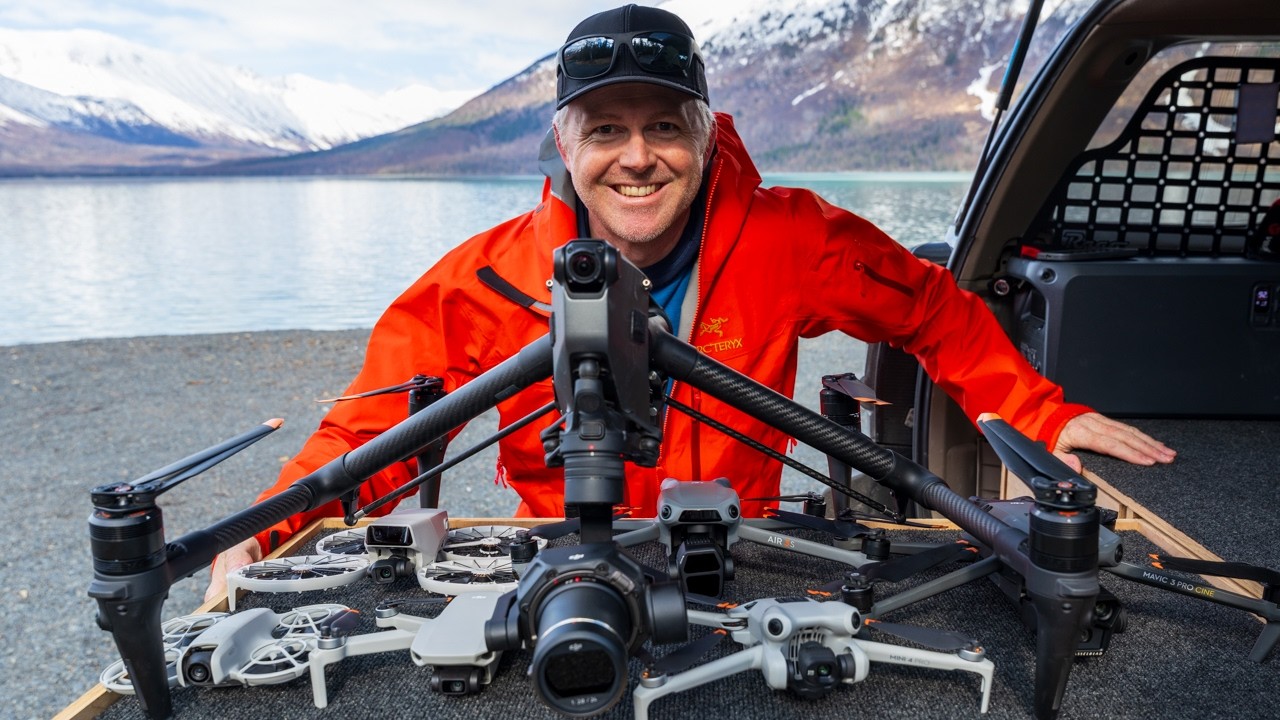
Ce film dédié à «drone» est accessible en streaming sur youtube.
Une analyse approfondie de « drone » par Jake Sloan.
Cette vidéo, mise en ligne par Jake Sloan, est disponible sur youtube. autour de « drone »:
En la découvrant récemment, nous avons constaté qu’elle engageait son audience. Le décompte de Likes indiquait: 494.
La durée de 00:19:51 secondes et le titre The Best Drone for Beginners 2025 A Complete Guide sont à prendre en compte, ainsi que les informations de l’auteur et la description qui suit :« Ce sont les meilleurs drones pour les débutants en 2025 couvrant du moins cher au professionnel Ceci est un guide complet pour acheter un drone en 2025 DJI NEO: https://geni.us/dbsbl (lien d’suggestion) DJI Mini 4k: https://geni.us/aenve (lien affilié) DJI Flip: https://geni.us/i8v2qa (lien d’suggestion) dji mini 4 pro: https://geni.us/92fwxpf (lien d’suggestion) DJI Air 3: https://geni.us/wgakm (lien d’suggestion) DJI Air 3s: https://geli.us/jlLw78z (affilié) DJI MAVIC 3 Pro: https://geni.us/potq (lien d’suggestion) DJI Inspire 3: https://geni.us/z8ikfeb (lien d’affilate) DJI Avata 2: https://geni.us/m5doiu (lien d’suggestion) et nous comparons les différences entre tous Les gens qui veulent commencer à gagner de l’argent à des drones. Nous couvrons le DJI NEO, DJI Mini 4K, DJI Mini 4 Pro, DJI Air 3 et Air 3s, DJI Mavic 3 Pro et le DJI Inspire 3. Apprenez à utiliser et à piloter votre drone pour créer des résultats professionnels en suivant mon cours ici: https://www.soloCreatoracademy.com/store Trouver mon appareil photo préféré et Drone Tech ici: https://www.amazon.com/shop/jakesloan (lien d’suggestion) J’utilise ArtList pour toute ma musique: https://geni.us/kqv9l (lien d’suggestion) Rejoignez mon Patreon pour voir le contenu en coulisses et plus encore! www.patreon.com/jakesloan connect on: Facebook: https://www.facebook.com/jakesloanpage/ Instagram: https://www.instagram.com/jakesloan/ Twitter: https://twitter.com/jakesloaninak jake sloan power 212445 Anchorage, ak n 99521 Pissert Sloan est un participant au programme Amazon Services LLC Associates, un programme publicitaire d’suggestion conçu pour fournir aux sites un moyen de gagner des frais de publicité en publicitant et en liant à Amazon.com. Cette vidéo et cette description contient des liens d’suggestion, ce qui signifie que si vous cliquez sur l’un des liens du produit, je recevrai une petite commission. 00:00 Intro 00:44 Autres fabricants de drones 01:48 DRONES STABILISÉES VS DRONES FPV (AVATA 2) 03:49 DRONES DE CONDUMER DES COMMERCIAUX BUDGT (DJI NEO VS DJI MINI 4K) Mavic 3 Pro) 14:53 meilleurs drones de niveau pro pour un travail professionnel de niveau supérieur (DJI Mavic 3 vs Inspire 3) 16:58 Vitesse de plage et différences de durée de vie de la batterie 19:21. ».
Grâce à ses fonctionnalités avancées, youtube permet aux utilisateurs d’accéder à un large éventail de contenus tout en garantissant sécurité et confidentialité.
Professionnelles Entreprise de Drone : Des Solutions Aériennes
Les drones professionnels ont eu un impact majeur sur divers secteurs en France. Que l’on se serve de ces dispositifs pour la photographie aérienne, l’analyse de l’urbanisme ou la cartographie des zones inondables, ils offrent des points de vue inédits avec une précision et une efficacité supérieures. Dans le contexte actuel, faire appel à une entreprise de drone est une solution incontournable pour répondre aux besoins des particuliers, des collectivités et des entreprises.
Un drone professionnel peut, grâce aux innovations technologiques, réaliser des missions diverses avec une grande exactitude. On l’utilise pour l’inspection de bâtiments, la surveillance de chantiers, la cartographie de terrains ainsi que pour la réalisation de films et productions audiovisuelles. Afin de garantir un travail de qualité, il est indispensable de solliciter des pilotes formés et certifiés par la DGAC.
Les inspections techniques peuvent être effectuées en toute sécurité grâce à un drone. Cet outil est utilisé pour examiner l’état des infrastructures, identifier d’éventuels défauts et optimiser la gestion des risques. La photographie aérienne permet d’obtenir des images et vidéos en haute définition, parfaites pour des projets de communication, le tournage de films ou le suivi de chantiers. La cartographie et la modélisation offrent la possibilité de recréer des structures en 3D et de réaliser des relevés topographiques détaillés.
Pour être un pilote de drone professionnel, il est nécessaire d’avoir une certification délivrée par la DGAC. Il est important que la formation inclue la gestion des vols en zones spécifiques, la maîtrise des réglementations et le respect des protocoles de sécurité. L’acquisition de ces compétences assure la réalisation de missions conformes à la loi et répond aux exigences des clients.
SupraDrone est un expert français dans le domaine des services de drone professionnel. Présent dans plusieurs régions et départements en France, il gère l’ensemble des formalités administratives liées aux vols de drones. SupraDrone prend en charge les autorisations en partenariat avec la DGAC, les services des préfectures et les mairies, tout en assurant la conformité réglementaire avant chaque mission.
Une fois les formalités achevées, SupraDrone déploie ses opérateurs de drone locaux pour fournir des services en adéquation avec les attentes des clients. Que ce soit pour une production audiovisuelle, une inspection technique ou une mission de cartographie, chaque projet est confié à un pilote qualifié. En raison de cette structure, l’entreprise assure une intervention rapide et efficace, offrant un soutien personnalisé dans chaque région. En intégrant savoir-faire technique et gestion allégée, SupraDrone se positionne comme un acteur majeur dans le domaine du drone professionnel en France.
Basé à Paris, SupraDrone collabore étroitement avec la DGAC et les services administratifs pour gérer les autorisations de vol. Son implantation en régions lui permet d’assurer des interventions en moins de 24 heures avec des télépilotes expérimentés. Plus d’informations
Ce lien vous permet de voir la vidéo sur youtube :
la source: Cliquer ici
#Drone #Beginners #Complete #Guide
Retranscription des paroles de la vidéo: So, if you’ve been wondering which drone to buy in 2025, have no fear. Today, we’re going to go through all the drones that DJI makes and figure out which one might be the right drone for you if you’re looking to get into drones or if you’re looking to upgrade your drone. We’re going to go through and break down the differences between all of these drones. There’s a lot. And just in case you’re wondering, DJI isn’t sponsoring this video. In fact, I’ve purchased all but two of the drones on this table. And oddly enough, the ones that DJI has sent me are a couple of the cheaper ones. Uh, I will tell you which ones those are, but nobody’s sponsoring this video. Nobody paid me for this video or anything like that. These are just the drones that I either use professionally or drones that I purchased to review on YouTube. There are other manufacturers of decent drones out there. One is Autel, but I just have never got my hands on any Autel drones. And so, they’re kind of hit or miss as well from what I hear. can’t speak to that personally, but and then there’s also Hover Air, which has been making quite a splash in follow drones, which would be similar to Flip and Neo here. And then there’s also VFly, which recently released their Vfly copter mini, which is a sub249 g copter that I would love to biccopter, which I would love to get my hands on, but we’ll have to wait and see. And we’re going to break this video down into three different parts, which are the consumer drones or the beginner drones, which are probably what most of you came here to see. And then we’re going to move into the proumer drones which are still affordable, better image quality, maybe better flight handling, uh some other characteristics in there. And then we’ll also break down into the professional drones, which are the drones that I use to shoot big budgets or big productions, including movies, TV shows. And by the end of this video, you should be able to decide which drone is going to be the right drone for you. But before we start off with consumer drones, we need to talk about the different styles of drones. Now, you’ve got the regular normal GPS stabilized drones, and then you’ve also got FPV drones. The Evvada 2 and the Neo can both fly as FPV drones, which essentially means you use some goggles and you can fly and get the feeling of flight because you’re actually viewing everything through this camera here and it’s in like VR goggles. So, if you’re wanting to experience the feeling of flight and the fun of flight, then FPV is a great way to go. the Neo, which is a super inexpensive drone, and honestly probably the one I would recommend that anybody who’s just wanting to see if they want to get into drones get because it’s inexpensive, because it does FPV, and then it also does some of the tracking modes and it also does photos and all of that, the Neo is a great place to start. But if you’re wanting to jump into a little bit higher end of FPV or a little bit more robust end of FPV, including some professional work, which I’ve done with the Evata 2, then jumping into the Evat 2 is a good place to go. The Evvada 2 is a great FPV drone. It’s safe. It has all of the safe features or the uh safety features that DJI builds in, including a pause button in case you’re getting into trouble and you want to pause. The Evvada will just stop and hover where it is until you’re ready to continue. And it can be flown with goggles. It can be flown with a regular controller or this uh stick controller thing that works pretty intuitively if you’ve never flown drones before. Uh and the Evat 2 is a great FPV drone. Now, there’s a couple of things that the Avat does not do well, and that’s one is photos. Actually, that’s the main thing is photos. um it can take photos, but because it’s an FPV drone, and because this camera only has a two-way stabilized gimbal like this right here, then the problem is if you’re flying in wind, the drone is going to pitch sideways to counter for the wind coming this way, and you’re not going to get great photos. So, if you want to do photo stuff, I don’t recommend the Evvada. And that brings us to the most inexpensive consumer drones that DJI makes, the Neo, which, like I said before, can do FPV. The Neo is kind of a catch-all. It’ll do just about everything. You can fly it with no remote at all, which is kind of cool. You can use just your phone if you want to, and you can record audio from your phone that then can synchronize to the fly files from the drone. So then you can have audio on your drone file, which is also very cool and one of only two drones that does that. But the Neo will do a lot of things. The uh the other one that’s inexpensive that I recommend or would talk about is the Mini 4K, which is also a great little drone if you’re wanting to jump into. I think it’s about 300 bucks, so it’s a little more than the Neo, but the Mini 4K is more the classic stabilized drone. It has a threeaxis stabilized gimbal. These both have essentially the same sort of video and photo specs, 12 megapixel stills or 4K video, but you are limited to 4K normal. You don’t get any sort of log modes or anything like that. You just get pretty much a very standard photo and a very standard video. Not that either one of them are bad, but they are somewhat limited in that aspect. But again, if you’re just wanting to capture memories of your family or you out on a trip somewhere where you travel or, you know, something you’re doing for fun, then the Mini 4K and the Neo are both really great options. And again, I really do recommend either one of these if you’re not wanting to invest a lot of money, but you want to jump into maybe testing out the waters and seeing what drones are like and how they might fit into your life, then this is a great way to go because you’re not spending a lot of money and you’re also not risking a lot. Now, while both Neo and the Mini4K have similar quick shots, one big thing that differentiates the two, other than the Neo can do FPV style flights, is that the Neo can also track from behind and from in front. Very basic, very limited, but it can track. The Mini 4K won’t track and follow you through a scene. One more thing about the Mini 4K and the Neo is they have no obstacle avoidance. While they do have some smart features, some quick shots and stuff like that, they do not have any obstacle avoidance, so you need to be very cautious. Now, I don’t use obstacle avoidance normally anyway, but you may want to, and that’s where we jump into the Flip and the Mini4 Pro, which are essentially the bigger brothers of both of these drones. The Mini4 Pro actually has 360° obstacle avoidance, and it will film in a much better quality DLOG M. It also will film just much better quality video and photos anyway because it has a better sensor. Whereas the Flip also has that same sensor and will also record in Dlog M and will take those better photos, but they’re a little different in how they operate. The Flip is much more like the Neo. You can fly it with no remote at all. You can fly it with your phone or you can fly it with a regular moan. It does not have any sort of FPV capability, but it does give you a lot of those options for how you want to fly it. And again, actually, all of these drones are under 249 g. So, the Flip though does come in at a higher price of I think we’re around $700. Prices are changing a lot lately, so you know, the actual links down in the description will take you to the most current prices. But, uh, Flip is a great drone if you’re wanting to stand under 249 g, but get a lot of smart features. Although, it only has forward- facing obstacle avoidance. So, uh, you need to be aware of that. But, it does have these uh, duct covers or protections so that you have a harder time damaging the drone if you crash. That being said, I’ve crashed this several times. And this is one of the only drones uh, DJI sent me. The other one is the Mini 4K. Everything else I bought and paid for myself. Then we come to the Mini4 Pro, which is the I’d say highest tier of consumer level drone. And at some point, I’m sure in 2025, maybe we’ll see a Mini 5 Pro, but the Mini4 Pro is a fantastic drone. The difference between uh the Flip and the Mini4 Pro is the Mini4 Pro can handle wind a lot better because it doesn’t have prop guards. It has open props, which means it just doesn’t have to fight as hard against the wind. And while the Mini 4 Pro will give you these will both give you about the same amount of flight time, 28 27 minutes, the Mini4 Pro, you can actually get a heavier battery that makes the drone over 249 g, but it will give you up to 37 36 minutes. Now, one big feature and one reason why to why you might want to consider the miniseries is if you do a lot of posting on social media, the minieries gimbal will actually rotate 90° and give you a true vertical video, which gives you a wider field of view and gives you a full 4K field of view. A lot of these other drones will do vertical video except for the Mini 4K, but they are cropping in on the sensor and giving you a 2.7 vertical video. So, if you do a lot of vertical video, the Mini 4K is actually one of the best or the uh sorry, the Mini4 Pro and the Mini3 series are some of the best drones that DJI offers because they actually will give you true vertical 4K video and it’s fantastic. Now, while these tiny under 249 g are amazing, especially from a regulatory standpoint because a lot of times you don’t have to register them or if you’re in Europe, it’s a lot less restricted. You still do need to obey all the rules, but they are really nice and especially for travel or hiking or backpacking is super nice because they are super small and very very lightweight. The downside of that is that if you get into wind and you’re filming close to something like yourself, you will notice it in the footage because those drones have to fight a lot harder in wind. And that’s where we come to the proumer starting to get into prolevel drones which are here the Air3 or the Air3s and the Mavic 3 Pro which is probably soon to be replaced by the Mavic 4. And can we just say that if it’s replaced by the Mavic 4 in the next month or 2 months or whatever that the Mavic 4 is probably better in every way than the Mavic 3 Pro was and that you will get as good or better performance in almost every way. And so then if you’re going to go for a Mavic 3 and you can’t find one, probably just go for the Mavic 4. One of the biggest advantages of these larger drones is that they’re bigger, heavier, they have much more power. So that means they are faster. Whereas all of those mineries drones top out at between 17 to 36 m an hour is about as fast as you can get them going in the best of conditions. These ones will fly between 40 up to 46 or even 60 mph in the case of the Air3s. So, they are much faster, which also means they can handle a lot more wind. But the biggest advantage that the Air3, Air3S, and Mavic 3 Pro have over any of the other drones is that they have multiple cameras and multiple focal lengths. The Air3 has a dual camera system and the Air3S has a dual camera system where you get this 24mm wide camera and then a 70mm kind of telephoto camera which is super fun and really great to have if you’re wanting to punch a little closer without actually getting the drone a little too close. You can get these really great parallax shots. You can just do some really creative things with that 70mm camera. Now, on the Air3 and the Air3s, both those cameras are capable of filming 4K up to 60 frames a second. You can do 4K 100 or 120 depending on which drone you’re using. And they’re both capable of taking 48 megapixel stills, except the Air3s can actually take really beautiful 50 megapixel stills with the main camera and then 48 megapixels with the telephoto camera. But here is where the Mavic 3 separates itself from the rest. It has a triple camera system. So you get this incredibly beautiful main camera at 24 millimeters. It’s a four third sensor which gives you 5.1K resolution or 20 megapixel stills. And in the video modes and photo modes, it’s backed by the Hasselblad color science which is spectacular. It comes out with these beautifully detailed, really rich but very natural looking video and photos on that main camera. Now the second camera is just like the A3. It has a 70 millimeter field of view, so you get these really great telephoto lengths. It’s become one of my favorite cameras to shoot with in drones just because you have the option of getting these really different looks and really cool parallax u effects when you’re moving the drone around. But the Mavic 3 also has this third camera which is 166 millimeter camera. And that while it’s not as usable, the quality is not as good and it’s somewhat limited because of the aperture, it does give you some very cool effects. In fact, I filmed an entire video just using that lens on the Mavic 3 for fun because it gives you these wild super telephoto looks like you really could only get from a helicopter up to this point. But with that lens on the drone, you can get these really cool, really zoomed in that are incredibly different to see from a proumer drone. The Mavic 3 also has one massive advantage over any of the other drones I’ve mentioned so far, and that’s that the main camera has a variable aperture, which means you don’t need to be quite as precise with ND filters, or you can make adjustments to the exposure while you’re in flight. The one downside of the Air3 and the Mavic 3 series is they’re larger and heavier. So depending on where you are, that might mean different regulations come into play, but that also means you’re carrying more with you. As far as flight time and handling, they both have 360 obstacle avoidance. They both have really good active track systems. The Air3 and the Air3S definitely is on another level from the Mavic 3 because they’re a lot newer, but they both do track really well. They both have a lot of smart features just like all of the rest of the drones, and they both have insane range. But in one difference between the Air3 and the Air3S and the Mavic 3 is that your flight time differs somewhat drastically. In the Mavic 3, you’ll get 25 28 maybe 30 minutes depending on how you’re flying. Whereas with the Air3, you’re going to be more in that 36 minute 37 minute flight range. Again, depending on how you’re flying and the conditions. Hey, real quick. If you’re enjoying or getting value out of this video, then consider subscribing. I go out and test and compare equipment in the most real world conditions I can find here in Alaska where I live and I give you tips and tutorials on how to use it. And then we come to the professional level which would be the Mavic 3 Cine comes in about $5,000 a little under $5,000 and the Inspire 3 which is currently the only Netflix approved like offtheshelf drone that you can purchase but you know whatever. So, the reason the Cinei is a good professional drone is it has an SSD and will give you ProRes, which lots of editing houses and colorists want ProRes because it gives you a lot of detail, a lot of color fidelity, and they can edit it really well. Uh, that being said, this which has a full-frame camera, biggest advantage of this is is that it unlocks features like being able to dual operate, which allows you to get really wild shots. And because it’s full-frame and shoots 8K, ProRes, RAW, all that stuff, it can do really well in low light and give you some spectacular lowlight imagery. And it just gives you a lot of options for ways to film, including being able to use different lenses and have different focal lengths all built into the same full-frame 8K camera, which is insane. Oddly enough though, it actually has some of the worst battery life. Not surprising, I guess, considering the size of this drone, but it only flies for about 20 minutes before you got to change batteries. And because you’re going to invest between 20 and $30,000 to buy the Inspire 3 and to operate it, you know, where it needs to be to be able to film and fly and do everything you need to do. Um, this is not something you’re going to buy unless you really are doing and earning some good amount of money with this. Same thing with the Mavic 3 Cine. I don’t think it’s necessary unless you’re earning a good amount of money and you have people that are asking for that level of footage off of a drone. That being said, I have used the Mavic 3 way more and earned way more money with it than I have with the Inspire 3. Um, but I have had jobs that demanded this level and I have jobs coming up this year that demand this level and so that’s why I bought it. But it is a massive investment and not for most people. Curious to see what the Mavic 4 is going to bring. And now that my camera battery is dying, we’ve got to hurry this up and finish this up. But there is something to be said for range, speed, battery life. Uh battery life will vary a fair amount. Anywhere from like 15 20 15 to 16 minutes on this to about the same on this. Probably about 20 on this where you can get more like 25 26 on these two. Unless you’re using the heavier duty or heavier batteries that make this above 249 g on the Mini series, then you’re going to be looking at like 36 minutes. Both of these drones offer about 35 36 minutes depending on how you’re flying and all of them depending on the conditions you’re operating in. Now, a lot of the drones, a lot of the newer drones enable you to fly with this RC 2, which I highly recommend because having a screen built in, if you fly a lot, is so much nicer and so much easier than the kind that you have to put your phone into. That being said, the Mini 4K only works with this remote. But this remote here, the RC2, works with all of these except the Mini 4K and the Mavic 3. I’m assuming this is going to work with the Mavic 4 as well, but getting the internal screen, absolutely worth the $150 upgrade or whatever it is because of not having to mess with your phone. Now, when it comes to range, this is something that has been talked about a lot because it used to be drones had an issue with range. Now, that really isn’t an issue. All of these drones will go well beyond your line of sight, which in most places you legally have to keep the drone within your line of sight. But the the reason that it is important to pay attention to range is because when you’re in congested areas where there’s a lot of other competing RF signals, it will give you a stronger signal link to the drone. So the Neo or the Flip, if you’re flying it with your phone, you are not going to get very much range because you have a very very short uh communication distance between your phone and the drone. But as soon as you switch to a regular remote, you’re going to get a lot more range. In fact, more range than either one of those probably should ever go away from you. But, uh, range really isn’t an issue anymore. It’s more about battery life. And that honestly, if you’re getting anywhere near 20 something minutes per battery, that is plenty. Get a few extra batteries, get the FlyMore kit, and you will be good to go. If you’re wanting to check any of these drones out, they’re all linked down in the description, and those are affiliate links, so they will help support this channel and help me make more videos like this. But next, you’re going to want to watch this video right here. I’ll see you over there. As always, if you have questions, ask me in the comments below or join my live stream, which happens most Wednesday nights at 400 p.m. Alaska time, 8:00 p.m. Eastern. We can have more of a conversation. I can answer questions that maybe I didn’t get to in this video. I will um I’ll see you again soon in the next one. Cheers. .
Déroulement de la vidéo:
0.08 So, if you&;ve been wondering which drone
0.08 to buy in 2025, have no fear. Today,
0.08 we&;re going to go through all the drones
0.08 that DJI makes and figure out which one
0.08 might be the right drone for you if
0.08 you&;re looking to get into drones or if
0.08 you&;re looking to upgrade your drone.
0.08 We&;re going to go through and break down
0.08 the differences between all of these
0.08 drones. There&;s a lot. And just in case
0.08 you&;re wondering, DJI isn&;t sponsoring
0.08 this video. In fact, I&;ve purchased all
0.08 but two of the drones on this table. And
0.08 oddly enough, the ones that DJI has sent
0.08 me are a couple of the cheaper ones. Uh,
0.08 I will tell you which ones those are,
0.08 but nobody&;s sponsoring this video.
0.08 Nobody paid me for this video or
0.08 anything like that. These are just the
0.08 drones that I either use professionally
0.08 or drones that I purchased to review on
0.08 YouTube. There are other manufacturers
0.08 of decent drones out there. One is
0.08 Autel, but I just have never got my
0.08 hands on any Autel drones. And so,
0.08 they&;re kind of hit or miss as well from
0.08 what I hear. can&;t speak to that
0.08 personally, but and then there&;s also
0.08 Hover Air, which has been making quite a
0.08 splash in follow drones, which would be
0.08 similar to Flip and Neo here. And then
0.08 there&;s also VFly, which recently
0.08 released their Vfly copter mini, which
0.08 is a sub249 g copter that I would love
0.08 to biccopter, which I would love to get
0.08 my hands on, but we&;ll have to wait and
0.08 see. And we&;re going to break this video
0.08 down into three different parts, which
0.08 are the consumer drones or the beginner
0.08 drones, which are probably what most of
0.08 you came here to see. And then we&;re
0.08 going to move into the proumer drones
0.08 which are still affordable, better image
0.08 quality, maybe better flight handling,
0.08 uh some other characteristics in there.
0.08 And then we&;ll also break down into the
0.08 professional drones, which are the
0.08 drones that I use to shoot big budgets
0.08 or big productions, including movies, TV
0.08 shows. And by the end of this video, you
0.08 should be able to decide which drone is
0.08 going to be the right drone for you. But
0.08 before we start off with consumer
0.08 drones, we need to talk about the
0.08 different styles of drones. Now, you&;ve
0.08 got the regular normal GPS stabilized
0.08 drones, and then you&;ve also got FPV
0.08 drones. The Evvada 2 and the Neo can
0.08 both fly as FPV drones, which
0.08 essentially means you use some goggles
0.08 and you can fly and get the feeling of
0.08 flight because you&;re actually viewing
0.08 everything through this camera here and
0.08 it&;s in like VR goggles. So, if you&;re
0.08 wanting to experience the feeling of
0.08 flight and the fun of flight, then FPV
0.08 is a great way to go. the Neo, which is
0.08 a super inexpensive drone, and honestly
0.08 probably the one I would recommend that
0.08 anybody who&;s just wanting to see if
0.08 they want to get into drones get because
0.08 it&;s inexpensive, because it does FPV,
0.08 and then it also does some of the
0.08 tracking modes and it also does photos
0.08 and all of that, the Neo is a great
0.08 place to start. But if you&;re wanting to
0.08 jump into a little bit higher end of FPV
0.08 or a little bit more robust end of FPV,
0.08 including some professional work, which
0.08 I&;ve done with the Evata 2, then jumping
0.08 into the Evat 2 is a good place to go.
0.08 The Evvada 2 is a great FPV drone. It&;s
0.08 safe. It has all of the safe features or
0.08 the uh safety features that DJI builds
0.08 in, including a pause button in case
0.08 you&;re getting into trouble and you want
0.08 to pause. The Evvada will just stop and
0.08 hover where it is until you&;re ready to
0.08 continue. And it can be flown with
0.08 goggles. It can be flown with a regular
0.08 controller or this uh stick controller
0.08 thing that works pretty intuitively if
0.08 you&;ve never flown drones before. Uh and
0.08 the Evat 2 is a great FPV drone. Now,
0.08 there&;s a couple of things that the Avat
0.08 does not do well, and that&;s one is
0.08 photos. Actually, that&;s the main thing
0.08 is photos. um it can take photos, but
0.08 because it&;s an FPV drone, and because
0.08 this camera only has a two-way
0.08 stabilized gimbal like this right here,
0.08 then the problem is if you&;re flying in
0.08 wind, the drone is going to pitch
0.08 sideways to counter for the wind coming
0.08 this way, and you&;re not going to get
0.08 great photos. So, if you want to do
0.08 photo stuff, I don&;t recommend the
0.08 Evvada. And that brings us to the most
0.08 inexpensive consumer drones that DJI
0.08 makes, the Neo, which, like I said
0.08 before, can do FPV. The Neo is kind of a
0.08 catch-all. It&;ll do just about
0.08 everything. You can fly it with no
0.08 remote at all, which is kind of cool.
0.08 You can use just your phone if you want
0.08 to, and you can record audio from your
0.08 phone that then can synchronize to the
0.08 fly files from the drone. So then you
0.08 can have audio on your drone file, which
0.08 is also very cool and one of only two
0.08 drones that does that. But the Neo will
0.08 do a lot of things. The uh the other one
0.08 that&;s inexpensive that I recommend or
0.08 would talk about is the Mini 4K, which
0.08 is also a great little drone if you&;re
0.08 wanting to jump into. I think it&;s about
0.08 300 bucks, so it&;s a little more than
0.08 the Neo, but the Mini 4K is more the
0.08 classic stabilized drone. It has a
0.08 threeaxis stabilized gimbal. These both
0.08 have essentially the same sort of video
0.08 and photo specs, 12 megapixel stills or
0.08 4K video, but you are limited to 4K
0.08 normal. You don&;t get any sort of log
0.08 modes or anything like that. You just
0.08 get pretty much a very standard photo
0.08 and a very standard video. Not that
0.08 either one of them are bad, but they are
0.08 somewhat limited in that aspect. But
0.08 again, if you&;re just wanting to capture
0.08 memories of your family or you out on a
0.08 trip somewhere where you travel or, you
0.08 know, something you&;re doing for fun,
0.08 then the Mini 4K and the Neo are both
0.08 really great options. And again, I
0.08 really do recommend either one of these
0.08 if you&;re not wanting to invest a lot of
0.08 money, but you want to jump into maybe
0.08 testing out the waters and seeing what
0.08 drones are like and how they might fit
0.08 into your life, then this is a great way
0.08 to go because you&;re not spending a lot
0.08 of money and you&;re also not risking a
0.08 lot. Now, while both Neo and the Mini4K
0.08 have similar quick shots, one big thing
0.08 that differentiates the two, other than
0.08 the Neo can do FPV style flights, is
0.08 that the Neo can also track from behind
0.08 and from in front. Very basic, very
0.08 limited, but it can track. The Mini 4K
0.08 won&;t track and follow you through a
0.08 scene. One more thing about the Mini 4K
0.08 and the Neo is they have no obstacle
0.08 avoidance. While they do have some smart
0.08 features, some quick shots and stuff
0.08 like that, they do not have any obstacle
0.08 avoidance, so you need to be very
0.08 cautious. Now, I don&;t use obstacle
0.08 avoidance normally anyway, but you may
0.08 want to, and that&;s where we jump into
0.08 the Flip and the Mini4 Pro, which are
0.08 essentially the bigger brothers of both
0.08 of these drones. The Mini4 Pro actually
0.08 has 360° obstacle avoidance, and it will
0.08 film in a much better quality DLOG M. It
0.08 also will film just much better quality
0.08 video and photos anyway because it has a
0.08 better sensor. Whereas the Flip also has
0.08 that same sensor and will also record in
0.08 Dlog M and will take those better
0.08 photos, but they&;re a little different
0.08 in how they operate. The Flip is much
0.08 more like the Neo. You can fly it with
0.08 no remote at all. You can fly it with
0.08 your phone or you can fly it with a
0.08 regular moan. It does not have any sort
0.08 of FPV capability, but it does give you
0.08 a lot of those options for how you want
0.08 to fly it. And again, actually, all of
0.08 these drones are under 249 g. So, the
0.08 Flip though does come in at a higher
0.08 price of I think we&;re around $700.
0.08 Prices are changing a lot lately, so you
0.08 know, the actual links down in the
0.08 description will take you to the most
0.08 current prices. But, uh, Flip is a great
0.08 drone if you&;re wanting to stand under
0.08 249 g, but get a lot of smart features.
0.08 Although, it only has forward- facing
0.08 obstacle avoidance. So, uh, you need to
0.08 be aware of that. But, it does have
0.08 these uh, duct covers or protections so
0.08 that you have a harder time damaging the
0.08 drone if you crash. That being said,
0.08 I&;ve crashed this several times. And
0.08 this is one of the only drones uh, DJI
0.08 sent me. The other one is the Mini 4K.
0.08 Everything else I bought and paid for
0.08 myself. Then we come to the Mini4 Pro,
0.08 which is the I&;d say highest tier of
0.08 consumer level drone. And at some point,
0.08 I&;m sure in 2025, maybe we&;ll see a Mini
0.08 5 Pro, but the Mini4 Pro is a fantastic
0.08 drone. The difference between uh the
0.08 Flip and the Mini4 Pro is the Mini4 Pro
0.08 can handle wind a lot better because it
0.08 doesn&;t have prop guards. It has open
0.08 props, which means it just doesn&;t have
0.08 to fight as hard against the wind. And
0.08 while the Mini 4 Pro will give you these
0.08 will both give you about the same amount
0.08 of flight time, 28 27 minutes, the Mini4
0.08 Pro, you can actually get a heavier
0.08 battery that makes the drone over 249 g,
0.08 but it will give you up to
0.08 37 36 minutes. Now, one big feature and
0.08 one reason why to why you might want to
0.08 consider the miniseries is if you do a
0.08 lot of posting on social media, the
0.08 minieries gimbal will actually rotate
0.08 90° and give you a true vertical video,
0.08 which gives you a wider field of view
0.08 and gives you a full 4K field of view. A
0.08 lot of these other drones will do
0.08 vertical video except for the Mini 4K,
0.08 but they are cropping in on the sensor
0.08 and giving you a 2.7 vertical video. So,
0.08 if you do a lot of vertical video, the
0.08 Mini 4K is actually one of the best or
0.08 the uh sorry, the Mini4 Pro and the
0.08 Mini3 series are some of the best drones
0.08 that DJI offers because they actually
0.08 will give you true vertical 4K video and
0.08 it&;s fantastic. Now, while these tiny
0.08 under 249 g are amazing, especially from
0.08 a regulatory standpoint because a lot of
0.08 times you don&;t have to register them or
0.08 if you&;re in Europe, it&;s a lot less
0.08 restricted. You still do need to obey
0.08 all the rules, but they are really nice
0.08 and especially for travel or hiking or
0.08 backpacking is super nice because they
0.08 are super small and very very
0.08 lightweight. The downside of that is
0.08 that if you get into wind and you&;re
0.08 filming close to something like
0.08 yourself, you will notice it in the
0.08 footage because those drones have to
0.08 fight a lot harder in wind. And that&;s
0.08 where we come to the
0.08 proumer starting to get into prolevel
0.08 drones which are here the Air3 or the
0.08 Air3s and the Mavic 3 Pro which is
0.08 probably soon to be replaced by the
0.08 Mavic 4. And can we just say that if
0.08 it&;s replaced by the Mavic 4 in the next
0.08 month or 2 months or whatever that the
0.08 Mavic 4 is probably better in every way
0.08 than the Mavic 3 Pro was and that you
0.08 will get as good or better performance
0.08 in almost every way. And so then if
0.08 you&;re going to go for a Mavic 3 and you
0.08 can&;t find one, probably just go for the
0.08 Mavic 4. One of the biggest advantages
0.08 of these larger drones is that they&;re
0.08 bigger, heavier, they have much more
0.08 power. So that means they are faster.
0.08 Whereas all of those mineries drones top
0.08 out at between 17 to 36 m an hour is
0.08 about as fast as you can get them going
0.08 in the best of conditions. These ones
0.08 will fly between 40 up to 46 or even 60
0.08 mph in the case of the Air3s. So, they
0.08 are much faster, which also means they
0.08 can handle a lot more wind. But the
0.08 biggest advantage that the Air3, Air3S,
0.08 and Mavic 3 Pro have over any of the
0.08 other drones is that they have multiple
0.08 cameras and multiple focal lengths. The
0.08 Air3 has a dual camera system and the
0.08 Air3S has a dual camera system where you
0.08 get this 24mm wide camera and then a
0.08 70mm kind of telephoto camera which is
0.08 super fun and really great to have if
0.08 you&;re wanting to punch a little closer
0.08 without actually getting the drone a
0.08 little too close. You can get these
0.08 really great parallax shots. You can
0.08 just do some really creative things with
0.08 that 70mm camera. Now, on the Air3 and
0.08 the Air3s, both those cameras are
0.08 capable of filming 4K up to 60 frames a
0.08 second. You can do 4K 100 or 120
0.08 depending on which drone you&;re using.
0.08 And they&;re both capable of taking 48
0.08 megapixel stills, except the Air3s can
0.08 actually take really beautiful 50
0.08 megapixel stills with the main camera
0.08 and then 48 megapixels with the
0.08 telephoto camera. But here is where the
0.08 Mavic 3 separates itself from the rest.
0.08 It has a triple camera system. So you
0.08 get this incredibly beautiful main
0.08 camera at 24 millimeters. It&;s a four
0.08 third sensor which gives you 5.1K
0.08 resolution or 20 megapixel stills. And
0.08 in the video modes and photo modes, it&;s
0.08 backed by the Hasselblad color science
0.08 which is spectacular. It comes out with
0.08 these beautifully detailed, really rich
0.08 but very natural looking video and
0.08 photos on that main camera. Now the
0.08 second camera is just like the A3. It
0.08 has a 70 millimeter field of view, so
0.08 you get these really great telephoto
0.08 lengths. It&;s become one of my favorite
0.08 cameras to shoot with in drones just
0.08 because you have the option of getting
0.08 these really different looks and really
0.08 cool parallax u effects when you&;re
0.08 moving the drone around. But the Mavic 3
0.08 also has this third camera which is 166
0.08 millimeter camera. And that while it&;s
0.08 not as usable, the quality is not as
0.08 good and it&;s somewhat limited because
0.08 of the aperture, it does give you some
0.08 very cool effects. In fact, I filmed an
0.08 entire video just using that lens on the
0.08 Mavic 3 for fun because it gives you
0.08 these wild super telephoto looks like
0.08 you really could only get from a
0.08 helicopter up to this point. But with
0.08 that lens on the drone, you can get
0.08 these really cool, really zoomed in that
0.08 are incredibly different to see from a
0.08 proumer drone. The Mavic 3 also has one
0.08 massive advantage over any of the other
0.08 drones I&;ve mentioned so far, and that&;s
0.08 that the main camera has a variable
0.08 aperture, which means you don&;t need to
0.08 be quite as precise with ND filters, or
0.08 you can make adjustments to the exposure
0.08 while you&;re in flight. The one downside
0.08 of the Air3 and the Mavic 3 series is
0.08 they&;re larger and heavier. So depending
0.08 on where you are, that might mean
0.08 different regulations come into play,
0.08 but that also means you&;re carrying more
0.08 with you. As far as flight time and
0.08 handling, they both have 360 obstacle
0.08 avoidance. They both have really good
0.08 active track systems. The Air3 and the
0.08 Air3S definitely is on another level
0.08 from the Mavic 3 because they&;re a lot
0.08 newer, but they both do track really
0.08 well. They both have a lot of smart
0.08 features just like all of the rest of
0.08 the drones, and they both have insane
0.08 range. But in one difference between the
0.08 Air3 and the Air3S and the Mavic 3 is
0.08 that your flight time differs somewhat
0.08 drastically. In the Mavic 3, you&;ll get
0.08 25 28 maybe 30 minutes depending on how
0.08 you&;re flying. Whereas with the Air3,
0.08 you&;re going to be more in that 36
0.08 minute 37 minute flight range. Again,
0.08 depending on how you&;re flying and the
0.08 conditions. Hey, real quick. If you&;re
0.08 enjoying or getting value out of this
0.08 video, then consider subscribing. I go
0.08 out and test and compare equipment in
0.08 the most real world conditions I can
0.08 find here in Alaska where I live and I
0.08 give you tips and tutorials on how to
0.08 use it. And then we come to the
0.08 professional level which would be the
0.08 Mavic 3 Cine comes in about $5,000 a
0.08 little under $5,000 and the Inspire 3
0.08 which is currently the only Netflix
0.08 approved like offtheshelf drone that you
0.08 can purchase but you know whatever. So,
0.08 the reason the Cinei is a good
0.08 professional drone is it has an SSD and
0.08 will give you ProRes, which lots of
0.08 editing houses and colorists want ProRes
0.08 because it gives you a lot of detail, a
0.08 lot of color fidelity, and they can edit
0.08 it really well. Uh, that being said,
0.08 this which has a full-frame camera,
0.08 biggest advantage of this is is that it
0.08 unlocks features like being able to dual
0.08 operate, which allows you to get really
0.08 wild shots. And because it&;s full-frame
0.08 and shoots 8K, ProRes, RAW, all that
0.08 stuff, it can do really well in low
0.08 light and give you some spectacular
0.08 lowlight imagery. And it just gives you
0.08 a lot of options for ways to film,
0.08 including being able to use different
0.08 lenses and have different focal lengths
0.08 all built into the same full-frame 8K
0.08 camera, which is insane. Oddly enough
0.08 though, it actually has some of the
0.08 worst battery life. Not surprising, I
0.08 guess, considering the size of this
0.08 drone, but it only flies for about 20
0.08 minutes before you got to change
0.08 batteries. And because you&;re going to
0.08 invest between 20 and $30,000 to buy the
0.08 Inspire 3 and to operate it, you know,
0.08 where it needs to be to be able to film
0.08 and fly and do everything you need to
0.08 do. Um, this is not something you&;re
0.08 going to buy unless you really are doing
0.08 and earning some good amount of money
0.08 with this. Same thing with the Mavic 3
0.08 Cine. I don&;t think it&;s necessary
0.08 unless you&;re earning a good amount of
0.08 money and you have people that are
0.08 asking for that level of footage off of
0.08 a drone. That being said, I have used
0.08 the Mavic 3 way more and earned way more
0.08 money with it than I have with the
0.08 Inspire 3. Um, but I have had jobs that
0.08 demanded this level and I have jobs
0.08 coming up this year that demand this
0.08 level and
0.08 so that&;s why I bought it. But it is a
0.08 massive investment and not for most
0.08 people. Curious to see what the Mavic 4
0.08 is going to bring. And now that my
0.08 camera battery is dying, we&;ve got to
0.08 hurry this up and finish this up. But
0.08 there is something to be said for range,
0.08 speed, battery life. Uh battery life
0.08 will vary a fair amount. Anywhere from
0.08 like 15 20 15 to 16 minutes on this to
0.08 about the same on this. Probably about
0.08 20 on this where you can get more like
0.08 25 26 on these two. Unless you&;re using
0.08 the heavier duty or heavier batteries
0.08 that make this above 249 g on the Mini
0.08 series, then you&;re going to be looking
0.08 at like 36 minutes. Both of these drones
0.08 offer about 35 36 minutes depending on
0.08 how you&;re flying and all of them
0.08 depending on the conditions you&;re
0.08 operating in. Now, a lot of the drones,
0.08 a lot of the newer drones enable you to
0.08 fly with this RC 2, which I highly
0.08 recommend because having a screen built
0.08 in, if you fly a lot, is so much nicer
0.08 and so much easier than the kind that
0.08 you have to put your phone into. That
0.08 being said, the Mini 4K only works with
0.08 this remote. But this remote here, the
0.08 RC2, works with all of these except the
0.08 Mini 4K and the Mavic 3. I&;m assuming
0.08 this is going to work with the Mavic 4
0.08 as well, but getting the internal
0.08 screen, absolutely worth the $150
0.08 upgrade or whatever it is because of not
0.08 having to mess with your phone. Now,
0.08 when it comes to
0.08 range, this is something that has been
0.08 talked about a lot because it used to be
0.08 drones had an issue with range. Now,
0.08 that really isn&;t an issue. All of these
0.08 drones will go well beyond your line of
0.08 sight, which in most places you legally
0.08 have to keep the drone within your line
0.08 of sight. But the the reason that it is
0.08 important to pay attention to range is
0.08 because when you&;re in congested areas
0.08 where there&;s a lot of other competing
0.08 RF signals, it will give you a stronger
0.08 signal link to the drone. So the Neo or
0.08 the Flip, if you&;re flying it with your
0.08 phone, you are not going to get very
0.08 much range because you have a very very
0.08 short uh communication distance between
0.08 your phone and the drone. But as soon as
0.08 you switch to a regular remote, you&;re
0.08 going to get a lot more range. In fact,
0.08 more range than either one of those
0.08 probably should ever go away from you.
0.08 But, uh, range really isn&;t an issue
0.08 anymore. It&;s more about battery life.
0.08 And that honestly, if you&;re getting
0.08 anywhere near 20 something minutes per
0.08 battery, that is plenty. Get a few extra
0.08 batteries, get the FlyMore kit, and you
0.08 will be good to go. If you&;re wanting to
0.08 check any of these drones out, they&;re
0.08 all linked down in the description, and
0.08 those are affiliate links, so they will
0.08 help support this channel and help me
0.08 make more videos like this. But next,
0.08 you&;re going to want to watch this video
0.08 right here. I&;ll see you over there. As
0.08 always, if you have questions, ask me in
0.08 the comments below or join my live
0.08 stream, which happens most Wednesday
0.08 nights at 400 p.m. Alaska time, 8:00
0.08 p.m. Eastern. We can have more of a
0.08 conversation. I can answer questions
0.08 that maybe I didn&;t get to in this
0.08 video. I will um I&;ll see you again soon
0.08 in the next one. Cheers.
.