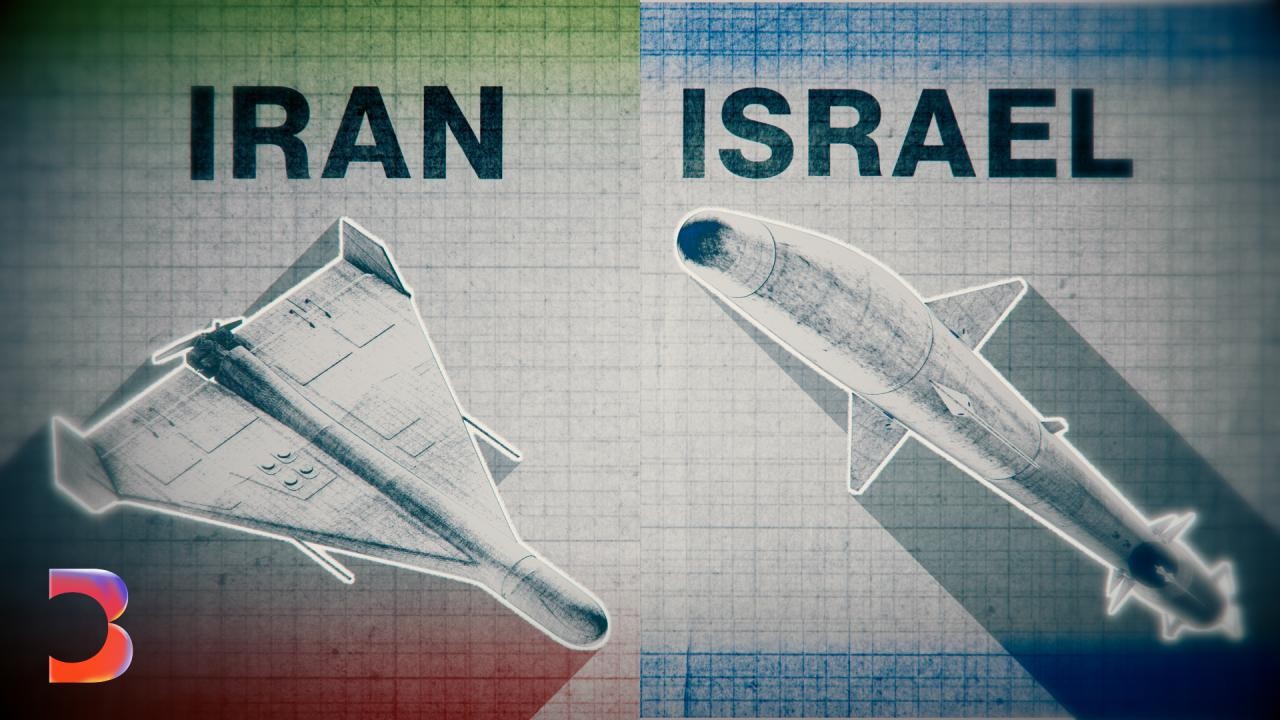
Ce film autour de «dron guerra» est en streaming sur youtube.
Bloomberg Originals décrypte pour vous le sujet de « dron guerra ».
Cette vidéo, mise en ligne par Bloomberg Originals, est disponible sur Youtube.
à propos de « dron guerra »:
Lorsque nous avons découvert cette vidéo récemment, elle suscitait de l’intérêt. Le décompte de Likes indiquait: 4056.
Le titre de cette vidéo est How Drones Are Revolutionizing the Economics of War, sa durée est de 00:06:18 secondes, et elle a été fournie par l’auteur. La description suit ci-dessous :« Israël et ses alliés, y compris les États-Unis, le Royaume-Uni et la France, ont réussi à déjouer principalement une attaque massive de drones et de missiles par l’Iran, des représailles pour une grève sur son consulat en Syrie. L’assaut sans précédent a montré combien de drones ont changé la guerre. Bien que les inquiétudes concernant la réponse d’Israël et l’escalade régionale augmentent, une chose est claire: la fabrication des drones iraniens Shahed-136 a changé l’économie de la guerre. Leur utilisation par Houthis en mer Rouge et en Russie en Ukraine illustra la nouvelle réalité, cette technologie peu coûteuse mais précise permet à toute personne qui lui soit exercée de causer des dommages asymétriques dans n’importe quel théâtre de guerre. En savoir plus sur Bloomberg.com: https://www.bloomberg.com/news/features/2024-04-08/iran-s-drone-tech-innovations-are-redefining-global-warfare?utm_medium=youtube&utm_source=bbg_original Israël sous attaque 1:42 – Warfare et drones asymétriques 2:44 – The Shahed-136 Drone 3:41 – The Economics of Drone Warfare 4:31 – Drones in the Red Sea and Ukraine 5:16 – Fournir des armées modernes ——- Comme cette vidéo? Abonnez-vous: http://www.youtube.com/bomberg?sub_confirmation=1 Obtenez un accès illimité à Bloomberg.com pour 1,99 $ / mois pour les 3 premiers mois: https://www.bloomberg.com/subscriptions?in_source=youtumiginals Bloomberg Originals propose Bold Takes pour Curious Minds sur aujourd’hui. Hébergé par des experts couvrant des histoires que vous n’avez pas vues et des points de vue que vous n’avez pas entendus, vous découvrirez des émissions cinématographiques de Data, qui enquêtent sur l’intersection des affaires et de la culture. Explorant tous les angles du changement climatique, de la technologie, de la finance, des sports et au-delà, Bloomberg Originals est des affaires comme vous ne l’avez jamais vue. Abonnez-vous à Business News, mais pas comme vous l’avez connu: des interviews exclusives, des profils fascinants, une analyse basée sur les données et les dernières innovations technologiques du monde entier. Visitez notre chaîne partenaire Bloomberg Quicktake pour Global News et Insight en un instant. ».
Cette plateforme largement adoptée permet de diffuser et de découvrir une grande diversité de vidéos sur des sujets variés, y compris des inspirations et des concepts originaux.
Les différentes manières d’utiliser les drones dans les conflits.
Le potentiel des drones dans les conflits futurs
L’essor fulgurant de la technologie annonce un avenir où les drones occuperont une place encore plus prépondérante. Des drones autonomes, enrichis d’intelligence artificielle, émergent et prennent des décisions sans intervention humaine.
En opérant de manière coordonnée, des centaines d’unités en essaims de drones pourraient bouleverser les approches militaires. En plus, la miniaturisation des technologies pourrait engendrer la conception de drones de dimensions toujours plus réduites et dissimulées, rendant leur détection et leur neutralisation plus complexes.
Les drones militaires : une transformation significative dans le paysage des guerres actuelles
Les guerres d’aujourd’hui sont profondément influencées par l’utilisation des drones. En concevant des modèles de plus en plus avancés, les grandes puissances militaires peuvent réaliser des missions de reconnaissance, de frappe et de soutien aux troupes au sol.
En tant que drone de combat américain, le MQ-9 Reaper est utilisé pour des frappes de précision. Le Bayraktar TB2 est un drone turc qui a acquis une renommée grâce à son rôle dans des conflits récents, comme en Ukraine et au Haut-Karabakh. Le drone kamikaze iranien, le Shahed-136, trouve une utilisation importante dans les conflits au Moyen-Orient et en Europe de l’Est.
Grâce à ces drones, les armées peuvent toucher des cibles distantes avec une précision impressionnante, ce qui diminue les risques encourus par les pilotes humains.
En tant que héros de guerre, les pilotes de drones se révèlent
Avec la montée en puissance des drones, une nouvelle classe de combattants a vu le jour : les pilotes de drones de guerre. Il est clair que ces opérateurs, situés à des milliers de kilomètres du champ de bataille, jouent un rôle fondamental dans le succès des opérations militaires.
Des pilotes, en réalisant des frappes décisives, se transforment en légendes, modifiant ainsi le cours des batailles. Dans les conflits modernes, le courage ne se vérifie plus uniquement sur le front, mais aussi dans la stratégie et l’habileté des pilotes de drones.
Une tendance forte : les drones FPV et kamikazes
Ces dernières années, on observe une tendance significative : les drones FPV (First Person View) modifiés sont utilisés pour transporter des explosifs. Ces petits drones, souvent dérivés de modèles civils, sont utilisés en Ukraine et permettent un pilotage en immersion avec des lunettes de réalité virtuelle. En raison de leur coût réduit et de leur efficacité, ils sont des armes redoutables pour les opérations tactiques.
Souvent, ces drones sont laissés pour compte après l’attaque, car ils sont élaborés comme des armes à usage unique. La simplicité d’utilisation de ces systèmes permet aux militaires sans compétences avancées en pilotage de les utiliser sur le champ de bataille.
Des drones civils exploités dans un contexte militaire
Les drones grand public, en particulier ceux de la marque DJI (comme le Mavic ou le Phantom), sont souvent détournés pour des missions de reconnaissance ou même d’attaque. Les soldats improvisent des bombardiers en attachant des charges explosives à ces drones.
En raison de leur accessibilité et de leur qualité, les caméras embarquées sont des outils précieux pour le renseignement et le guidage des tirs d’artillerie. Il est courant que ces drones soient vulnérables aux contre-mesures électroniques, telles que le brouillage ou le piratage.
Accédez directement à la vidéo sur Youtube grâce à ce lien :
la source: Cliquer ici
#Drones #Revolutionizing #Economics #War
Retranscription des paroles de la vidéo: Iran’s unprecedented attack on Israel made the new reality of conflict very clear: From Iran to Ukraine, this is the era of cheap drone warfare. Kyiv endured an aerial assault by Russian drones. The Kremlin seeing the biggest drone attack yet, inside Russia. Missiles, drones, a barrage of attacks in the Red Sea. Iran has started a direct attack on Israel by launching dozens of drones. Drones have changed the landscape of war. It’s like the AK-47 of 21st century warfare. They’re a feature of the modern battlefield, mostly because they’re so inexpensive and easy to make. And many of these drones can be traced back to Iran, a country under strict international sanctions. So how are drones changing the economics of warfare? This attack was a direct response to something that happened on the 1st of April when Israel bombed a building close to the Iranian embassy in Damascus. There were some very senior Iranian generals in that building who died in that attack. The Iranians had to respond. These were designed to overwhelm Israeli defenses while a separate battery of missiles, were following at the distance. So if everything had gone to plan, the missiles would have been able to penetrate those defenses. We’ve never seen a swarm this big. Scores all set off at the same time and it could be a game changer in the way war is conducted. Asymmetry is often what decides a conflict. That’s effectively when one side is more powerful than the other. Historically, at least in the modern history of warfare every technological advance has come from the technologically superior military power. So the most powerful countries got more powerful and the gap between them and the rest widened. To address this kind of mismatch, the weaker power seeks a way to catch up. An asymmetrical tool. drone warfare is a way to close the capability gap, and it’s a way to diffuse power. Drones come in a full spectrum. Most of the drones that we’re using in the West, like the Reaper drone, which has been somewhat the iconic drone that we’ve used since 9/11, which cost in the region of $30 million. At the other end of the spectrum are the drones we saw over the weekend. They are what are called kamikaze drones. All they do is carry a payload of explosives and they ram into a target and blow up. In military circles, they’re called lawnmowers on wings. People are saying that the Shahed drone is Iran’s AK 47 because it is extremely versatile and can be produced in high quantity at low cost. Now we entered into the next phase of drone warfare, which is low tech drones at large quantities. The main Iranian drone company is called Shahed Aviation Industries, which the US says is a subsidiary of the Revolutionary Guards. They have been using scores and scores of small companies to circumvent sanctions. They have their own smuggling networks globally, where they can get their hands on any sort of component part that they need. Shahed drones can be found in Syria, Russia, Ethiopia, Tajikistan and Venezuela. The Shahed-136 is the best known. It carries up to 50 kilograms of explosives and has a range of up to 2500 kilometers, which lets Iran strike targets within Israel without needing to use proxy forces in Lebanon, Gaza and elsewhere. This is where the economic consideration comes in. They cost anywhere between $20,000 and $50,000. Others are even cheaper, as little as $1,000. Each missile the Israelis were using could cost in the region of hundreds of thousands of dollars, if not millions of dollars. America and Israel together probably spent around $1.5 billion in defending against the Shahed drones, while the Shahed drones all put together probably cost the Iranians in the region of something like $3 million. You can drain your enemies military budgets by them having to restock, they’re air defenses at a very high cost. If Iran didn’t have these drones and these missiles, it would have to send jet fighters over long distances in order to attack Israel. If Israel shot down those jet fighters that would be a huge blow for Iran. Iran’s proxy in Yemen, the Houthis, have already managed to clog up trade in the Red Sea with the threat of drones and inexpensive but accurate missiles. Drones have changed the war in Ukraine too. Cheap, consumer, mainly Chinese models have been adapted to drop explosives on multimillion dollar tanks, and more sophisticated drones have been used to great effect against the Russian navy. Those drones have been key in Ukraine’s ability to destroy quite a large part of Russia’s naval fleet in the Black Sea. The US military has leaned increasingly on fewer but more sophisticated and more expensive weapon systems. All of this is provoking big rethinks about how to kit out modern armies. over time, we need to find a better way to defend against these drones at lower cost. We know that the U.S. has been developing weapons to counter the threat of drones, lasers, the use of anti-aircraft weapons. The German anti-aircraft weapons have been very effective in Ukraine, for instance. But there’s a big economic challenge here too. for defense industry, it’s more profitable to rely on the multibillion dollar research and development of sophisticated platforms where you only sell one or two or three. In other words, big defense companies don’t consider cheap drones an attractive business proposition. To change that thinking, governments would need to provide defense companies with the motivation to build the tech. I think what is needed is an incentive and a push to say we need more platforms at cheaper cost and use them in a networked way. Or. .
Déroulement de la vidéo:
4.212 Iran’s unprecedented attack on Israel
4.212 made the new reality of conflict very clear:
4.212 From Iran to Ukraine, this is the era
4.212 of cheap drone warfare.
4.212 Kyiv endured an aerial assault by Russian drones.
4.212 The Kremlin seeing the biggest
drone attack yet, inside Russia.
4.212 Missiles, drones,
a barrage of attacks in the Red Sea.
4.212 Iran has started a direct attack
on Israel by launching
4.212 dozens of drones.
4.212 Drones have changed the landscape of war.
4.212 It&;s like the AK-47
of 21st century warfare.
4.212 They&;re a feature
of the modern battlefield,
4.212 mostly because they&;re so
inexpensive and easy to make.
4.212 And many of these drones
can be traced back to Iran,
4.212 a country under strict international sanctions.
4.212 So how are drones
changing the economics of warfare?
4.212 This attack was a direct response
to something that happened
4.212 on the 1st of April when Israel bombed a building
4.212 close to the Iranian embassy in Damascus.
4.212 There were some very
senior Iranian generals
4.212 in that building who died in that attack.
4.212 The Iranians had to respond.
4.212 These were designed to overwhelm Israeli defenses
4.212 while a separate battery of missiles,
were following at the distance.
4.212 So if everything had gone to plan,
the missiles would have been able
4.212 to penetrate those defenses.
4.212 We&;ve never seen a swarm this big.
4.212 Scores all set off at the same time
4.212 and it could be a game
changer in the way war is conducted.
4.212 Asymmetry is often what decides a conflict.
4.212 That&;s effectively when one side
is more powerful than the other.
4.212 Historically, at least in the modern history of warfare
4.212 every technological advance
has come from the technologically
4.212 superior military power.
4.212 So the most powerful countries
4.212 got more powerful and the gap
between them and the rest widened.
4.212 To address this kind of mismatch,
the weaker power seeks a way to catch up.
4.212 An asymmetrical tool.
4.212 drone warfare
4.212 is a way to close the capability gap,
and it&;s a way to diffuse power.
4.212 Drones come in a full spectrum.
4.212 Most of the drones
that we&;re using in the West,
4.212 like the Reaper drone,
which has been somewhat the iconic drone
4.212 that we&;ve used since 9/11,
which cost in the region of $30 million.
4.212 At the other end of the spectrum
4.212 are the drones we saw over the weekend.
4.212 They are what are called kamikaze drones.
4.212 All they do is carry
a payload of explosives
4.212 and they ram into a target and blow up.
4.212 In military circles,
they&;re called lawnmowers on wings.
4.212 People are saying that
the Shahed drone is Iran&;s AK 47
4.212 because it is extremely versatile and can
be produced in high quantity at low cost.
4.212 Now we entered into the next phase
of drone warfare,
4.212 which is low tech drones at large quantities.
4.212 The main Iranian drone company is called
Shahed Aviation Industries, which the US
4.212 says is a subsidiary
of the Revolutionary Guards.
4.212 They have been using scores
and scores of small companies
4.212 to circumvent sanctions.
4.212 They have their own smuggling networks
4.212 globally, where they can get their hands
on any sort of component part
4.212 that they need.
4.212 Shahed drones can be found in Syria, Russia,
Ethiopia, Tajikistan and Venezuela.
4.212 The Shahed-136 is the best known.
4.212 It carries up to 50 kilograms
of explosives and has a range of up
4.212 to 2500 kilometers, which lets
Iran strike targets within Israel
4.212 without needing to use proxy
forces in Lebanon, Gaza and elsewhere.
4.212 This is where the economic consideration comes in.
4.212 They cost anywhere between
$20,000 and $50,000.
4.212 Others are even cheaper,
as little as $1,000.
4.212 Each missile the Israelis were using
could cost in the region
4.212 of hundreds of thousands of dollars,
if not millions of dollars.
4.212 America and Israel together
probably spent around $1.5 billion
4.212 in defending against the Shahed drones,
while the Shahed drones all put together
4.212 probably cost the Iranians in the region
of something like $3 million.
4.212 You can drain your enemies military budgets
4.212 by them having to restock,
they&;re air defenses at a very high cost.
4.212 If Iran didn&;t have these drones
and these missiles,
4.212 it would have to send jet fighters over
4.212 long distances in order to attack Israel.
4.212 If Israel shot down those jet fighters
4.212 that would be a huge blow for Iran.
4.212 Iran&;s proxy in Yemen,
4.212 the Houthis, have already managed
to clog up trade in the Red Sea
4.212 with the threat of drones and inexpensive
but accurate missiles.
4.212 Drones have changed the war in Ukraine too.
4.212 Cheap, consumer, mainly Chinese models
4.212 have been adapted
to drop explosives on multimillion dollar
4.212 tanks, and more sophisticated drones
have been used to great effect
4.212 against the Russian navy.
4.212 Those drones have been key in Ukraine&;s ability
4.212 to destroy quite a large part of Russia&;s
naval fleet in the Black Sea.
4.212 The US military has leaned increasingly on fewer
4.212 but more sophisticated
and more expensive weapon systems.
4.212 All of this is provoking big rethinks
about how to kit out modern armies.
4.212 over time, we need to find a better way
to defend against these drones
4.212 at lower cost.
4.212 We know that the U.S.
4.212 has been developing weapons
to counter the threat of drones,
4.212 lasers, the use of anti-aircraft weapons.
4.212 The German anti-aircraft weapons have been
very effective in Ukraine, for instance.
4.212 But there&;s a big economic challenge
here too.
4.212 for defense industry, it&;s more profitable
to rely on the multibillion dollar
4.212 research and development
of sophisticated platforms where
4.212 you only sell one or two or three.
4.212 In other words, big defense companies
4.212 don&;t consider cheap drones
an attractive business proposition.
4.212 To change that thinking, governments
would need to provide
4.212 defense companies
with the motivation to build the tech.
4.212 I think what is needed is an incentive
and a push to say
4.212 we need more platforms at cheaper cost
and use them in a networked way.
4.212 Or.
.