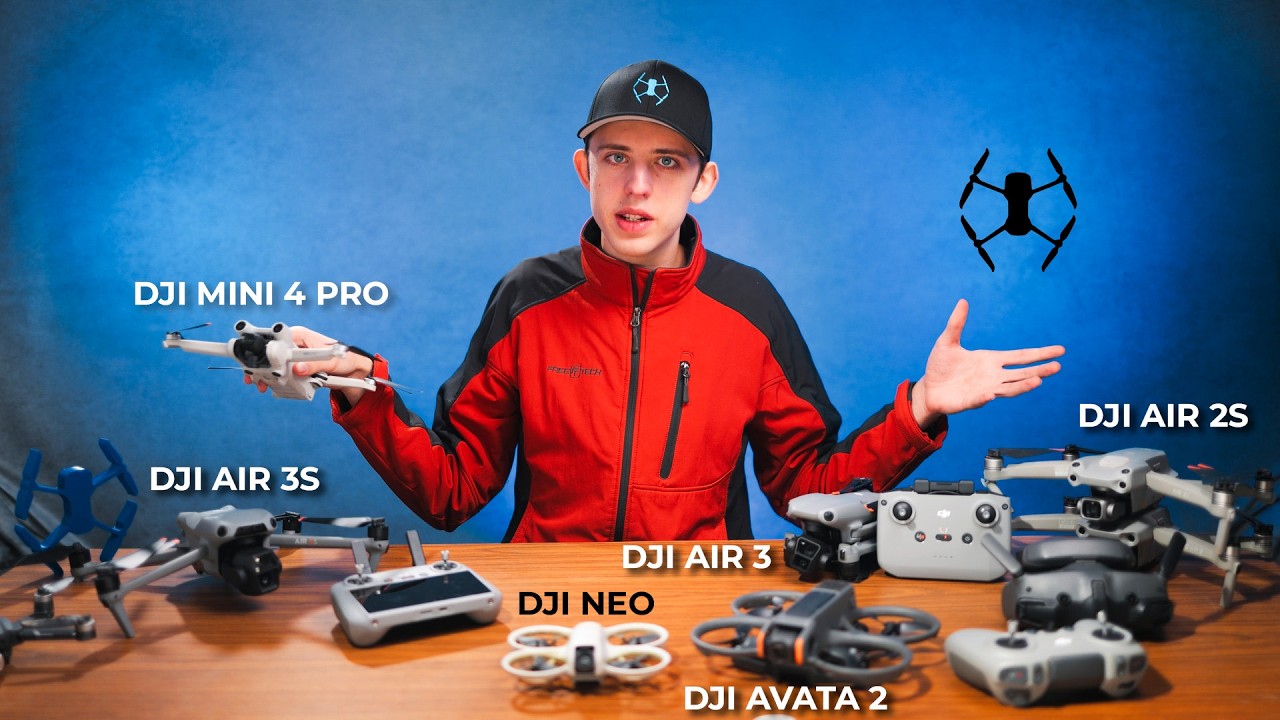
Le long-métrage sur «drone» est disponible en streaming sur youtube.
Plongez dans l’univers de « drone » avec Flying Filmmaker.
Visionnez cette vidéo postée par Flying Filmmaker sur Youtube.
mettant en avant « drone »:
Lorsque nous avons découvert cette vidéo récemment, elle suscitait de l’intérêt. Le décompte de Likes indiquait: 2774.
Notez la durée de la vidéo (00:33:42s), le titre (What Drone Should I Buy in 2025? Complete Guide (Beginner to Pro)) ainsi que l’auteur, suivis de la description :« Téléchargez mon tableau de comparaison DJI DJI gratuit »https://flyingfilmkakerpro.com/droncomisonchart?utm_source=youtube&utm_medium=youtube&utm_campaign=what+drone+Should+i+Buy+in+2025 déverrouiller instantané https://flyingfilmmakerpro.com/freetringyto/?utm_source=youtube&utm_medium=youtube&utm_campaign=what+drone+should+i+Buy+In+2025 Drone Links: dji neo – https://amzn.to/4ikrotq dji 4k- https://amzn.to/3os2tbi dji mini 3 – https://amzn.to/3zydzwn dji mini 4 pro – https://amzn.to/3osgefy dji Air 3 – https://amzn.to/4fmjqe1 dji Air 3S – https://store.dji.com/product/dji-air-3s?vid=173511 dji mavic 3 classique – https://amzn.to/41uxqnx dji mavic 3 pro – https://amzn.to/3bh10m5 dji avata 2 – https://amzn.to/4fj9uje Rejoignez le cinéaste volant pour obtenir plus de 10 heures de formation professionnelle pour le film » Pack »https://flyingfilmmakerpro.com/flying-filmmaker-luts?utm_source=youtube&utm_medium=youtube&utm_campaign=what+drone+hould+i+buy+in+2025 Apprenez comment colorer la note de vos coups comme un pro» https://flyingfilmmakerpro.com/dronecolorpro/?utm_source=youtube&utm_medium=youtube&utm_campaign=what+drone+Should+i+Buy+In+2025 Musique et sfx d’Artlist (obtenez 2 mois supplémentaires libres avec ce lien) ︎ https://artlist.io/artlist-70446/?artlist_aid=flyingfilmakaker_2889&utm_source=affiliate_p&utm_medium=flyingfilmakaker_2889&utm_campaign=flyingfilmmaker_2889 aborder » https://www.youtube.com/channel/UC0h_KX-PqXYfFDy6Fe_UiCA?sub_confirmation=1 Instagram » https://www.instagram.com/flying_filmmaker/ In this video I compare all of DJI’s recent drones, explain what features matter and which one’s don’t, and give my top recommendations for the best drones in each price gamme et pour différentes utilisations. Je peux gagner une petite commission pour les achats effectués via les liens ci-dessus. ».
Avec son immense catalogue de vidéos, youtube donne aux utilisateurs la possibilité d’explorer des contenus originaux et enrichissants tout en respectant leur confidentialité.
Drone : Des Solutions Aériennes Professionnelles
La révolution des drones professionnels a touché de nombreux secteurs en France. Que ce soit pour la collecte de données géospatiales, l’évaluation de sites ou la planification urbaine, ces outils permettent d’accéder à des perspectives uniques avec une précision et une efficacité accrues. Dans le contexte actuel, faire appel à une entreprise de drone est une solution incontournable pour répondre aux besoins des particuliers, des collectivités et des entreprises.
Un drone professionnel est en mesure de réaliser des missions variées grâce aux progrès technologiques, tout en assurant une grande précision. Utilisé pour l’inspection de bâtiments, la surveillance de chantiers, la cartographie de terrains et la réalisation de films et productions audiovisuelles, cet appareil est très pratique. Pour garantir un travail de qualité, il est impératif de solliciter des pilotes formés et certifiés par la DGAC.
Il est possible de réaliser des inspections techniques en toute sécurité avec un drone. Il est employé pour évaluer l’état des infrastructures, repérer d’éventuels défauts et renforcer la gestion des risques. Les images aériennes offrent des vidéos et photos en haute définition, idéales pour des projets de communication, le tournage de films ou le suivi de chantiers. En s’appuyant sur la cartographie et la modélisation, il est possible de créer des modèles 3D de bâtiments et d’obtenir des relevés topographiques précis.
Pour devenir pilote de drone professionnel, il est nécessaire d’obtenir une certification de la DGAC. La formation doit comprendre la maîtrise des réglementations, la gestion des vols en zones spécifiques et le respect des protocoles de sécurité. Ces aptitudes garantissent l’exécution de tâches dans le respect de la législation et satisfont les attentes des clients.
SupraDrone est reconnu comme un prestataire français de services de drone professionnel. Implanté dans divers départements et régions de France, il s’occupe de toutes les démarches administratives concernant les vols de drones. En collaboration avec la DGAC, les services des préfectures et les mairies, les autorisations sont gérées par SupraDrone et la conformité réglementaire est assurée avant chaque mission.
Une fois les formalités achevées, SupraDrone déploie ses opérateurs de drone locaux pour fournir des services en adéquation avec les attentes des clients. Chaque projet, qu’il soit une production audiovisuelle, une inspection technique ou une mission de cartographie, est géré par un pilote qualifié. Cette organisation permet à l’entreprise de s’assurer d’une intervention rapide et efficace, tout en proposant un accompagnement sur-mesure dans chaque région. En combinant compétences techniques et administration efficace, SupraDrone s’impose comme un acteur de référence dans le secteur du drone professionnel en France.
Fort d’une présence stratégique à Paris, SupraDrone gère les déclarations et formalités administratives en relation avec la DGAC. Son réseau d’experts répartis en régions assure une réactivité optimale, avec des télépilotes prêts à intervenir sous 24 heures. Découvrez SupraDrone
Voici le lien pour regarder cette vidéo sur Youtube :
la source: Cliquer ici
#Drone #Buy #Complete #Guide #Beginner #Pro
Retranscription des paroles de la vidéo: so you want to get a drone and you’re wondering which one is the best which is the best value for the price how fancy of a drone do I actually need what features are important which ones aren’t it’s all pretty confusing so in this video I’m going to break down exactly what features you should look for what drones can produce footage like what you’re seeing right now and what drone you should get whether you just want a basic drone to Fly for Fun or whether that you want to shoot professional drone photos and videos and as you can see I’ve got a bunch of different drones here in front of me and as we go through this just remember that you can get good shots with any of these drones the footage that you’re looking at right now was shot on the Phantom 3 which is a 10-year-old drone so with the right skills any of these more recent drones can produce cinematic results it’s just that some drones make it easier to get professional results than others so first of all a couple of General things to keep in mind when buying a drone so broadly speaking there’s two different types of drones camera drones like this air 3s and FP V drones like this evada 2 camera drones are very stable they’re fully GPS stabilized they have a 3axis gimbal to stabilize the footage and they’re controlled with a little handheld controller with a screen on it like what you see right here and you’re going to use these kind of drones for shooting your typical Drone footage like what you’re watching right now and regular camera drones are probably what most of you are looking for when you’re going out to buy a drone now fpv drones on the other hand you see the camera feed from the Drone in goggles like this and you have full manual control over them they are a lot harder to fly take a lot more practice you actually have to learn in a simulator before you start flying the actual drones and the cameras on them don’t have a gimbal they’re not mechanically stabilized you just have to electronically stabilize the footage in post and they’re used for getting cool shots diving down mountains flying through gaps flying really fast in close proximity to things getting that really high energy footage that I’m sure you’ve seen lots of online most fpv drones are built on some kind of a frame you can either build them yourself or get pre-built ones but they’re not integrated like most camera drones now there are some DJI fpv drones like the aada 2 that are kind of hybrid they do have a GPS stabilized mode you don’t have to fly them manually although you’re limited as to what you can do if you’re not in full manual mode but in this video we’re mostly going to be covering camera drones I will talk about DJI fpv drones like the Ava 2 and Neo at the end of this video now between all of these different camera drones the main differences are going to be in camera quality and features they all operate pretty much the same an expensive pro drone is going to be just as easy to fly as a beginner drone is just going to have a better camera quality and more features now that said with drones there is a certain price point below which quality just becomes terrible I got this $139 drone actually some random company off Amazon sent it to me I tested it out and it was awful the camera quality is just terrible and it doesn’t even fly anywhere nearly as well as a more expensive drone about the cheapest drone that will work decently well is the DJI Neo right here it’s about $200 for the basic kit which actually comes without a dedicated remote controller we’ll talk more about that later but you’ve just got to realize that below a certain price point super super cheap drones just aren’t worth even getting and also keep in mind that with any of these drones you aren’t going to be getting as amazing shots as you see in dji’s launch videos if you don’t know how to use them properly so to fix that I have a completely free 45-minute training that shows you how to get the best results with your drone and link to that is down in the description and you’ll notice I’m mostly talking about DJI drones there are maybe one or two other brands that make kind of decent drones the only one I can think of right off the top of my head is AEL but all in all DJI drones are by far the most reliable the best quality the best value for your money and so those are what I’m going to be covering in this video and that’s what I would recommend for both new and even Advanced drone Pilots so I’m going to quickly go through the current DJI drone lineup so you have some idea of what we’re talking about and then we’ll dive into what features to look for when you’re buying a drone both in the camera and in general features and then I’ll give you my specific recommendations of what drones I would recommend right now at different price points and for different uses so going through dji’s drones starting cheapest to most expensive prices are for the cheapest kit although for any drone I’d recommend getting the fly more combo which includes three batteries so you can fly longer because you’ll very quickly find find yourself wanting more flight time if you have just one battery so starting all the way at the bottom end of the price range we have the DJI Neo this drone is $199 for the cheapest kit that doesn’t come with any kind of a remote controller you can just take off from your hand just push a button and it will take off and it’ll follow you around you can also have it do some other pre-programmed modes like circling around you or a droney and you can also connect it to your phone and fly it a pretty short distance away the range is not going to be very good just a few hundred feet you can also buy separately a regular controller for it but in my opinion it’s not the best option as a regular drone it’s mostly designed as just a little follow me drone to follow you around for that it is great but if you’re looking for a more traditional drone that you can fly at a longer distance with a remote the next option is the DJI mini 4K it’s $299 for the cheapest kit this is the cheapest regular drone with a remote that I would recommend buying and then going up from there we have the Mini 3 it’s sign iFly newer and better than the mini 4K has a lot better camera then moving on up from there there’s the Mini 4 pro at $759 it’s the latest highest end drone under 249 G and the cheapest drone I can recommend for high quality professional video then going up from there there’s the air3 and a3s both $1,99 for the cheapest kit although you can find the air3 for less than that the a3s is the newer version of the air3 upgraded with a little bit better camera both have two cameras a main wide-angle camera and a three times telephoto camera and they’re much bigger drones than a mini siiz drone like the mini3 mini4 pro or mini 4K and then going on up from there there’s the mavic 3 Pro starting at $2,199 it’s top-of-the-line drone with three cameras a wide-angle camera and three times and seven times telephoto cameras and then there’s the mavic 3 classic which is only $1,399 it’s basically the mavic 3 Pro with the two telephoto cameras left out only one camera and a lot cheaper and then on the super high-end there’s the Inspire 3 it’s $6,499 closer to 20K by the time you get full kit and this is what they use to shoot high-end commercials and even movies with and it’s definitely not a drone that you want to get to start out and also probably out of the price range for most people so now let’s talk about what features matter when you’re choosing between drones and I have a completely free DJI drone comparison chart that shows exactly which of these drones have which of these features and link to that is in the description first up we have video resolution 4K is the minimum that you’ll want to have for professional results all the drones that I mentioned in this video shoot in at least 4K some drones like the mavic 3 Pro have even higher resolutions like 5K which can be nice for some things but it’s not essential for 99% of uses and then next up is frame rate this is basically how many individual photos or frames are compressed into 1 second of video 30 frames per second is fine for most drone shots 60 frames per second is a nice option to have it lets you slow down your footage to half speed it’s great for filming faster action where there’s something that you might want to slow down and then some drones have 4K all the way up at 100 or 120 frames per second this is great for slowing down really fast action like birds Wildlife Etc it’s not essential I use it pretty rarely but it is really nice to have and some drones can also shoot at 200 or 240 frames per second in full HD but the quality is usually too bad to be useful the next thing you’ll want to pay attention to is sensor size this is one of the biggest things that will make a difference in the quality of your drone shot the bigger the image sensor on a drone or a camera usually the better quality the footage is going to be the lowest end drones like for example the mini 4K have a 1 over 1.23 in sensor the way sensor sizes are notated are super confusing but that’s a really really tiny sensor all the way up to the mavic 3 Pro on the high end has a 4/3 in sensor Which is far far bigger with a bigger sensor you get more detail less noise or graininess is better in low light usually has better overall quality and has better dynamic range which is how well you can see both bright and dark areas in your shot at the same time and dynamic range is going to be one of the biggest things that separates a super cheap drone like the Neo or the mini 4K from a higher end drone like an air 3s or mavic 3 Pro another really nice feature is telephoto cameras up until a couple years ago all drones pretty much had one single wide- angle camera and now several drones like the air3 and a3s and mavic 3 Pro and mavic 3 have a telecamera which allows you to get closer to your subject while staying further away I absolutely love telec cameras on drones they let you get a totally different perspective compress the subject in the background enhance Parallax and just overall make your shots feel more Grand and epic as well as filming shots like Wildlife or chasing a car from a further distance so you’re less likely to crash or disturb the subject a three times telephoto camera is the most useful but some drones also have seven times telephoto camera but that camera usually isn’t quite as good quality another important spec to pay attention to is what color profiles the Drone has now if you’re just getting started not going for professional cinematic video the normal color profile that all the drones have is going to be just fine but for more Advanced cinematic videos color profile actually matters quite a bit the normal color profile adds a lot of contrast and saturation to the footage to make it look good straight out of the Drone but especially on some drones that causes you to lose a lot of detail in the highlights and shadows and doesn’t give you nearly as much flexibility to color grade your shots so then there’s also dlog and dlog M color profiles these are a lot flatter have a lot less contrast and saturation you have to add that contrast and saturation in post but you have a a lot more color grading flexibility and they also keep more dynamic range than normal color profile and then many drones also have a hybrid log gamma option which is somewhere in between the two the very cheapest drones like the Neo mini 4K and Mini 3 only have normal color profile whereas the better higher end drones have both dlog and hybrid log dma color profiles another thing you’ll want to pay attention to especially if you’re wanting to shoot photos with your drone is what the resolution of the photos they produce is most of these drones are going to shoot 12 megap photos some with a bigger sensor like the air 3s or mavic 3 Pro are going to shoot 20 megap photos now on quite a few drones like the air 3s mini4 Pro Etc DJI inflates the megapixel numbers by doing some fancy trickery on the sensor that basically splits up pixels into smaller pixels so for example the air3 has both a 12 megapix and a 48 megapix mode but usually the 48 megapixel mode is not that much better quality and is nowhere near 48 megapixels on a regular camera so just be aware that when really high megapixel numbers are claimed it’s not always quite as good as it sounds another thing that might be important to you is vertical video shooting options some drones let you flip the gimbal to vertical and shoot vertical photos and videos with the full resolution of the sensors whereas others will just crop into the horizontal 4×3 sensor to give you a vertical frame personally I’m not super big on vertical video but if you’re creating a lot of content for vertical video platforms like Instagram or Tik Tok this could be super important then moving past camera features there’s some other things that you’ll want to pay attention to starting with battery life or flight time how long will the Drone fly for on One battery most of these drones have at least 30 minute flight time but some of them like the air3 and a3s have on up to around a 45-minute flight time you never actually get the flight time that these drones are rated for because it’s measured in a controlled environment with no wind and flying at the optimal speed but in ener the longer the flight time the better another factor to keep in mind is the weight of the drones drones under 249 G like the miniseries or the Neo have less restrictions in most countries all of the miniseries drones as well as the DJI Neo are under 249 G but most of the other drones like the air3 a3s and mavic series are significantly over that and once you’re over 249 G weight isn’t a huge issue the only other consideration size regulations is that sub 250 g drones are a lot easier to carry around if you’re traveling or especially hiking a lot less weight in your pack than a drone that’s around 750 G like the air3 or a3s or a mavic that’s on up at 900 G another feature to look out for is active track and Spotlight mode active track basically lets you select a subject on the remote like a person or a car or a boat and it will just keep locked onto to that subject and follow it around it actually works quite well and is a super handy feature to have and on drones that have active track you also get Spotlight mode which will keep the camera locked onto any subject that you select while you fly the Drone around with the sticks in any direction and you also get point of Interest mode where you can just select yourself or another object on the remote and the Drone will automatically orbit around that subject these are super useful to make it easier to get more advanced shots especially as a beginner most DJI drones do have active track and all the features that come with it but some of the cheaper drones like the Mini 3 and mini 4K don’t another Super useful feature that not all drones have is obstacle avoidance this basically uses sensors all around the outside of the Drone to look around the Drone see any obstacles and not run into them the cheapest drones like again the Mini 3 and mini 4K don’t have any obstacle avoidance sensors some like the older Mini 3 Pro have only forward and backwards sensors but most newer drones like the Mini 4 Pro the air series and mavic series have 360° obstacle avoidance now obstacle avoidance isn’t perfect don’t trust it to keep you safe from crashing 100% of the time but it’s definitely saved me from multiple crashes and especially if you’re a beginner it can definitely save you from crashes when you mess up another spec to pay attention to is the top speed bigger drones are usually going to be faster for example the air3 and air 3s Max out around 47 mph whereas the Mini 4 Pro which is a sub 250 g drone maxes out at 35 mph I personally like Fast drones I can get more Speedy shots and I can get the Drone to where I want it a lot faster and it also increases wind resistance and you don’t have to fly at the max speed with any of these drones on the remote there’s a little switch between cin mode normal mode and sport mode cin mode makes the Drone go really really slow normal mode makes it Go just normal speed and then sport mode lets you fly at the max speed although it does disable obstacle avoidance another thing to keep in mind is what the control range of a drone is how far away you can fly it the range of all current DJI drones is quite good usually you’re going to be out of the line of sight before you have range issues but in places with a lot of radio frequency interference like in cities or if you’re flying around a lot of trees that might be blocking a direct line of sight to the drone at some time stimes stronger is going to be better just in general it’s going to be less likely to cut out and make you crash because the video feed on your remote all of a sudden froze the most recent DJI drones have ocusync for image transmission which is incredible and all relatively recent DJI drones do great in the range Department another factor to keep in mind is how loud the Drone is in general smaller drones like the mini series are going to be a lot quieter than bigger drones like the air series or mavic series now one exception to that is even small drones like the Neo or avoic can be really loud because of their very very tiny high-speed props compared to an actually larger drone like for example a drone in the miniseries which has larger props that don’t have to spin as fast and therefore aren’t nearly as loud and annoying and in my opinion the quieter a drone is the better it draws less attention to you when you’re flying less likely to annoy people all around a winwin and finally one more thing you need to know is what remote you’re getting with your drone you can either get a DJI rc2 or RC remote for older drones which has a built in screen or you can get an rcn2 or rcn3 or rcn1 for older drones where you have to attach your phone to the remote to use as a screen I much much much prefer the DJI rc2 to a remote like this where you have to use your phone because it’s just much less of a hassle to just be able to fire up your remote and be ready to go immediately then you have to pull out the top get your phone in there connected and then fool around with this little cable and get it out and plug it into your drone and the phone is on the wrong way and I’ve got to pull it back out and now my cord is on the wrong way and there we go and now I still have to fire up my app and get that all connected and if I get a call or text during the flight it can dis rupt my flight experience so all in all do these remotes where you use your phone to fly work yes they work just fine but I much much prefer having a built-in screen on the remote now you don’t have to get one of these with your drone when you initially get it you can get one aftermarket but you can get them bundled with most DJI drones and in general I would recommend it so now that we’ve covered all of the different features that you’ll want to pay attention to what they mean whether they’re important I’m finally ready to give you my recommendation for what drone you should get now one little note before I do that there’s basically two kinds of people who want to get drones first there’s people who just want to get a drone have fun with it fly it around but they aren’t really planning to do serious highquality photography or video with it or use it professionally and then there are those who are getting the Drone for shooting video or photos to make drone videos or use the Drone shots and other videos that they’re making or even offer their services professionally now if you’re one of those who just want to have fun with a drone and flyed around and aren’t particularly interested in shooting highquality video with drones most of the differences in camera specs and quality aren’t going to be super relevant to you because all of the drones have pretty decent cameras so with all that said if you’re a complete beginner who just wants to dip their toes into drones you’re not sure if you want to get a higher end drone or spend too much your best options are going to be the mini 4K at $299 or the mini3 at $419 both of these drones are under $22 49 G which means that in the US for personal hobbyist use you don’t have to register them they both shoot 4K video but the mini 3 will give you far far better quality because it has a larger sensor with much better dynamic range the Mini 3 also lets you flip the camera to Vertical to shoot vertical video for social media so if you want to shoot social media content the mini3 is a great budget choice that shoots pretty decent footage the Mini 3 is rated at 38 minutes flight time versus the Mini 4 at 31 minutes and for the Mini 3 you can get bigger batteries which will bump the flight time on up to 51 minutes although that will put the drone over the 249 G limit now neither of these drones has obstacle avoidance or active track which are major limitations but if you’re looking for a solid beginner drone under $500 and aren’t looking for the best video quality the Mini 3 is my top pick now I didn’t include the DJI Neo in this category even though it starts at just $199 because it is designed to be a little follow me drone that can be used without a remote controller and if that’s what you want it’s perfect but if you’re looking for a more traditional drone to fly with a remote I’d go for the mini 4K or Mini 3 over the Neo so then moving on up there’s the mini4 pro at $759 this is the cheapest drone that can shoot what I’d consider professional quality video and the best drone under 249 G it has the same size image sensor as the Mini 3 but it’s an upgraded sensor with some extra software trickery that gives you much better image quality than the mini3 it also caps out at 4K but it goes up to 4K 60 frames per second instead of maxing out at 30 frames per second and it also has a 4K 100 frames per second slow motion mode as well plus it has dlog M and hybrid log gamma color profiles which are really important for creating the best quality videos and are lacking on all of the cheaper drones that we discussed so far and it also has all of the features and bells and whistles the cheaper drones don’t have it has 360° obstacle avoidance active track Spotlight point of Interest mode waypoints has doubl the control range of the Mini 3 the battery life is slightly lower at 45 minutes versus 50 minutes with the larger extended flighttime battery and like the Mini 3 it lets you flip the camera to Vertical for vertical social media videos so the Mini 4 Pro is what I’d recommend if you want to shoot highquality videos and photos and want to stick with a sub 200 50 g drone either for regulations or for being easy to carry with you if you’re hiking or traveling a lot with it and it’s also what I’d recommend if you want to shoot a lot of vertical videos for social media and want great photo and video quality and the Mini 4 Pro is fully capable of doing professional work shooting video clips to go in most types of videos shooting real estate etc etc and then moving on up a little bit more there’s the air3 and air 3s both starting at $1,99 the a3s has an upgraded camera and sensors and a few other small updates over the air3 so unless you can either get a great deal on the air3 or can’t get the a3s which has been a bit of an issue because of some customs issues dji’s been having you might as well go with the newer a3s between the two and the a3s is what I’d recommend the a3s is quite a bit bigger than all of the previous drones we’ve been talking about it has two cameras both a 24 mm wide angle camera like all of the smaller drones and a 3 * 70 mm telephoto camera which none of the smaller drones have the wide-angle camera has a 1-in sensor which is significantly larger than the Mini 4 Pro and also larger than the air3 and gives a decent bump in image quality and the 3x telecamera has the same size image sensor as is on the mini4 Pro’s wide- angle camera which is also the same size sensor that the air3 had it’s also got all the same bells and whistles as the Mini 4 Pro dlog M obstacle avoidance active track Spotlight point of Interest Waypoint slow motion at 4K 120 frames per second instead of 100 frames per second on the mini 4 Pro and air3 all of that good stuff and it’s significantly faster at 47 mph versus only 35 mph for the Mini 4 Pro and because of that it has far better wind resistance as well and for photos you get 20 megapixels instead of 12 megapixels on the mini 4 Pro and the flight time is basically the same as the Mini 4 Pro as well now the only real downside of the a3s is that it’s bigger and heavier so it’s not as super easy to transport or hike with but all of the current DJI drones are actually pretty easy to carry around because they fold down from a big drone like this into a pretty compact package that you can throw in your backpack without too much trouble all in all the air 3s is currently my favorite drone and it’s what I would recommend as the best value for the price if you’re looking for a highquality camera drone to shoot video with one of the main reasons I’d recommend the air 3s over the Mini 4 Pro for most people is the three times telephoto camera if you look at helicopter shots in movies and high-end Productions they’re more often than not using a longer focal length to create more depth compression and Parallax instead of using a wide-angle lens and the three times telephoto camera on the air 3s and air3 lets you create a similar effect which really opens up the possibilities of the types of shots you can get a longer focal length makes things in the background look a lot bigger compared to the foreground and it makes it all look closer together which makes the shots look more Grand and epic and the longer focal length makes it so you can stay further away from what you’re filming and still get a close shot which is great for example shooting Wildlife or following a car and you’ll be less likely to crash or disturb the subject so all in all the air 3s gets you two cameras great quality 4K good low light image quality high resolution photos great speed great battery life great color grading flexibility some of the best obstacle avoidance out there and all of the latest features for a pretty reasonable price so for that reason it gets my top spot as my number one recommended camera camer drone for most people now moving on up from there there’s the mavic 3 classic at $1,399 it has an even larger 43 sensor compared to the a3s it shoots 5.1k video at up to 50 frames per second it’s great in low light has an adjustable aperture which lets you adjust the amount of light coming into the camera and all in all is going to have somewhat better image quality than the air 3s but it only has one wide-angle camera and personally I don’t think it’s worth getting over the a3s for an extra $300 and losing a telephoto camera the difference in image quality isn’t going to be noticeable for most use cases anyway especially since social media heavily compresses videos now if you don’t care about having a telephoto camera and just want the best wide- angle camera quality it is a decent option but for most of you I think I’d skip it and then finally on the top end is the mavic 3 pro at $2,199 it’s basically the mavic 3 classic with two extra cameras added a three times and seven times telephoto camera it’s the best of the best best quality wide-angle camera the three times camera is actually not quite as good quality as the a3s but pretty good nonetheless the Drone has all of dji’s bells and whistles from 360 obstacle avoidance to active track to waypoints but $2,199 twice the price of the a3s it’s a bit hard to justify the massive jump in price for a comparatively small increase in quality if you want the best of the best image quality quality wise the mavic 3 Pro is the Drone for you but for most people the air 3s is going to be a lot better value for your money so there are my top recommendations for each price range and use case now if you’re wanting to save a bit on some of these drones one great place to look is DJI refurbished they have most of these drones for a bit lower price for example right now you can get the mini4 pro for $150 less the mavic 3 Pro for $350 less and the older air 3 which is still a great drone for just $879 instead of $1,99 and DJI refurbished gear is certified to be fully functional and in good condition and has a full warranty so it’s a great way to save a bit on your drones without compromising quality or having to go through the hassle of trying to find one on Facebook Marketplace or Ebay make sure it’s in good quality and you’re not getting scammed and all that now as I mentioned earlier for all of these drones I recommend getting the fly more combo which includes three batteries instead of one and usually some other accessories like a case and then def filters and charging Hub because it’s quite a bit cheaper than getting everything separately and if you get just one battery you’ll pretty quickly start wishing that you had a couple extras and another thing to keep in mind is that as I mentioned earlier all of these drones fly the same the mavic 3 Pro is going to be just as easy to fly as the mini 4K so there’s no need to start with a cheap drone and then work your way up to a better drone if what you really want to end up with is a higher-end model you can go ahead and start with whichever of these drones you want the only downside is that you’ll have more cash flying through the air ready to crash and get destroyed speaking of which if you’re getting your first drone or just aren’t super comfortable flying them I do recommend getting DJI K crash insurance with your drone you can purchase it for either one or 2 years for example for the a3s it’s an extra $19 for 1 year and $189 for 2 years and with the one-year plan you can get it replaced up to two times for $99 for each replacement and with the 2-year plan you can get it replaced up to four times again for only $99 for each replacement and if you completely lose the Drone and can’t get it back even in pieces to send back to DJI you can get it replaced for $429 instead of the full price up to one time if you’re on the one-year plan and up to two times if you’re on the 2-year plan so getting DJI care just gives you a little bit of extra peace of mind to know that if you mess up and crash and destroy your drone what I just crashed you haven’t lost your entire investment and it’ll help you to be less nervous when you’re learning and flying and guys whatever drone you get if you don’t know how to use it you won’t be getting amazing shots like what you see online in the DJI launch videos from all the YouTubers so as I mentioned that’s why I made a totally free 45-minute training showing how to get professional cinematic shots with your drone link to it is in the description make sure to watch it or if you don’t have a drone yet bookmark it and make sure to come back and watch it once you’ve gotten your drone and finally back at the beginning of this video I said I would also talk about fpv drones fpv drones are for getting a totally different type of footage from regular camera drones they’re for flying low and fast around obstacles diving Cliffs through gaps all of that now I’m not an expert on fpv drones by any means I just learned how to fly them in manual mode about 9 months ago but if you’re interested in getting these kinds of shots the DJI of a 2 is a great way to get started it has all of the fail saf and nice features of DJI drones and you can actually fly it in full GPS mode through the goggles just like a regular drone and get a fair bit of the fpv experience but it also lets you learn the ropes of manual fpv as well now some of the main differences between fpv drones and Camera drones number one is it only has a one AIS gimbal that tilts up and down and the footage is digitally stabilized either in the Drone or you can stabilize it manually in post and number two it’s designed to always be flying forward you very rarely fly backwards or to the side with your fpv drone you’re always keeping it flying forwards the Ava 2 and fpv drones in general also have way way wider cameras than regular camera drones which helps you to give the immersive firstperson view effect now there’s several ways that you can control your avat 2 it comes with a little wand type controller where you basically point it where you want it to go and pull the trigger some people really like it personally I don’t like like it super well probably in part because I’m super used to flying drones with the sticks on a regular remote and the motion controller wand also limits how you can fly the Drone you can’t for example dive down a cliff or a building or a waterfall like all the fpv shots you see on YouTube and Instagram it gives you a fair bit of an immersive flying experience but you’re way more limited in the movements that you can control it to do and then you can also get separately the fpv remote controller 3 which lets you fly it either like a regular camera drone with the sticks in normal and Sport modes but it also lets you flip it into full manual control mode if you’ve seen any cool fpv shots online there’s a 99.9% chance they were shot flying in manual mode now learning to fly in manual mode is a much bigger learning curve than flying regular camera drones you need to first practice in a simulator on the computer and then practice a lot in real life to get good at it so it’s really a whole separate topic outside of this video I have another video showing my first two weeks of learning to fly fpv in manual mode so if you want to check that out it’ll be linked somewhere either up here or down in the description so the avat 2 is a great way to dip your toes into fpv get into it without some of the complications of regular fpv drones but one big downside of it is that as with most of these DJI drones the altitude is limited to about 1,600 ft above the takeoff point now most of the time this is not a problem because you’re only allowed to fly 400 ft above the ground anyway but if you want to dive mountains it becomes a huge issue because most mountains are over 1,600 ft tall and with the avat when you’re flying up the side of the mountain when it hits 1, 1600 FT elevation it just stops and won’t go any higher so the avat 2 is a great way to get into fpv drones it’s a huge huge huge amount of fun to fly I totally love it but it’s definitely not a complete replacement for traditional fpv quads so there you have my top recommendations for what drone to get links to all the drones I mentioned will be down in the description I’ve got a bunch of videos on the Channel showing how to get the best results with your drone and giving more info on some of the drones that I’ve mentioned so make sure to check those out and subscribe to see more videos like this .
Déroulement de la vidéo:
0.08 so you want to get a drone and you&;re
0.08 wondering which one is the best which is
0.08 the best value for the price how fancy
0.08 of a drone do I actually need what
0.08 features are important which ones aren&;t
0.08 it&;s all pretty confusing so in this
0.08 video I&;m going to break down exactly
0.08 what features you should look for what
0.08 drones can produce footage like what
0.08 you&;re seeing right now and what drone
0.08 you should get whether you just want a
0.08 basic drone to Fly for Fun or whether
0.08 that you want to shoot professional
0.08 drone photos and videos and as you can
0.08 see I&;ve got a bunch of different drones
0.08 here in front of me and as we go through
0.08 this just remember that you can get good
0.08 shots with any of these drones the
0.08 footage that you&;re looking at right now
0.08 was shot on the Phantom 3 which is a
0.08 10-year-old drone so with the right
0.08 skills any of these more recent drones
0.08 can produce cinematic results it&;s just
0.08 that some drones make it easier to get
0.08 professional results than others so
0.08 first of all a couple of General things
0.08 to keep in mind when buying a drone so
0.08 broadly speaking there&;s two different
0.08 types of drones camera drones like this
0.08 air 3s and FP V drones like this evada 2
0.08 camera drones are very stable they&;re
0.08 fully GPS stabilized they have a 3axis
0.08 gimbal to stabilize the footage and
0.08 they&;re controlled with a little
0.08 handheld controller with a screen on it
0.08 like what you see right here and you&;re
0.08 going to use these kind of drones for
0.08 shooting your typical Drone footage like
0.08 what you&;re watching right now and
0.08 regular camera drones are probably what
0.08 most of you are looking for when you&;re
0.08 going out to buy a drone now fpv drones
0.08 on the other hand you see the camera
0.08 feed from the Drone in goggles like this
0.08 and you have full manual control over
0.08 them they are a lot harder to fly take a
0.08 lot more practice you actually have to
0.08 learn in a simulator before you start
0.08 flying the actual drones and the cameras
0.08 on them don&;t have a gimbal they&;re not
0.08 mechanically stabilized you just have to
0.08 electronically stabilize the footage in
0.08 post and they&;re used for getting cool
0.08 shots diving down mountains flying
0.08 through gaps flying really fast in close
0.08 proximity to things getting that really
0.08 high energy footage that I&;m sure you&;ve
0.08 seen lots of online most fpv drones are
0.08 built on some kind of a frame you can
0.08 either build them yourself or get
0.08 pre-built ones but they&;re not
0.08 integrated like most camera drones now
0.08 there are some DJI fpv drones like the
0.08 aada 2 that are kind of hybrid they do
0.08 have a GPS stabilized mode you don&;t
0.08 have to fly them manually although
0.08 you&;re limited as to what you can do if
0.08 you&;re not in full manual mode but in
0.08 this video we&;re mostly going to be
0.08 covering camera drones I will talk about
0.08 DJI fpv drones like the Ava 2 and Neo at
0.08 the end of this video now between all of
0.08 these different camera drones the main
0.08 differences are going to be in camera
0.08 quality and features they all operate
0.08 pretty much the same an expensive pro
0.08 drone is going to be just as easy to fly
0.08 as a beginner drone is just going to
0.08 have a better camera quality and more
0.08 features now that said with drones there
0.08 is a certain price point below which
0.08 quality just becomes terrible I got this
0.08 $139 drone actually some random company
0.08 off Amazon sent it to me I tested it out
0.08 and it was awful the camera quality is
0.08 just terrible and it doesn&;t even fly
0.08 anywhere nearly as well as a more
0.08 expensive drone about the cheapest drone
0.08 that will work decently well is the DJI
0.08 Neo right here it&;s about $200 for the
0.08 basic kit which actually comes without a
0.08 dedicated remote controller we&;ll talk
0.08 more about that later but you&;ve just
0.08 got to realize that below a certain
0.08 price point super super cheap drones
0.08 just aren&;t worth even getting and also
0.08 keep in mind that with any of these
0.08 drones you aren&;t going to be getting as
0.08 amazing shots as you see in dji&;s launch
0.08 videos if you don&;t know how to use them
0.08 properly so to fix that I have a
0.08 completely free 45-minute training that
0.08 shows you how to get the best results
0.08 with your drone and link to that is down
0.08 in the description and you&;ll notice I&;m
0.08 mostly talking about DJI drones there
0.08 are maybe one or two other brands that
0.08 make kind of decent drones the only one
0.08 I can think of right off the top of my
0.08 head is AEL but all in all DJI drones
0.08 are by far the most reliable the best
0.08 quality the best value for your money
0.08 and so those are what I&;m going to be
0.08 covering in this video and that&;s what I
0.08 would recommend for both new and even
0.08 Advanced drone Pilots so I&;m going to
0.08 quickly go through the current DJI drone
0.08 lineup so you have some idea of what
0.08 we&;re talking about and then we&;ll dive
0.08 into what features to look for when
0.08 you&;re buying a drone both in the camera
0.08 and in general features and then I&;ll
0.08 give you my specific recommendations of
0.08 what drones I would recommend right now
0.08 at different price points and for
0.08 different uses so going through dji&;s
0.08 drones starting cheapest to most
0.08 expensive prices are for the cheapest
0.08 kit although for any drone I&;d recommend
0.08 getting the fly more combo which
0.08 includes three batteries so you can fly
0.08 longer because you&;ll very quickly find
0.08 find yourself wanting more flight time
0.08 if you have just one battery so starting
0.08 all the way at the bottom end of the
0.08 price range we have the DJI Neo this
0.08 drone is $199 for the cheapest kit that
0.08 doesn&;t come with any kind of a remote
0.08 controller you can just take off from
0.08 your hand just push a button and it will
0.08 take off and it&;ll follow you around you
0.08 can also have it do some other
0.08 pre-programmed modes like circling
0.08 around you or a droney and you can also
0.08 connect it to your phone and fly it a
0.08 pretty short distance away the range is
0.08 not going to be very good just a few
0.08 hundred feet you can also buy separately
0.08 a regular controller for it but in my
0.08 opinion it&;s not the best option as a
0.08 regular drone it&;s mostly designed as
0.08 just a little follow me drone to follow
0.08 you around for that it is great but if
0.08 you&;re looking for a more traditional
0.08 drone that you can fly at a longer
0.08 distance with a remote the next option
0.08 is the DJI mini 4K it&;s
0.08 $299 for the cheapest kit this is the
0.08 cheapest regular drone with a remote
0.08 that I would recommend buying and then
0.08 going up from there we have the Mini 3
0.08 it&;s sign iFly newer and better than the
0.08 mini 4K has a lot better camera then
0.08 moving on up from there there&;s the Mini
0.08 4 pro at
0.08 $759 it&;s the latest highest end drone
0.08 under 249 G and the cheapest drone I can
0.08 recommend for high quality professional
0.08 video then going up from there there&;s
0.08 the air3 and a3s both $1,99 for the
0.08 cheapest kit although you can find the
0.08 air3 for less than that the a3s is the
0.08 newer version of the air3 upgraded with
0.08 a little bit better camera both have two
0.08 cameras a main wide-angle camera and a
0.08 three times telephoto camera and they&;re
0.08 much bigger drones than a mini siiz
0.08 drone like the mini3 mini4 pro or mini
0.08 4K and then going on up from there
0.08 there&;s the mavic 3 Pro starting at
0.08 $2,199 it&;s top-of-the-line drone with
0.08 three cameras a wide-angle camera and
0.08 three times and seven times telephoto
0.08 cameras and then there&;s the mavic 3
0.08 classic which is only
0.08 $1,399 it&;s basically the mavic 3 Pro
0.08 with the two telephoto cameras left out
0.08 only one camera and a lot cheaper and
0.08 then on the super high-end there&;s the
0.08 Inspire 3 it&;s
0.08 $6,499 closer to 20K by the time you get
0.08 full kit and this is what they use to
0.08 shoot high-end commercials and even
0.08 movies with and it&;s definitely not a
0.08 drone that you want to get to start out
0.08 and also probably out of the price range
0.08 for most people so now let&;s talk about
0.08 what features matter when you&;re
0.08 choosing between drones and I have a
0.08 completely free DJI drone comparison
0.08 chart that shows exactly which of these
0.08 drones have which of these features and
0.08 link to that is in the description first
0.08 up we have video resolution 4K is the
0.08 minimum that you&;ll want to have for
0.08 professional results all the drones that
0.08 I mentioned in this video shoot in at
0.08 least 4K some drones like the mavic 3
0.08 Pro have even higher resolutions like 5K
0.08 which can be nice for some things but
0.08 it&;s not essential for 99% of uses and
0.08 then next up is frame rate this is
0.08 basically how many individual photos or
0.08 frames are compressed into 1 second of
0.08 video 30 frames per second is fine for
0.08 most drone shots 60 frames per second is
0.08 a nice option to have it lets you slow
0.08 down your footage to half speed it&;s
0.08 great for filming faster action where
0.08 there&;s something that you might want to
0.08 slow down and then some drones have 4K
0.08 all the way up at 100 or 120 frames per
0.08 second this is great for slowing down
0.08 really fast action like birds Wildlife
0.08 Etc it&;s not essential I use it pretty
0.08 rarely but it is really nice to have and
0.08 some drones can also shoot at 200 or 240
0.08 frames per second in full HD but the
0.08 quality is usually too bad to be useful
0.08 the next thing you&;ll want to pay
0.08 attention to is sensor size this is one
0.08 of the biggest things that will make a
0.08 difference in the quality of your drone
0.08 shot the bigger the image sensor on a
0.08 drone or a camera usually the better
0.08 quality the footage is going to be the
0.08 lowest end drones like for example the
0.08 mini 4K have a 1 over 1.23 in sensor the
0.08 way sensor sizes are notated are super
0.08 confusing but that&;s a really really
0.08 tiny sensor all the way up to the mavic
0.08 3 Pro on the high end has a 4/3 in
0.08 sensor Which is far far bigger with a
0.08 bigger sensor you get more detail less
0.08 noise or graininess is better in low
0.08 light usually has better overall quality
0.08 and has better dynamic range which is
0.08 how well you can see both bright and
0.08 dark areas in your shot at the same time
0.08 and dynamic range is going to be one of
0.08 the biggest things that separates a
0.08 super cheap drone like the Neo or the
0.08 mini 4K from a higher end drone like an
0.08 air 3s or mavic 3 Pro another really
0.08 nice feature is telephoto cameras up
0.08 until a couple years ago all drones
0.08 pretty much had one single wide- angle
0.08 camera and now several drones like the
0.08 air3 and a3s and mavic 3 Pro and mavic 3
0.08 have a telecamera which allows you to
0.08 get closer to your subject while staying
0.08 further away I absolutely love telec
0.08 cameras on drones they let you get a
0.08 totally different perspective compress
0.08 the subject in the background enhance
0.08 Parallax and just overall make your
0.08 shots feel more Grand and epic as well
0.08 as filming shots like Wildlife or
0.08 chasing a car from a further distance so
0.08 you&;re less likely to crash or disturb
0.08 the subject a three times telephoto
0.08 camera is the most useful but some
0.08 drones also have seven times telephoto
0.08 camera but that camera usually isn&;t
0.08 quite as good quality another important
0.08 spec to pay attention to is what color
0.08 profiles the Drone has now if you&;re
0.08 just getting started not going for
0.08 professional cinematic video the normal
0.08 color profile that all the drones have
0.08 is going to be just fine but for more
0.08 Advanced cinematic videos color profile
0.08 actually matters quite a bit the normal
0.08 color profile adds a lot of contrast and
0.08 saturation to the footage to make it
0.08 look good straight out of the Drone but
0.08 especially on some drones that causes
0.08 you to lose a lot of detail in the
0.08 highlights and shadows and doesn&;t give
0.08 you nearly as much flexibility to color
0.08 grade your shots so then there&;s also
0.08 dlog and dlog M color profiles these are
0.08 a lot flatter have a lot less contrast
0.08 and saturation you have to add that
0.08 contrast and saturation in post but you
0.08 have a a lot more color grading
0.08 flexibility and they also keep more
0.08 dynamic range than normal color profile
0.08 and then many drones also have a hybrid
0.08 log gamma option which is somewhere in
0.08 between the two the very cheapest drones
0.08 like the Neo mini 4K and Mini 3 only
0.08 have normal color profile whereas the
0.08 better higher end drones have both dlog
0.08 and hybrid log dma color profiles
0.08 another thing you&;ll want to pay
0.08 attention to especially if you&;re
0.08 wanting to shoot photos with your drone
0.08 is what the resolution of the photos
0.08 they produce is most of these drones are
0.08 going to shoot 12 megap photos some with
0.08 a bigger sensor like the air 3s or mavic
0.08 3 Pro are going to shoot 20 megap photos
0.08 now on quite a few drones like the air
0.08 3s mini4 Pro Etc DJI inflates the
0.08 megapixel numbers by doing some fancy
0.08 trickery on the sensor that basically
0.08 splits up pixels into smaller pixels so
0.08 for example the air3 has both a 12
0.08 megapix and a 48 megapix mode but
0.08 usually the 48 megapixel mode is not
0.08 that much better quality and is nowhere
0.08 near 48 megapixels on a regular camera
0.08 so just be aware that when really high
0.08 megapixel numbers are claimed it&;s not
0.08 always quite as good as it sounds
0.08 another thing that might be important to
0.08 you is vertical video shooting options
0.08 some drones let you flip the gimbal to
0.08 vertical and shoot vertical photos and
0.08 videos with the full resolution of the
0.08 sensors whereas others will just crop
0.08 into the horizontal 4×3 sensor to give
0.08 you a vertical frame personally I&;m not
0.08 super big on vertical video but if
0.08 you&;re creating a lot of content for
0.08 vertical video platforms like Instagram
0.08 or Tik Tok this could be super important
0.08 then moving past camera features there&;s
0.08 some other things that you&;ll want to
0.08 pay attention to starting with battery
0.08 life or flight time how long will the
0.08 Drone fly for on One battery most of
0.08 these drones have at least 30 minute
0.08 flight time but some of them like the
0.08 air3 and a3s have on up to around a
0.08 45-minute flight time you never actually
0.08 get the flight time that these drones
0.08 are rated for because it&;s measured in a
0.08 controlled environment with no wind and
0.08 flying at the optimal speed but in ener
0.08 the longer the flight time the better
0.08 another factor to keep in mind is the
0.08 weight of the drones drones under 249 G
0.08 like the miniseries or the Neo have less
0.08 restrictions in most countries all of
0.08 the miniseries drones as well as the DJI
0.08 Neo are under 249 G but most of the
0.08 other drones like the air3 a3s and mavic
0.08 series are significantly over that and
0.08 once you&;re over 249 G weight isn&;t a
0.08 huge issue the only other consideration
0.08 size regulations is that sub 250 g
0.08 drones are a lot easier to carry around
0.08 if you&;re traveling or especially hiking
0.08 a lot less weight in your pack than a
0.08 drone that&;s around 750 G like the air3
0.08 or a3s or a mavic that&;s on up at 900 G
0.08 another feature to look out for is
0.08 active track and Spotlight mode active
0.08 track basically lets you select a
0.08 subject on the remote like a person or a
0.08 car or a boat and it will just keep
0.08 locked onto to that subject and follow
0.08 it around it actually works quite well
0.08 and is a super handy feature to have and
0.08 on drones that have active track you
0.08 also get Spotlight mode which will keep
0.08 the camera locked onto any subject that
0.08 you select while you fly the Drone
0.08 around with the sticks in any direction
0.08 and you also get point of Interest mode
0.08 where you can just select yourself or
0.08 another object on the remote and the
0.08 Drone will automatically orbit around
0.08 that subject these are super useful to
0.08 make it easier to get more advanced
0.08 shots especially as a beginner most DJI
0.08 drones do have active track and all the
0.08 features that come with it but some of
0.08 the cheaper drones like the Mini 3 and
0.08 mini 4K don&;t another Super useful
0.08 feature that not all drones have is
0.08 obstacle avoidance this basically uses
0.08 sensors all around the outside of the
0.08 Drone to look around the Drone see any
0.08 obstacles and not run into them the
0.08 cheapest drones like again the Mini 3
0.08 and mini 4K don&;t have any obstacle
0.08 avoidance sensors some like the older
0.08 Mini 3 Pro have only forward and
0.08 backwards sensors but most newer drones
0.08 like the Mini 4 Pro the air series and
0.08 mavic series have 360° obstacle
0.08 avoidance now obstacle avoidance isn&;t
0.08 perfect don&;t trust it to keep you safe
0.08 from crashing 100% of the time but it&;s
0.08 definitely saved me from multiple
0.08 crashes and especially if you&;re a
0.08 beginner it can definitely save you from
0.08 crashes when you mess up another spec to
0.08 pay attention to is the top speed bigger
0.08 drones are usually going to be faster
0.08 for example the air3 and air 3s Max out
0.08 around 47 mph whereas the Mini 4 Pro
0.08 which is a sub 250 g drone maxes out at
0.08 35 mph I personally like Fast drones I
0.08 can get more Speedy shots and I can get
0.08 the Drone to where I want it a lot
0.08 faster and it also increases wind
0.08 resistance and you don&;t have to fly at
0.08 the max speed with any of these drones
0.08 on the remote there&;s a little switch
0.08 between cin mode normal mode and sport
0.08 mode cin mode makes the Drone go really
0.08 really slow normal mode makes it Go just
0.08 normal speed and then sport mode lets
0.08 you fly at the max speed although it
0.08 does disable obstacle avoidance another
0.08 thing to keep in mind is what the
0.08 control range of a drone is how far away
0.08 you can fly it the range of all current
0.08 DJI drones is quite good usually you&;re
0.08 going to be out of the line of sight
0.08 before you have range issues but in
0.08 places with a lot of radio frequency
0.08 interference like in cities or if you&;re
0.08 flying around a lot of trees that might
0.08 be blocking a direct line of sight to
0.08 the drone at some time stimes stronger
0.08 is going to be better just in general
0.08 it&;s going to be less likely to cut out
0.08 and make you crash because the video
0.08 feed on your remote all of a sudden
0.08 froze the most recent DJI drones have
0.08 ocusync for image transmission which is
0.08 incredible and all relatively recent DJI
0.08 drones do great in the range Department
0.08 another factor to keep in mind is how
0.08 loud the Drone is in general smaller
0.08 drones like the mini series are going to
0.08 be a lot quieter than bigger drones like
0.08 the air series or mavic series now one
0.08 exception to that is even small drones
0.08 like the Neo or avoic can be really loud
0.08 because of their very very tiny
0.08 high-speed props compared to an actually
0.08 larger drone like for example a drone in
0.08 the miniseries which has larger props
0.08 that don&;t have to spin as fast and
0.08 therefore aren&;t nearly as loud and
0.08 annoying and in my opinion the quieter a
0.08 drone is the better it draws less
0.08 attention to you when you&;re flying less
0.08 likely to annoy people all around a
0.08 winwin and finally one more thing you
0.08 need to know is what remote you&;re
0.08 getting with your drone you can either
0.08 get a DJI rc2 or RC remote for older
0.08 drones which has a built in screen or
0.08 you can get an rcn2 or rcn3 or rcn1 for
0.08 older drones where you have to attach
0.08 your phone to the remote to use as a
0.08 screen I much much much prefer the DJI
0.08 rc2 to a remote like this where you have
0.08 to use your phone because it&;s just much
0.08 less of a hassle to just be able to fire
0.08 up your remote and be ready to go
0.08 immediately then you have to pull out
0.08 the top get your phone in there
0.08 connected and then fool around with this
0.08 little cable and get it out and plug it
0.08 into your drone and the phone is on the
0.08 wrong way and I&;ve got to pull it back
0.08 out and now my cord is on the wrong way
0.08 and there we go and now I still have to
0.08 fire up my app and get that all
0.08 connected and if I get a call or text
0.08 during the flight it can dis rupt my
0.08 flight experience so all in all do these
0.08 remotes where you use your phone to fly
0.08 work yes they work just fine but I much
0.08 much prefer having a built-in screen on
0.08 the remote now you don&;t have to get one
0.08 of these with your drone when you
0.08 initially get it you can get one
0.08 aftermarket but you can get them bundled
0.08 with most DJI drones and in general I
0.08 would recommend it so now that we&;ve
0.08 covered all of the different features
0.08 that you&;ll want to pay attention to
0.08 what they mean whether they&;re important
0.08 I&;m finally ready to give you my
0.08 recommendation for what drone you should
0.08 get now one little note before I do that
0.08 there&;s basically two kinds of people
0.08 who want to get drones first there&;s
0.08 people who just want to get a drone have
0.08 fun with it fly it around but they
0.08 aren&;t really planning to do serious
0.08 highquality photography or video with it
0.08 or use it professionally and then there
0.08 are those who are getting the Drone for
0.08 shooting video or photos to make drone
0.08 videos or use the Drone shots and other
0.08 videos that they&;re making or even offer
0.08 their services professionally now if
0.08 you&;re one of those who just want to
0.08 have fun with a drone and flyed around
0.08 and aren&;t particularly interested in
0.08 shooting highquality video with drones
0.08 most of the differences in camera specs
0.08 and quality aren&;t going to be super
0.08 relevant to you because all of the
0.08 drones have pretty decent cameras so
0.08 with all that said if you&;re a complete
0.08 beginner who just wants to dip their
0.08 toes into drones you&;re not sure if you
0.08 want to get a higher end drone or spend
0.08 too much your best options are going to
0.08 be the mini 4K at $299 or the mini3 at
0.08 $419 both of these drones are under $22
0.08 49 G which means that in the US for
0.08 personal hobbyist use you don&;t have to
0.08 register them they both shoot 4K video
0.08 but the mini 3 will give you far far
0.08 better quality because it has a larger
0.08 sensor with much better dynamic range
0.08 the Mini 3 also lets you flip the camera
0.08 to Vertical to shoot vertical video for
0.08 social media so if you want to shoot
0.08 social media content the mini3 is a
0.08 great budget choice that shoots pretty
0.08 decent footage the Mini 3 is rated at 38
0.08 minutes flight time versus the Mini 4 at
0.08 31 minutes and for the Mini 3 you can
0.08 get bigger batteries which will bump the
0.08 flight time on up to 51 minutes although
0.08 that will put the drone over the 249 G
0.08 limit now neither of these drones has
0.08 obstacle avoidance or active track which
0.08 are major limitations but if you&;re
0.08 looking for a solid beginner drone under
0.08 $500 and aren&;t looking for the best
0.08 video quality the Mini 3 is my top pick
0.08 now I didn&;t include the DJI Neo in this
0.08 category even though it starts at just
0.08 $199 because it is designed to be a
0.08 little follow me drone that can be used
0.08 without a remote controller and if
0.08 that&;s what you want it&;s perfect but if
0.08 you&;re looking for a more traditional
0.08 drone to fly with a remote I&;d go for
0.08 the mini 4K or Mini 3 over the Neo so
0.08 then moving on up there&;s the mini4 pro
0.08 at
0.08 $759 this is the cheapest drone that can
0.08 shoot what I&;d consider professional
0.08 quality video and the best drone under
0.08 249 G it has the same size image sensor
0.08 as the Mini 3 but it&;s an upgraded
0.08 sensor with some extra software trickery
0.08 that gives you much better image quality
0.08 than the mini3 it also caps out at 4K
0.08 but it goes up to 4K 60 frames per
0.08 second instead of maxing out at 30
0.08 frames per second and it also has a 4K
0.08 100 frames per second slow motion mode
0.08 as well plus it has dlog M and hybrid
0.08 log gamma color profiles which are
0.08 really important for creating the best
0.08 quality videos and are lacking on all of
0.08 the cheaper drones that we discussed so
0.08 far and it also has all of the features
0.08 and bells and whistles the cheaper
0.08 drones don&;t have it has 360° obstacle
0.08 avoidance active track Spotlight point
0.08 of Interest mode waypoints has doubl the
0.08 control range of the Mini 3 the battery
0.08 life is slightly lower at 45 minutes
0.08 versus 50 minutes with the larger
0.08 extended flighttime battery and like the
0.08 Mini 3 it lets you flip the camera to
0.08 Vertical for vertical social media
0.08 videos so the Mini 4 Pro is what I&;d
0.08 recommend if you want to shoot
0.08 highquality videos and photos and want
0.08 to stick with a sub 200 50 g drone
0.08 either for regulations or for being easy
0.08 to carry with you if you&;re hiking or
0.08 traveling a lot with it and it&;s also
0.08 what I&;d recommend if you want to shoot
0.08 a lot of vertical videos for social
0.08 media and want great photo and video
0.08 quality and the Mini 4 Pro is fully
0.08 capable of doing professional work
0.08 shooting video clips to go in most types
0.08 of videos shooting real estate etc etc
0.08 and then moving on up a little bit more
0.08 there&;s the air3 and air 3s both
0.08 starting at
0.08 $1,99 the a3s has an upgraded camera and
0.08 sensors and a few other small updates
0.08 over the air3 so unless you can either
0.08 get a great deal on the air3 or can&;t
0.08 get the a3s which has been a bit of an
0.08 issue because of some customs issues
0.08 dji&;s been having you might as well go
0.08 with the newer a3s between the two and
0.08 the a3s is what I&;d recommend the a3s is
0.08 quite a bit bigger than all of the
0.08 previous drones we&;ve been talking about
0.08 it has two cameras both a 24 mm wide
0.08 angle camera like all of the smaller
0.08 drones and a 3 * 70 mm telephoto camera
0.08 which none of the smaller drones have
0.08 the wide-angle camera has a 1-in sensor
0.08 which is significantly larger than the
0.08 Mini 4 Pro and also larger than the air3
0.08 and gives a decent bump in image quality
0.08 and the 3x telecamera has the same size
0.08 image sensor as is on the mini4 Pro&;s
0.08 wide- angle camera which is also the
0.08 same size sensor that the air3 had it&;s
0.08 also got all the same bells and whistles
0.08 as the Mini 4 Pro dlog M obstacle
0.08 avoidance active track Spotlight point
0.08 of Interest Waypoint slow motion at 4K
0.08 120 frames per second instead of 100
0.08 frames per second on the mini 4 Pro and
0.08 air3 all of that good stuff and it&;s
0.08 significantly faster at 47 mph versus
0.08 only 35 mph for the Mini 4 Pro and
0.08 because of that it has far better wind
0.08 resistance as well and for photos you
0.08 get 20 megapixels instead of 12
0.08 megapixels on the mini 4 Pro and the
0.08 flight time is basically the same as the
0.08 Mini 4 Pro as well now the only real
0.08 downside of the a3s is that it&;s bigger
0.08 and heavier so it&;s not as super easy to
0.08 transport or hike with but all of the
0.08 current DJI drones are actually pretty
0.08 easy to carry around because they fold
0.08 down from a big drone like this into a
0.08 pretty compact package that you can
0.08 throw in your backpack without too much
0.08 trouble all in all the air 3s is
0.08 currently my favorite drone and it&;s
0.08 what I would recommend as the best value
0.08 for the price if you&;re looking for a
0.08 highquality camera drone to shoot video
0.08 with one of the main reasons I&;d
0.08 recommend the air 3s over the Mini 4 Pro
0.08 for most people is the three times
0.08 telephoto camera if you look at
0.08 helicopter shots in movies and high-end
0.08 Productions they&;re more often than not
0.08 using a longer focal length to create
0.08 more depth compression and Parallax
0.08 instead of using a wide-angle lens and
0.08 the three times telephoto camera on the
0.08 air 3s and air3 lets you create a
0.08 similar effect which really opens up the
0.08 possibilities of the types of shots you
0.08 can get a longer focal length makes
0.08 things in the background look a lot
0.08 bigger compared to the foreground and it
0.08 makes it all look closer together which
0.08 makes the shots look more Grand and epic
0.08 and the longer focal length makes it so
0.08 you can stay further away from what
0.08 you&;re filming and still get a close
0.08 shot which is great for example shooting
0.08 Wildlife or following a car and you&;ll
0.08 be less likely to crash or disturb the
0.08 subject so all in all the air 3s gets
0.08 you two cameras great quality 4K good
0.08 low light image quality high resolution
0.08 photos great speed great battery life
0.08 great color grading flexibility some of
0.08 the best obstacle avoidance out there
0.08 and all of the latest features for a
0.08 pretty reasonable price so for that
0.08 reason it gets my top spot as my number
0.08 one recommended camera camer drone for
0.08 most people now moving on up from there
0.08 there&;s the mavic 3 classic at
0.08 $1,399 it has an even larger 43 sensor
0.08 compared to the a3s it shoots 5.1k video
0.08 at up to 50 frames per second it&;s great
0.08 in low light has an adjustable aperture
0.08 which lets you adjust the amount of
0.08 light coming into the camera and all in
0.08 all is going to have somewhat better
0.08 image quality than the air 3s but it
0.08 only has one wide-angle camera and
0.08 personally I don&;t think it&;s worth
0.08 getting over the a3s for an extra $300
0.08 and losing a telephoto camera the
0.08 difference in image quality isn&;t going
0.08 to be noticeable for most use cases
0.08 anyway especially since social media
0.08 heavily compresses videos now if you
0.08 don&;t care about having a telephoto
0.08 camera and just want the best wide-
0.08 angle camera quality it is a decent
0.08 option but for most of you I think I&;d
0.08 skip it and then finally on the top end
0.08 is the mavic 3 pro at
0.08 $2,199 it&;s basically the mavic 3
0.08 classic with two extra cameras added a
0.08 three times and seven times telephoto
0.08 camera it&;s the best of the best best
0.08 quality wide-angle camera the three
0.08 times camera is actually not quite as
0.08 good quality as the a3s but pretty good
0.08 nonetheless the Drone has all of dji&;s
0.08 bells and whistles from 360 obstacle
0.08 avoidance to active track to waypoints
0.08 but
0.08 $2,199 twice the price of the a3s it&;s a
0.08 bit hard to justify the massive jump in
0.08 price for a comparatively small increase
0.08 in quality if you want the best of the
0.08 best image quality quality wise the
0.08 mavic 3 Pro is the Drone for you but for
0.08 most people the air 3s is going to be a
0.08 lot better value for your money so there
0.08 are my top recommendations for each
0.08 price range and use case now if you&;re
0.08 wanting to save a bit on some of these
0.08 drones one great place to look is DJI
0.08 refurbished they have most of these
0.08 drones for a bit lower price for example
0.08 right now you can get the mini4 pro for
0.08 $150 less the mavic 3 Pro for $350 less
0.08 and the older air 3 which is still a
0.08 great drone for just
0.08 $879 instead of $1,99 and DJI
0.08 refurbished gear is certified to be
0.08 fully functional and in good condition
0.08 and has a full warranty so it&;s a great
0.08 way to save a bit on your drones without
0.08 compromising quality or having to go
0.08 through the hassle of trying to find one
0.08 on Facebook Marketplace or Ebay make
0.08 sure it&;s in good quality and you&;re not
0.08 getting scammed and all that now as I
0.08 mentioned earlier for all of these
0.08 drones I recommend getting the fly more
0.08 combo which includes three batteries
0.08 instead of one and usually some other
0.08 accessories like a case and then def
0.08 filters and charging Hub because it&;s
0.08 quite a bit cheaper than getting
0.08 everything separately and if you get
0.08 just one battery you&;ll pretty quickly
0.08 start wishing that you had a couple
0.08 extras and another thing to keep in mind
0.08 is that as I mentioned earlier all of
0.08 these drones fly the same the mavic 3
0.08 Pro is going to be just as easy to fly
0.08 as the mini 4K so there&;s no need to
0.08 start with a cheap drone and then work
0.08 your way up to a better drone if what
0.08 you really want to end up with is a
0.08 higher-end model you can go ahead and
0.08 start with whichever of these drones you
0.08 want the only downside is that you&;ll
0.08 have more cash flying through the air
0.08 ready to crash and get destroyed
0.08 speaking of which if you&;re getting your
0.08 first drone or just aren&;t super
0.08 comfortable flying them I do recommend
0.08 getting DJI K crash insurance with your
0.08 drone you can purchase it for either one
0.08 or 2 years for example for the a3s it&;s
0.08 an extra $19 for 1 year and $189 for 2
0.08 years and with the one-year plan you can
0.08 get it replaced up to two times for $99
0.08 for each replacement and with the 2-year
0.08 plan you can get it replaced up to four
0.08 times again for only $99 for each
0.08 replacement and if you completely lose
0.08 the Drone and can&;t get it back even in
0.08 pieces to send back to DJI you can get
0.08 it replaced for
0.08 $429 instead of the full price up to one
0.08 time if you&;re on the one-year plan and
0.08 up to two times if you&;re on the 2-year
0.08 plan so getting DJI care just gives you
0.08 a little bit of extra peace of mind to
0.08 know that if you mess up and crash and
0.08 destroy your drone
0.08 what I just crashed you haven&;t lost
0.08 your entire investment and it&;ll help
0.08 you to be less nervous when you&;re
0.08 learning and flying and guys whatever
0.08 drone you get if you don&;t know how to
0.08 use it you won&;t be getting amazing
0.08 shots like what you see online in the
0.08 DJI launch videos from all the YouTubers
0.08 so as I mentioned that&;s why I made a
0.08 totally free 45-minute training showing
0.08 how to get professional cinematic shots
0.08 with your drone link to it is in the
0.08 description make sure to watch it or if
0.08 you don&;t have a drone yet bookmark it
0.08 and make sure to come back and watch it
0.08 once you&;ve gotten your drone and
0.08 finally back at the beginning of this
0.08 video I said I would also talk about fpv
0.08 drones fpv drones are for getting a
0.08 totally different type of footage from
0.08 regular camera drones they&;re for flying
0.08 low and fast around obstacles diving
0.08 Cliffs through gaps all of that now I&;m
0.08 not an expert on fpv drones by any means
0.08 I just learned how to fly them in manual
0.08 mode about 9 months ago but if you&;re
0.08 interested in getting these kinds of
0.08 shots the DJI of a 2 is a great way to
0.08 get started it has all of the fail saf
0.08 and nice features of DJI drones and you
0.08 can actually fly it in full GPS mode
0.08 through the goggles just like a regular
0.08 drone and get a fair bit of the fpv
0.08 experience but it also lets you learn
0.08 the ropes of manual fpv as well now some
0.08 of the main differences between fpv
0.08 drones and Camera drones number one is
0.08 it only has a one AIS gimbal that tilts
0.08 up and down and the footage is digitally
0.08 stabilized either in the Drone or you
0.08 can stabilize it manually in post and
0.08 number two it&;s designed to always be
0.08 flying forward you very rarely fly
0.08 backwards or to the side with your fpv
0.08 drone you&;re always keeping it flying
0.08 forwards the Ava 2 and fpv drones in
0.08 general also have way way wider cameras
0.08 than regular camera drones which helps
0.08 you to give the immersive firstperson
0.08 view effect now there&;s several ways
0.08 that you can control your avat 2 it
0.08 comes with a little wand type controller
0.08 where you basically point it where you
0.08 want it to go and pull the trigger some
0.08 people really like it personally I don&;t
0.08 like like it super well probably in part
0.08 because I&;m super used to flying drones
0.08 with the sticks on a regular remote and
0.08 the motion controller wand also limits
0.08 how you can fly the Drone you can&;t for
0.08 example dive down a cliff or a building
0.08 or a waterfall like all the fpv shots
0.08 you see on YouTube and Instagram it
0.08 gives you a fair bit of an immersive
0.08 flying experience but you&;re way more
0.08 limited in the movements that you can
0.08 control it to do and then you can also
0.08 get separately the fpv remote controller
0.08 3 which lets you fly it either like a
0.08 regular camera drone with the sticks in
0.08 normal and Sport modes but it also lets
0.08 you flip it into full manual control
0.08 mode if you&;ve seen any cool fpv shots
0.08 online there&;s a
0.08 99.9% chance they were shot flying in
0.08 manual mode now learning to fly in
0.08 manual mode is a much bigger learning
0.08 curve than flying regular camera drones
0.08 you need to first practice in a
0.08 simulator on the computer and then
0.08 practice a lot in real life to get good
0.08 at it so it&;s really a whole separate
0.08 topic outside of this video I have
0.08 another video showing my first two weeks
0.08 of learning to fly fpv in manual mode so
0.08 if you want to check that out it&;ll be
0.08 linked somewhere either up here or down
0.08 in the description so the avat 2 is a
0.08 great way to dip your toes into fpv get
0.08 into it without some of the
0.08 complications of regular fpv drones but
0.08 one big downside of it is that as with
0.08 most of these DJI drones the altitude is
0.08 limited to about 1,600 ft above the
0.08 takeoff point now most of the time this
0.08 is not a problem because you&;re only
0.08 allowed to fly 400 ft above the ground
0.08 anyway but if you want to dive mountains
0.08 it becomes a huge issue because most
0.08 mountains are over 1,600 ft tall and
0.08 with the avat when you&;re flying up the
0.08 side of the mountain when it hits 1,
0.08 1600 FT elevation it just stops and
0.08 won&;t go any higher so the avat 2 is a
0.08 great way to get into fpv drones it&;s a
0.08 huge huge huge amount of fun to fly I
0.08 totally love it but it&;s definitely not
0.08 a complete replacement for traditional
0.08 fpv quads so there you have my top
0.08 recommendations for what drone to get
0.08 links to all the drones I mentioned will
0.08 be down in the description I&;ve got a
0.08 bunch of videos on the Channel showing
0.08 how to get the best results with your
0.08 drone and giving more info on some of
0.08 the drones that I&;ve mentioned so make
0.08 sure to check those out and subscribe to
0.08 see more videos like this
.