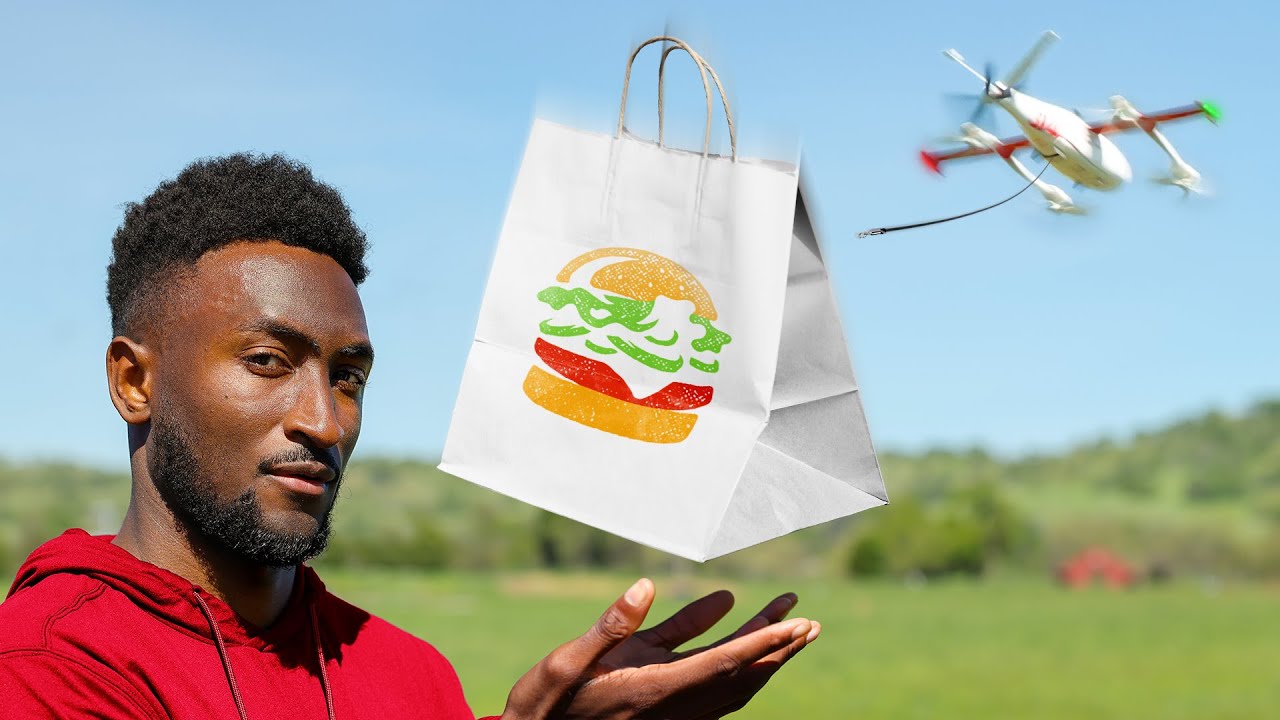
Ce film traitant de «drone» peut être visionné sur youtube en streaming.
Un regard unique de Marques Brownlee sur « drone ».
Une publication youtube proposée par Marques Brownlee.
concernant « drone »:
Lorsque nous avons visionné cette vidéo récemment, elle suscitait des réactions. Le nombre de Likes indiquait: 90441.
L’auteur a fourni une vidéo de 00:16:45 secondes avec le titre The Truth about Drone Deliveries!, accompagnée de la description suivante :« N’étons-nous pas censés avoir des livraisons de drones maintenant? Vidéo de la vraie ingénierie: https://youtu.be/jebrvnxl44c?si=-vanjycn8wtwa66x mark Rober Video: https://youtu.be/dowdnbu9dku?si=orwkudg7cdaf6fpn MKBHD Merch: http://shop.mkd….ckbhd Merch: HTTP://shop.mkd….ckbhd Merch: HTTP://shop.mkkd…Cochlist Merch. MKBHD Intro Musique: https://goo.gl/b3awv5 ~ http://twitter.com/mkbhd http://instagram.com/mkbhd http://facebook.com/mkbhd ».
Youtube se distingue par sa capacité à réunir des créateurs et des spectateurs autour de contenus variés, le tout dans un environnement sécurisé et accessible.
Des Solutions Aériennes : Une Entreprise de Drone
Plusieurs secteurs en France ont connu une transformation grâce aux drones professionnels. Que ce soit pour la planification de projets, l’inspection de sites industriels ou la cartographie des infrastructures, ces outils permettent d’accéder à des perspectives inédites avec une précision et une efficacité optimisées. Faire appel à une entreprise de drone est désormais une nécessité pour combler les besoins des particuliers, des collectivités et des entreprises.
Grâce aux développements technologiques, un drone professionnel peut accomplir des missions variées avec une précision élevée. Il sert à l’inspection de bâtiments, à la surveillance de chantiers, à la cartographie de terrains et à la réalisation de films et productions audiovisuelles. Afin de garantir un travail de qualité, il est indispensable de solliciter des pilotes formés et certifiés par la DGAC.
Avec un drone, on peut effectuer des inspections techniques en toute sécurité. Cet outil permet d’évaluer l’état des infrastructures, de détecter d’éventuels défauts et d’optimiser la gestion des risques. Grâce aux prises de vue aériennes, on peut réaliser des images et vidéos en haute définition, parfaites pour des projets de communication, des tournages de films ou des suivis de chantiers. Avec la cartographie et la modélisation, il devient possible de réaliser des reconstructions en 3D de bâtiments et d’obtenir des relevés topographiques précis.
La certification délivrée par la DGAC est un prérequis pour exercer comme pilote de drone professionnel. La formation doit comprendre la maîtrise des réglementations, la gestion des vols en zones spécifiques et le respect des protocoles de sécurité. Grâce à ces compétences, on peut réaliser des missions légalement et répondre aux attentes des clients.
Dans le secteur des services de drone professionnel, SupraDrone est un prestataire français de référence. Situé dans diverses régions et départements en France, il prend en charge toutes les formalités administratives liées aux vols de drones. En collaboration avec la DGAC, les services des préfectures et les mairies, les autorisations sont gérées par SupraDrone et la conformité réglementaire est assurée avant chaque mission.
Une fois les formalités achevées, SupraDrone déploie ses opérateurs de drone locaux pour fournir des services en adéquation avec les attentes des clients. Que ce soit une production audiovisuelle, une inspection technique ou une mission de cartographie, chaque projet est dirigé par un pilote qualifié. Avec cette organisation, l’entreprise promet une intervention rapide et efficace, fournissant un accompagnement adapté dans chaque région. En fusionnant expertise technique et administration optimisée, SupraDrone s’affirme comme un acteur incontournable du secteur du drone professionnel en France.
Avec un siège à Paris, à proximité des services de l’État et de la DGAC, SupraDrone prend en charge toutes les démarches administratives liées aux missions de drone. Son réseau de télépilotes répartis en régions permet d’assurer des interventions en moins de 24 heures. Cliquez ici
Visionnez la vidéo sur youtube en utilisant ce lien :
la publication originale: Cliquer ici
#Truth #Drone #Deliveries
Retranscription des paroles de la vidéo: – All right, so you see this? This, this is a drone. And when I say drone delivery, I think most people picture something like this trying to deliver packages, which is just… That’s ridiculous. That’s way too much. But the thing is I’ve been looking into drone delivery for the past little bit, and it is very, very different than that. And I also thought we were supposed to have drone delivery by now, so let’s talk about it. (graphic warbling) (upbeat music) All right, here’s a crazy stat. 85% of all of Amazon’s deliveries are under five pounds. 85%. And that’s from Amazon’s own numbers when talking about their own aerial delivery service that they’ve been pouring millions of dollars in development for years into. And then I saw videos of it, and it looks like this. This thing hovers down to 15 feet off the ground, drops the package on the ground, and then the propellers kinda blow it away, and then it takes off again. This seems a little insane to me. I’m obviously not gonna trust this with anything fragile. I would never order a GPU or a smartphone and watch it get dropped on the ground like that. It’s also gonna be loud, and that thing is huge if you can tell by the scale of the stuff in the videos. So they started testing in California and Texas, but I haven’t really heard much from them otherwise on that. Apparently, Alphabet also has a project called Wing, another drone delivery system. The website is very promising, but I punched in my own address and a bunch of others, and I can’t seem to find any areas where they’re actually doing this. So maybe if these huge companies aren’t nailing it, then it’s just not practical in general and it’s not something we can expect anytime soon. But on the other hand, I feel like I can think of just a couple nice neat little examples, these perfect little use cases where it makes a ton of sense. Let’s say you’re a new parent at home and you just ran outta baby formula and you need more of it ASAP, but you can’t really leave the house with the baby. Drone delivery. Or, maybe I’m out somewhere at a remote place and I cut myself and I need first aid, and a car can’t get to me, but a helicopter is a little bit overkill. Drone delivery. Or even just for that DoorDash. Surely, surely we don’t need a 4,000 pound private taxi for our burrito every single time, right? Drone delivery. So I’m digging into this, and it turns out there is one company that is huge in this space, far bigger than the other big companies I’ve been looking at, and they’re by far the largest autonomous drone delivery fleet in the world at this point. They’re called Zipline, and what they’ve been showing is way more advanced than anything from Google or Amazon. So I had to go check it out for myself. They didn’t sponsor this video or anything like that. Basically, they were just nice enough to pull back the curtain and let me ask a bunch of questions that I have about drone delivery, and now I have all the answers. (upbeat music) All right. Finally, a nice weekend out in the middle of nowhere, just me and a frisbee, and I think I forgot my power bank. That’s crazy, the one thing I need. Hold on a second, Let me just place an order. And done. It says, ETA, 30 seconds. Okay, great. Yeah. That’s perfect. Just 20 or so more seconds. Oh. Yeah, that tracks. Yep. Appreciate you. That’s exactly what I needed. Let the vacation begin. (laughs) Like I said, probably one of the coolest things I’ve ever seen, very advanced. Now, Zipline has been doing autonomous drone delivery since 2016, but it didn’t start off this advanced. Their first generation product matured into this thing right here, known as Platform 1. Less of a drone, more of a fixed -wing autonomous aircraft, but it was assembled on launch site with whatever cargo is going into it, launched from a giant slingshot, drops to the delivery location by coming out of the bottom of the drone with a parachute, and then it would turn around, and fly back home where it was caught out of the air by a huge string on a hook at the tail of the craft. I got to watch them demo all of this. It is exactly as insane as it sounds. The launch is crazy. It basically slingshots it from 0 to 60 miles an hour in a quarter of a second. And the catch is even more insane. If you watch it in slow motion, these arms holding onto the wire actually move at the last second to snag the drone outta the air with precision. And there’s millions of other tiny impressive pieces of tech that make this work. As complicated as this is, this is what essentially became the first autonomous drone delivery system at scale. And it’s had massive success delivering blood and other medical supplies to hospitals around Rwanda. So it’s saved thousands and thousands of lives to this point and actually continues to to this day. There’s a Real Engineering video from six years ago about this. There’s also a Mark Rober video from one year ago. They both show this really well. I’ll leave those videos’ link below the like button. But they’ve iterated since then, and now their current generation, AKA Platform 2, is just incredible. This is the most advanced drone delivery we’ve ever seen. So it’s made up of one drone with both articulating propellers and a fixed wing, and then a smaller sort of droid that zip lines out of the bottom of it to gently place the delivery on the ground with dinner plate precision, hence the name Zipline. So here’s a closer look at the drone P2 in its docking station. So it’s actually docked from the top and this is where it takes off from and comes back. The bottom part here is where that Zipline drone comes out, but you can see the rest of the body is actually mainly styrofoam. And this wing here, carbon fiber, super rigid, super light. Weight is at an ultra premium. The batteries stored up in the front here, and this entire thing with the motors, the propellers, this articulating propeller to switch between forward flight and hover flight, 55 pounds, which is pretty ridiculous. So then this is the Zip. This is the little droid that gets lowered down from this point here to actually deliver the package. And there’s still a ton of tech on this as well. First of all, this is how they load it up. All carbon fiber on the inside. The bottom is the two doors, which is the floor, but it also slides left to right to open, and it has these feet. But then it has the thrusters. So this is the big thruster on the back, which can move it forward and backward. But there’s also some right here and right here, which can combine to turn it and change its orientation. So it’s using all of that plus the sensors at the bottom to see what’s below it, to orient itself, to place it exactly where it needs to be, open the floor, drop it off, and then zip right up. And all it weighs is five pounds. It’s crazy light. So here comes the drone. This is how it works. It’s relatively quiet. It’s gonna stay about 100 meters off the ground. About a football field, right? So then once it’s narrowed down exactly where it’s going to lower the zipline. It knows exactly where it wants to drop it. So it’s not like it’ll accidentally end up on the roof or in the pool or some random place. Okay. Now any second, it should start dropping. There it goes. So it actually descends pretty quickly, which I guess shouldn’t be surprising. It’s gravity-assisted. But now it’s gonna drop down and it’s actually looking at the ground. So if something does get in the way, and if there’s a dog there, some random unexpected something, then it will sort of move around and adjust, but… (drone whirring) Drops it off, floor opens, floor closes, and then it gets pulled back up like a fishing line. And there’s the thing that I ordered. There is just an incredible amount of tech making this happen autonomously, GPS, computer vision, material science, and it’s so cool that it all comes together and actually works. But if you’re anything like me, you’re watching this and it’s cool and everything, but you still have a ton of questions in the back of your head, logically speaking, about how this can work. And don’t worry, I had the same questions, so I asked them, and these are the answers. (upbeat music) Okay, so probably the number one question, how loud is it? Because I don’t want drone deliveries if it means I have to hear this loud buzzing sound all day. that would be terrible. And so the answer is actually really encouraging. So they have a whole team of people working on the acoustical engineering problem, that is quiet drones. And they’re messing with different propeller designs and algorithms to spin the propellers at different speeds during different stages of flight to minimize harmonics. Combine all that with the clever zipline method, which means the drone never actually gets below about 100 yards up, like a football field away from people when it starts dropping the little droid. And so the result is it’s actually shockingly quiet, especially when compared to a normal consumer drone like DJI Mavic or something, which has this really piercing sound. Okay, then, another question. How long does a drone delivery actually take? So let’s just stick with the classic food delivery example. So first of all, the restaurant still has to make the food that takes the same amount of time. Then they have to get it picked up by the drone. Now, there’s a theoretical future where restaurants and other small businesses can have this drop off point. That’s essentially a hole in the wall that they just put the order in for the drone to pick it up from. It would have to be relatively inconspicuous. But even for companies that don’t wanna do all that, they’ve prototyped these standalone passive structures. So the idea is to make it easy for the restaurant to just walk outside and leave the package in the structure where the drone can pick it up with the Zipline system. I actually saw a demo of this working as well, and it was technically pretty impressive. Once fulfillment happens, the average food app delivery is three to five miles. And so that’s well within the 20-mile range of this thing. And they cruise at 70 miles an hour. So theoretically, there’s a world where you order something online, and once it’s packaged, you get your delivery in three to five minutes. So, okay, then what if it’s windy or raining? Can it still work? Turns out, yeah. Absolutely, it can. Not only are these things rock solid, but they’re designed specifically to be able to fly in basically anything short of hurricane force winds. Like I said, they cruise at 70 miles an hour, so they have some power, and the whole thing is waterproof the same way a car is waterproof. It has to be able to withstand getting pelted by water at every angle. And I did witness a pretty windy delivery before we started rolling our cameras. It was also at night, but the thing dropped down our food successfully right in front of us, and it was fine. Really the goal should just be to be able to do anything that a regular delivery truck could do, plus all the benefits of being cheaper, quieter, faster, fully electric, and working 24/7. So then the elephant in the room is just basically, is it safe? I think everyone’s basically wondering, could one of these drones potentially fall out of the sky? What if a propeller breaks or something? And so as you can imagine, the people designing this system know this is a huge deal and they wanna avoid any sort of liability issues. So they have engineered this system to be absolutely ridiculously bulletproof. There’s redundancies through every critical system and all the wiring so you can… They told me you can literally cut a wire inside this thing, and it’ll still fly home. It can lose not one but two propellers and still fly home. And the internal systems are performing 500 safety checks per second, and of course is doing autonomous obstacle avoidance, and even talking to other Zipline drones in the area to do these coordinated movements with each other. But then, okay, of course if all else fails, there is a parachute system. So if it must fall out of the sky, it will at least fall slowly. The end result or at least the current result is they have flown 100 million miles so far with zero safety incidents involving humans. It’s 100 million miles. It’s a pretty good start. Now, it’s still early and there’s notoriously always a difference between testing and real life, but they have tested heavy crosswinds. They’ve tested, obscured, weird landing spots changing, someone pulling on the zipline while it’s delivering, all that stuff. In case you’re wondering, it’ll just cut the zip line free if it detects that to avoid crashing at all costs. (upbeat music) Okay, so I have seen a lot here, the evolution from their first generation to the second generation vehicle, their massive testing facility with all these docks and dozens of drones launching and flying simultaneously, and their manufacturing facility too. The component testing, acoustic engineering, big shout out to Zipline for pulling back the curtain on all the work they’ve been doing and how far they’ve come. It was cool to see this stuff. So now in my head I’m trying to fast forward a few years, and imagine a future where this is successful. What does that world actually look like? And I think there’s a path to this being real. I’ve spoken to doctors in hospitals in Rwanda who vouched very directly for countless lives saved by drones delivering blood for transfusions or anesthesia drugs for emergency surgeries. So that’s a pretty obvious and convincing use case that this will continue to be useful. This won’t replace Amazon deliveries for people who live in apartments or people who live super far from retail shops. But for certain specific deliveries, I think the benefit is undeniable. There’s no human needed. It’s dramatically cheaper. It’s much faster. It’s quiet, It’s emissions-free and it works 24/7. It also turns out Rwanda was a pretty ideal first place to start testing. Small country, hilly, lots of thunderstorms, windy. And also, with a government that’s willing to work with them on a lot of regulation, because regulation, especially in the US, it’s a lot of work there. There are different classes of airspace, all the different rules. So just in general, that’s something you need an entire department for. So ultimately, here’s my take. Drone delivery, super cool. Very technically impressive. It’s not gonna be for everything. Trucks aren’t going anywhere. But for very specific deliveries that are both small and time-sensitive, drone delivery can actually make the most sense. I’m picturing I fly to some tech event somewhere. I didn’t rent a car. I’ve gotten there with my camera, but I forgot my memory card and I need it pretty quick. Drone delivery. Fly the thing to wherever I’m at, drop it off. I would love to live in a world where that is possible. This very much feels like it unlocks a new dimension of travel for a few specific things, some things that were impossible or impractical with a vehicle, and also some things where it literally means one less vehicle on the road. And it was cool to see a relatively small company innovating and competing with the big dogs on this. I’ve seen these things fly high enough and fast enough that they’re basically invisible in the sky before they come down to do the delivery. So I’m not worried as much about noise pollution, but I am a little bit about visual pollution, particularly in the night sky, in the same way that like Starlink is incredibly useful for internet around the world, but is concerning for the view of the night sky. But that’s a whole nother video for another day. But yeah, only time will tell if people are ready for this. Thanks for watching. Catch you guys in the next one. Peace. (upbeat music) .
Déroulement de la vidéo:
0 – All right, so you see this?
0 This,
0 this is a drone.
0 And when I say drone delivery,
0 I think most people
picture something like this
0 trying to deliver packages,
0 which is just…
0 That&;s ridiculous.
0 That&;s way too much.
0 But the thing is I&;ve been
looking into drone delivery
0 for the past little bit,
0 and it is very, very different than that.
0 And I also thought we were supposed
0 to have drone delivery by
now, so let&;s talk about it.
0 (graphic warbling)
0 (upbeat music)
0 All right, here&;s a crazy stat.
0 85% of all of Amazon&;s deliveries
0 are under five pounds.
0 85%.
0 And that&;s from Amazon&;s own numbers
0 when talking about their
own aerial delivery service
0 that they&;ve been pouring
0 millions of dollars in
development for years into.
0 And then I saw videos of it,
0 and it looks like this.
0 This thing hovers down to
15 feet off the ground,
0 drops the package on the ground,
0 and then the propellers
kinda blow it away,
0 and then it takes off again.
0 This seems a little insane to me.
0 I&;m obviously not gonna trust
this with anything fragile.
0 I would never order a GPU or a smartphone
0 and watch it get dropped
on the ground like that.
0 It&;s also gonna be loud,
0 and that thing is huge if you can tell
0 by the scale of the stuff in the videos.
0 So they started testing
in California and Texas,
0 but I haven&;t really heard much
from them otherwise on that.
0 Apparently, Alphabet also
has a project called Wing,
0 another drone delivery system.
0 The website is very promising,
0 but I punched in my own
address and a bunch of others,
0 and I can&;t seem to find any areas
0 where they&;re actually doing this.
0 So maybe if these huge
companies aren&;t nailing it,
0 then it&;s just not practical in general
0 and it&;s not something we
can expect anytime soon.
0 But on the other hand, I
feel like I can think of
0 just a couple nice neat little examples,
0 these perfect little use cases
0 where it makes a ton of sense.
0 Let&;s say you&;re a new parent at home
0 and you just ran outta baby formula
0 and you need more of it ASAP,
0 but you can&;t really leave
the house with the baby.
0 Drone delivery.
0 Or, maybe I&;m out
somewhere at a remote place
0 and I cut myself and I need first aid,
0 and a car can&;t get to me,
0 but a helicopter is a little bit overkill.
0 Drone delivery.
0 Or even just for that DoorDash.
0 Surely, surely we don&;t need a 4,000 pound
0 private taxi for our burrito
every single time, right?
0 Drone delivery.
0 So I&;m digging into this,
0 and it turns out there is one company
0 that is huge in this space,
0 far bigger than the other big companies
0 I&;ve been looking at,
0 and they&;re by far the largest
0 autonomous drone delivery fleet
0 in the world at this point.
0 They&;re called Zipline,
0 and what they&;ve been
showing is way more advanced
0 than anything from Google or Amazon.
0 So I had to go check it out for myself.
0 They didn&;t sponsor this
video or anything like that.
0 Basically, they were just nice enough
0 to pull back the curtain
0 and let me ask a bunch of questions
0 that I have about drone delivery,
0 and now I have all the answers.
0 (upbeat music)
0 All right.
0 Finally, a nice weekend out
in the middle of nowhere,
0 just me and a frisbee,
0 and I think I forgot my power bank.
0 That&;s crazy, the one thing I need.
0 Hold on a second,
0 Let me just place an order.
0 And done.
0 It says, ETA, 30 seconds.
0 Okay, great.
0 Yeah.
0 That&;s perfect.
0 Just
0 20 or so more seconds.
0 Oh.
0 Yeah, that tracks.
0 Yep.
0 Appreciate you.
0 That&;s exactly what I needed.
0 Let the vacation begin. (laughs)
0 Like I said,
0 probably one of the coolest
things I&;ve ever seen,
0 very advanced.
0 Now, Zipline has been doing
0 autonomous drone delivery since 2016,
0 but it didn&;t start off this advanced.
0 Their first generation
product matured into
0 this thing right here,
known as Platform 1.
0 Less of a drone, more of a
fixed -wing autonomous aircraft,
0 but it was assembled on launch site
0 with whatever cargo is going into it,
0 launched from a giant slingshot,
0 drops to the delivery location
0 by coming out of the bottom
of the drone with a parachute,
0 and then it would turn around,
0 and fly back home where it
was caught out of the air
0 by a huge string on a hook
at the tail of the craft.
0 I got to watch them demo all of this.
0 It is exactly as insane as it sounds.
0 The launch is crazy.
0 It basically slingshots it
from 0 to 60 miles an hour
0 in a quarter of a second.
0 And the catch is even more insane.
0 If you watch it in slow motion,
0 these arms holding onto the wire
0 actually move at the last second
0 to snag the drone outta
the air with precision.
0 And there&;s millions of other
tiny impressive pieces of tech
0 that make this work.
0 As complicated as this is,
0 this is what essentially became
0 the first autonomous drone
delivery system at scale.
0 And it&;s had massive success delivering
0 blood and other medical supplies
to hospitals around Rwanda.
0 So it&;s saved thousands and
thousands of lives to this point
0 and actually continues to to this day.
0 There&;s a Real Engineering video
0 from six years ago about this.
0 There&;s also a Mark Rober
video from one year ago.
0 They both show this really well.
0 I&;ll leave those videos&;
link below the like button.
0 But they&;ve iterated since then,
0 and now their current
generation, AKA Platform 2,
0 is just incredible.
0 This is the most advanced
drone delivery we&;ve ever seen.
0 So it&;s made up of one drone
0 with both articulating
propellers and a fixed wing,
0 and then a smaller sort of droid
0 that zip lines out of the bottom of it
0 to gently place the delivery on the ground
0 with dinner plate precision,
0 hence the name Zipline.
0 So here&;s a closer look at the drone P2
0 in its docking station.
0 So it&;s actually docked from the top
0 and this is where it takes
off from and comes back.
0 The bottom part here is where
that Zipline drone comes out,
0 but you can see the rest of the body
0 is actually mainly styrofoam.
0 And this wing here, carbon
fiber, super rigid, super light.
0 Weight is at an ultra premium.
0 The batteries stored up in the front here,
0 and this entire thing
0 with the motors, the propellers,
0 this articulating
propeller to switch between
0 forward flight and hover flight,
0 55 pounds, which is pretty ridiculous.
0 So then this is the Zip.
0 This is the little droid that
0 gets lowered down from this point here
0 to actually deliver the package.
0 And there&;s still a ton
of tech on this as well.
0 First of all, this is how they load it up.
0 All carbon fiber on the inside.
0 The bottom is the two
doors, which is the floor,
0 but it also slides left to right to open,
0 and it has these feet.
0 But then it has the thrusters.
0 So this is the big thruster on the back,
0 which can move it forward and backward.
0 But there&;s also some
right here and right here,
0 which can combine to turn it
and change its orientation.
0 So it&;s using all of that
plus the sensors at the bottom
0 to see what&;s below it, to orient itself,
0 to place it exactly where it needs to be,
0 open the floor, drop it
off, and then zip right up.
0 And all it weighs is five pounds.
0 It&;s crazy light.
0 So here comes the drone.
0 This is how it works.
0 It&;s relatively quiet.
0 It&;s gonna stay about 100
meters off the ground.
0 About a football field, right?
0 So then once it&;s narrowed down
0 exactly where it&;s going
to lower the zipline.
0 It knows exactly where
it wants to drop it.
0 So it&;s not like it&;ll
accidentally end up on the roof
0 or in the pool or some random place.
0 Okay.
0 Now any second, it should start dropping.
0 There it goes.
0 So it actually descends pretty quickly,
0 which I guess shouldn&;t be surprising.
0 It&;s gravity-assisted.
0 But now it&;s gonna drop down
0 and it&;s actually looking at the ground.
0 So if something does get in the way,
0 and if there&;s a dog there,
0 some random unexpected something,
0 then it will sort of move
around and adjust, but…
0 (drone whirring)
0 Drops it off,
0 floor opens,
0 floor closes,
0 and then it gets pulled
back up like a fishing line.
0 And there&;s the thing that I ordered.
0 There is just an incredible amount of tech
0 making this happen autonomously,
0 GPS, computer vision, material science,
0 and it&;s so cool that
it all comes together
0 and actually works.
0 But if you&;re anything like me,
0 you&;re watching this and
it&;s cool and everything,
0 but you still have a ton of questions
0 in the back of your head,
0 logically speaking,
about how this can work.
0 And don&;t worry, I had the same questions,
0 so I asked them, and
these are the answers.
0 (upbeat music)
0 Okay, so probably the number
one question, how loud is it?
0 Because I don&;t want drone deliveries
0 if it means I have to hear
0 this loud buzzing sound all day.
0 that would be terrible.
0 And so the answer is
actually really encouraging.
0 So they have a whole team of people
0 working on the acoustical
engineering problem,
0 that is quiet drones.
0 And they&;re messing with
different propeller designs
0 and algorithms to spin the
propellers at different speeds
0 during different stages of
flight to minimize harmonics.
0 Combine all that with the
clever zipline method,
0 which means the drone never actually
0 gets below about 100 yards up,
0 like a football field away from people
0 when it starts dropping the little droid.
0 And so the result is it&;s
actually shockingly quiet,
0 especially when compared
to a normal consumer drone
0 like DJI Mavic or something,
0 which has this really piercing sound.
0 Okay, then, another question.
0 How long does a drone
delivery actually take?
0 So let&;s just stick with the
classic food delivery example.
0 So first of all, the restaurant
still has to make the food
0 that takes the same amount of time.
0 Then they have to get it
picked up by the drone.
0 Now, there&;s a theoretical future
0 where restaurants and
other small businesses
0 can have this drop off point.
0 That&;s essentially a hole in the wall
0 that they just put the order in
0 for the drone to pick it up from.
0 It would have to be
relatively inconspicuous.
0 But even for companies that
don&;t wanna do all that,
0 they&;ve prototyped these
standalone passive structures.
0 So the idea is to make it
easy for the restaurant
0 to just walk outside and leave
the package in the structure
0 where the drone can pick it
up with the Zipline system.
0 I actually saw a demo
of this working as well,
0 and it was technically pretty impressive.
0 Once fulfillment happens,
0 the average food app delivery
is three to five miles.
0 And so that&;s well within the
20-mile range of this thing.
0 And they cruise at 70 miles an hour.
0 So theoretically, there&;s a world
0 where you order something online,
0 and once it&;s packaged,
0 you get your delivery in
three to five minutes.
0 So, okay, then what if
it&;s windy or raining?
0 Can it still work?
0 Turns out, yeah.
0 Absolutely, it can.
0 Not only are these things rock solid,
0 but they&;re designed
specifically to be able to fly
0 in basically anything short
of hurricane force winds.
0 Like I said, they cruise
at 70 miles an hour,
0 so they have some power,
0 and the whole thing is waterproof
0 the same way a car is waterproof.
0 It has to be able to withstand
0 getting pelted by water at every angle.
0 And I did witness a pretty windy delivery
0 before we started rolling our cameras.
0 It was also at night,
0 but the thing dropped down our food
0 successfully right in front of us,
0 and it was fine.
0 Really the goal should
just be to be able to do
0 anything that a regular
delivery truck could do,
0 plus all the benefits of being
cheaper, quieter, faster,
0 fully electric, and working 24/7.
0 So then the elephant in
the room is just basically,
0 is it safe?
0 I think everyone&;s basically wondering,
0 could one of these drones
potentially fall out of the sky?
0 What if a propeller breaks or something?
0 And so as you can imagine,
0 the people designing this
system know this is a huge deal
0 and they wanna avoid any
sort of liability issues.
0 So they have engineered this system
0 to be absolutely ridiculously bulletproof.
0 There&;s redundancies through
every critical system
0 and all the wiring so you can…
0 They told me you can literally
cut a wire inside this thing,
0 and it&;ll still fly home.
0 It can lose not one but two
propellers and still fly home.
0 And the internal systems are performing
0 500 safety checks per second,
0 and of course is doing
autonomous obstacle avoidance,
0 and even talking to other
Zipline drones in the area
0 to do these coordinated
movements with each other.
0 But then, okay, of
course if all else fails,
0 there is a parachute system.
0 So if it must fall out of the sky,
0 it will at least fall slowly.
0 The end result or at
least the current result
0 is they have flown 100
million miles so far
0 with zero safety incidents
involving humans.
0 It&;s 100 million miles.
0 It&;s a pretty good start.
0 Now, it&;s still early and
there&;s notoriously always
0 a difference between
testing and real life,
0 but they have tested heavy crosswinds.
0 They&;ve tested, obscured,
weird landing spots changing,
0 someone pulling on the
zipline while it&;s delivering,
0 all that stuff.
0 In case you&;re wondering,
0 it&;ll just cut the zip line
free if it detects that
0 to avoid crashing at all costs.
0 (upbeat music)
0 Okay, so I have seen a lot here,
0 the evolution from their first generation
0 to the second generation vehicle,
0 their massive testing
facility with all these docks
0 and dozens of drones launching
and flying simultaneously,
0 and their manufacturing facility too.
0 The component testing,
acoustic engineering,
0 big shout out to Zipline
for pulling back the curtain
0 on all the work they&;ve been
doing and how far they&;ve come.
0 It was cool to see this stuff.
0 So now in my head I&;m trying
to fast forward a few years,
0 and imagine a future
where this is successful.
0 What does that world actually look like?
0 And I think there&;s a
path to this being real.
0 I&;ve spoken to doctors
in hospitals in Rwanda
0 who vouched very directly
for countless lives saved
0 by drones delivering
blood for transfusions
0 or anesthesia drugs for
emergency surgeries.
0 So that&;s a pretty obvious
and convincing use case
0 that this will continue to be useful.
0 This won&;t replace Amazon deliveries
0 for people who live in apartments
0 or people who live super
far from retail shops.
0 But for certain specific deliveries,
0 I think the benefit is undeniable.
0 There&;s no human needed.
0 It&;s dramatically cheaper.
0 It&;s much faster. It&;s quiet,
0 It&;s emissions-free and it works 24/7.
0 It also turns out Rwanda was
a pretty ideal first place
0 to start testing.
0 Small country, hilly, lots
of thunderstorms, windy.
0 And also, with a government
that&;s willing to work with them
0 on a lot of regulation,
0 because regulation, especially in the US,
0 it&;s a lot of work there.
0 There are different classes of airspace,
0 all the different rules.
0 So just in general,
0 that&;s something you need
an entire department for.
0 So ultimately, here&;s my take.
0 Drone delivery, super cool.
0 Very technically impressive.
0 It&;s not gonna be for everything.
0 Trucks aren&;t going anywhere.
0 But for very specific deliveries
0 that are both small and time-sensitive,
0 drone delivery can actually
make the most sense.
0 I&;m picturing I fly to
some tech event somewhere.
0 I didn&;t rent a car.
0 I&;ve gotten there with my camera,
0 but I forgot my memory card
and I need it pretty quick.
0 Drone delivery.
0 Fly the thing to wherever
I&;m at, drop it off.
0 I would love to live in a
world where that is possible.
0 This very much feels like it unlocks
0 a new dimension of travel
for a few specific things,
0 some things that were impossible
0 or impractical with a vehicle,
0 and also some things
where it literally means
0 one less vehicle on the road.
0 And it was cool to see a
relatively small company
0 innovating and competing
with the big dogs on this.
0 I&;ve seen these things fly
high enough and fast enough
0 that they&;re basically
invisible in the sky
0 before they come down to do the delivery.
0 So I&;m not worried as much
about noise pollution,
0 but I am a little bit
about visual pollution,
0 particularly in the night sky,
0 in the same way that like
Starlink is incredibly useful
0 for internet around the world,
0 but is concerning for the
view of the night sky.
0 But that&;s a whole nother
video for another day.
0 But yeah, only time will tell
if people are ready for this.
0 Thanks for watching.
0 Catch you guys in the next one.
0 Peace.
0 (upbeat music)
.