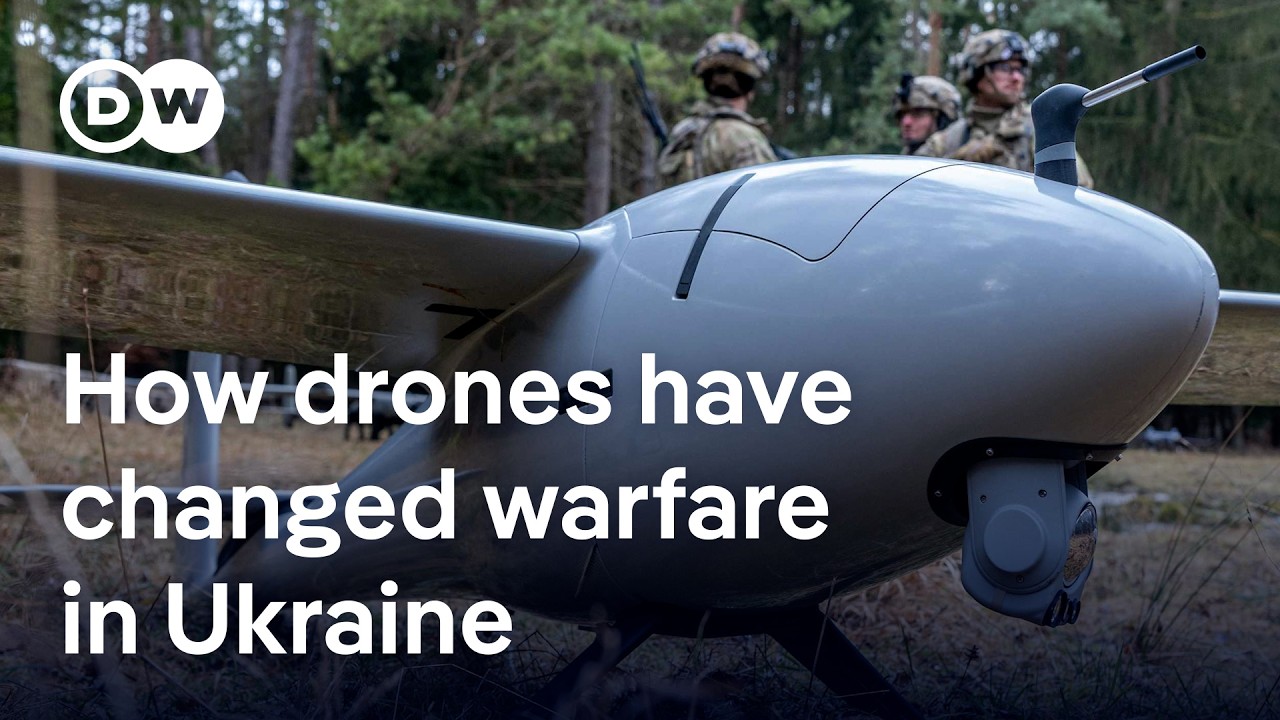
Regardez dès maintenant ce film sur «war drone» en streaming sur Youtube.
DW News vous propose un contenu dédié à « war drone ».
Visionnez cette vidéo postée par DW News sur youtube.
focalisé sur « war drone »:
En la découvrant récemment, nous avons constaté qu’elle engageait son audience. Le compteur de Likes indiquait: 1010.
L’auteur a fourni une vidéo de 00:07:43 secondes avec le titre How well are NATO forces prepared for drone warfare? « Alors que les dirigeants européens cherchent à stimuler leurs défenses militaires, la guerre en Ukraine a déjà bouleversé des années de doctrines militaires établies. Les drones sont devenus l’une des armes déterminantes du conflit – ce que les soldats ukrainiens disent que les pays de l’OTAN ne sont pas prêts à gérer. Pour plus de nouvelles, allez à: http://www.dw.com/en/ suivez DW sur les réseaux sociaux: ►instagram: https://www.instagram.com/dwnews ►Tiktok: https://www.tiktok.com/@dwnews ►Facebook: https://www.facebook.com/deutschewellenews/ ►twitter: https://twitter.com/dwnews für videos dans Deutscher Sprache Besuchen Sie: https://www.youtube.com/dwdeutsch abonnez-vous: https://www.youtube.com/user/deutschewelleenglish?sub_confirmation=1 #ukraine #drones #warfare ».
Youtube offre un espace d’expression où chacun peut partager des vidéos sur des thèmes multiples, des réflexions personnelles aux idées novatrices.
Les applications des drones dans la guerre sont multiples.
Des drones civils transformés en outils militaires
Les drones de la marque DJI (comme le Mavic ou le Phantom), qui sont destinés au grand public, sont souvent utilisés pour des missions de reconnaissance ou même d’attaque. Ces drones, équipés de charges explosives par les combattants, se transforment en bombardiers improvisés.
Les caméras embarquées, en raison de leur performance et de leur facilité d’acquisition, sont des outils clés pour le renseignement et le guidage des tirs d’artillerie. Il est à noter que ces drones sont souvent sensibles aux contre-mesures électroniques, comme le brouillage ou le piratage.
Les drones et leur rôle dans les guerres à venir
Un avenir où les drones seront encore plus intégrés se dessine grâce à l’évolution rapide de la technologie. Il se produit une évolution des drones autonomes, dotés d’intelligence artificielle, capables de prendre des décisions sans l’aide d’un humain.
En opérant de manière coordonnée, des centaines d’unités en essaims de drones pourraient bouleverser les approches militaires. De plus, la réduction des dimensions des technologies pourrait permettre le développement de drones de taille toujours plus réduite et furtive, rendant leur détection et leur neutralisation plus délicates.
La popularité croissante des drones FPV et kamikazes
Une caractéristique frappante de ces dernières années est l’emploi de drones FPV (First Person View) transformés pour le transport d’explosifs. En immersion, ces petits drones, souvent issus de modèles civils adaptés, sont pilotés en Ukraine grâce à des lunettes de réalité virtuelle. Leur prix abordable et leur performance en font des outils redoutables pour les missions stratégiques.
Il est fréquent que ces appareils soient perdus après l’assaut, car leur conception les destine à un usage unique. Les soldats, même sans formation de pilotage avancée, peuvent les utiliser sur le terrain grâce à leur simplicité d’utilisation.
Les drones militaires : une évolution essentielle dans la conduite des conflits modernes
Les drones ont révolutionné la façon dont les guerres se déroulent. Des modèles militaires de plus en plus avancés sont développés par les grandes puissances, permettant d’effectuer des missions de reconnaissance, de frappe et de soutien aux troupes au sol.
Utilisé pour des frappes de précision, le MQ-9 Reaper est un drone de combat américain. En tant que drone turc, le Bayraktar TB2 est reconnu pour son rôle dans divers conflits récents, y compris en Ukraine et au Haut-Karabakh. Dans les conflits au Moyen-Orient et en Europe de l’Est, le drone kamikaze iranien Shahed-136 est largement employé.
En recourant à ces drones, les militaires peuvent frapper des cibles à longue distance avec une grande exactitude, ce qui diminue les risques pour les pilotes.
Les pilotes de drones se révèlent être des héros de guerre
L’augmentation de l’usage des drones a engendré l’apparition d’une nouvelle classe de combattants : les pilotes de drones de guerre. Il est indéniable que ces opérateurs, parfois à des milliers de kilomètres du champ de bataille, contribuent de manière décisive au succès des opérations militaires.
Certains pilotes, par leurs performances remarquables, s’érigent en légendes, influençant directement le cours des conflits grâce à leurs frappes réussies. Dans les luttes modernes, la valeur ne se définit plus seulement sur le terrain, mais aussi dans la précision et la stratégie des pilotes de drones.
Utilisez ce lien pour regarder la vidéo sur youtube :
la publication originale: Cliquer ici
#NATO #forces #prepared #drone #warfare #News
Retranscription des paroles de la vidéo: well as European leaders look to boost their military defenses the war in Ukraine has already upended years of established military Doctrine drones have become one of the defining weapons of the conflict something Ukrainian soldiers say NATO countries are not prepared to handle tanks trenches and artillery the early battles in Russia’s invasion of Ukraine played out like scen from the two World Wars but now 3 years on another weapon has come to dominate the battlefield drones if it had not been for drones everything would have been a lot worse drones are the tool which allow us to give an asymmetrical response when the enemy is larger stronger and doesn’t value its soldiers lives from unmanned aircraft to Tiny homemade models drones are now the most common weapons in the air and at Sea Ukrainian officials estimate they are responsible for around 60 to 70% of all casualties on the battlefield cuttingedge Conventional Weapons like Germany’s Leopard 2 tank have taken a back seat even sophisticated air defense systems like the US supplied haar’s battery are making less of of an impact as hundreds of drones swarm across both sides of the front line for Ukrainian soldiers on the ground the reason for this dramatic shift is simple it’s just elementary mathematics how much does a missile that shoots down a shahad drone cost and how much does a shahad cost and how much does it cost to deploy a ship a plane and an air defense system to fire at it both Ukraine and Russia are now racing to expand their drone production and adapt to Rapid Innovations from the other side something that Ukrainian soldiers say their Western allies also need to learn from what I see and hear not a single NATO Army is ready to resist the Cascade of drones now as European allies look to ramp up their defense spending drones are already shaping how the wars of the future will be fought let’s get more on this now with Marina Miron she’s with the defense studies department at Kings College London and she joins us from Munich tell us Ukraine has been remarkably Adept at scaling up its production of drones how have they done it and what lessons can be learned good afternoon well um we have to understand that um the Ukrainian Armed Forces had to be very flexible and we’ve seen that at the very beginning of the war when both the ukrainians and the Russians started using um DJI mavic uh quadcopter so we are talking about a degree of adaptability here of course um there have been um government grants uh for civilian drone producers uh to switch their production um in for military purposes and that is what has happened in Ukraine as part of for instance Brave One um uh program and therefore um the benefit here is that the Ukrainian forces can get prototypes of those drones to test them on the battlefield and can give almost realtime feedback to the producers to adjust the drones because it is an interplay the ukrainians produce new drones um the Russians adapt they um produce new electronic warfare systems or adjust their um existing electronic warfare systems to jam the drones and so you have this cat and mouse game going on but both sides uh kind of trying to lead in this technological race so there is no point in Mass producing drones because they could be redundant just in a couple of weeks now drones have been used on the battlefield for many years already also by Western forces long before Russia’s full-scale invasion of Ukraine how well is NATO prepared for drone Warfare today well let’s clarify for a second drones have have been used since 1950s to be more precise um but those drones are different from the drones that are used now the drones that um the United States and NATO has been using uh large reconnaissance drones or strike drones which are very expensive similar to the Russian Oran 10 or the Turkish bakar tb2 drones what we’re seeing now is a shift toward smaller uh firsters view drones fpv drones and this is where um the problem is native forces has not experienced the character of war that we’re seeing now in Ukraine and so I think and there will be a lot of lessons learned for NATO to uh adapt to these kinds of tactics um to use these drones for different purposes for as loitering Munitions as well as um tactical reconnaissance and so on and so new doctrines will probably be written uh production will be adjusted and also training and education of um armed forces of respective countries will have to be adjusted to include this training to include fpv drones and how they will be used on the battlefield but we should not forget that it’s still critical to have the technological Edge so that your drones cannot be jammed and to have enough of them to make some sort of a difference on the operational level because um still you see ukrainians Russians use drones but they still use a lot of artillery so drones do not really uh serve as a substitute for more Conventional Weapons what do you think that NATO countries should be doing now marinaa to scale up their drone capacities well they should be observing both sides specifically not just in terms of how ukrainians use drones but uh what the Russ are doing in order to counteract the use of drones and there is a lot of innovation happening on the battlefield and it’s important to study both sides very carefully to see how for instance electronic warfare has evolved electronic warfare techniques have evolved now um the Russians for instance started using drones with a fiber optics cable um in order to make them unjam same with a ukrainians they have taken that idea copied it as well and so um I I think that distilling those lessons will be important but nothing will probably substitute for real Battlefield experience and unless you’re in that situation where you you you faced with this threat of drones and you have to defend against drones of course simulations training I think that will be the key not so much Drone production because as I said the drones that are produced today uh might already be out of date Marina thank you very much for talking with us that was Marina miror of King’s College London thank you for having me .
Déroulement de la vidéo:
0.88 well as European leaders look to boost
0.88 their military defenses the war in
0.88 Ukraine has already upended years of
0.88 established military Doctrine drones
0.88 have become one of the defining weapons
0.88 of the conflict something Ukrainian
0.88 soldiers say NATO countries are not
0.88 prepared to
0.88 handle
0.88 tanks
0.88 trenches and
0.88 artillery the early battles in Russia&;s
0.88 invasion of Ukraine played out like scen
0.88 from the two World
0.88 Wars but now 3 years on another weapon
0.88 has come to dominate the
0.88 battlefield
0.88 drones if it had not been for drones
0.88 everything would have been a lot
0.88 worse drones are the tool which allow us
0.88 to give an asymmetrical response when
0.88 the enemy is larger stronger and doesn&;t
0.88 value its soldiers lives
0.88 from unmanned aircraft to Tiny homemade
0.88 models drones are now the most common
0.88 weapons in the air and at Sea Ukrainian
0.88 officials estimate they are responsible
0.88 for around 60 to 70% of all casualties
0.88 on the battlefield cuttingedge
0.88 Conventional Weapons like Germany&;s
0.88 Leopard 2 tank have taken a back seat
0.88 even sophisticated air defense systems
0.88 like the US supplied haar&;s battery are
0.88 making less of of an impact as hundreds
0.88 of drones swarm across both sides of the
0.88 front
0.88 line for Ukrainian soldiers on the
0.88 ground the reason for this dramatic
0.88 shift is
0.88 simple it&;s just elementary mathematics
0.88 how much does a missile that shoots down
0.88 a shahad drone cost and how much does a
0.88 shahad cost and how much does it cost to
0.88 deploy a ship a plane and an air defense
0.88 system to fire at it both Ukraine and
0.88 Russia are now racing to expand their
0.88 drone production and adapt to Rapid
0.88 Innovations from the other
0.88 side something that Ukrainian soldiers
0.88 say their Western allies also need to
0.88 learn from what I see and hear not a
0.88 single NATO
0.88 Army is ready to resist the Cascade of
0.88 drones now as European allies look to
0.88 ramp up their defense spending drones
0.88 are already shaping how the wars of the
0.88 future will be fought
0.88 let&;s get more on this now with Marina
0.88 Miron she&;s with the defense studies
0.88 department at Kings College London and
0.88 she joins us from Munich tell us Ukraine
0.88 has been remarkably Adept at scaling up
0.88 its production of drones how have they
0.88 done it and what lessons can be
0.88 learned good afternoon well um we have
0.88 to understand that um the Ukrainian
0.88 Armed Forces had to be very flexible and
0.88 we&;ve seen that at the very beginning of
0.88 the war when both the ukrainians and the
0.88 Russians started using um DJI mavic uh
0.88 quadcopter so we are talking about a
0.88 degree of adaptability here of course um
0.88 there have been
0.88 um government grants uh for civilian
0.88 drone producers uh to switch their
0.88 production um in for military purposes
0.88 and that is what has happened in Ukraine
0.88 as part of for instance Brave One um uh
0.88 program and therefore um the benefit
0.88 here is that the Ukrainian forces can
0.88 get prototypes of those drones to test
0.88 them on the battlefield and can give
0.88 almost realtime feedback to the
0.88 producers to adjust the drones because
0.88 it is an interplay the ukrainians
0.88 produce new drones um the Russians adapt
0.88 they um produce new electronic warfare
0.88 systems or adjust their um existing
0.88 electronic warfare systems to jam the
0.88 drones and so you have this cat and
0.88 mouse game going on but both sides uh
0.88 kind of trying to lead in this
0.88 technological race so there is no point
0.88 in Mass producing drones because they
0.88 could be redundant just in a couple of
0.88 weeks now drones have been used on the
0.88 battlefield for many years already also
0.88 by Western forces long before Russia&;s
0.88 full-scale invasion of Ukraine how well
0.88 is NATO prepared for drone Warfare
0.88 today well let&;s clarify for a second
0.88 drones have have been used since 1950s
0.88 to be more precise um but those drones
0.88 are different from the drones that are
0.88 used now the drones that um the United
0.88 States and NATO has been using uh large
0.88 reconnaissance drones or strike drones
0.88 which are very expensive similar to the
0.88 Russian Oran 10 or the Turkish bakar tb2
0.88 drones what we&;re seeing now is a shift
0.88 toward smaller uh firsters view drones
0.88 fpv drones and this is where um the
0.88 problem is native forces has not
0.88 experienced the character of war that
0.88 we&;re seeing now in Ukraine and so I
0.88 think and there will be a lot of lessons
0.88 learned for NATO to uh adapt to these
0.88 kinds of tactics um to use these drones
0.88 for different purposes for as loitering
0.88 Munitions as well as um tactical
0.88 reconnaissance and so on and so new
0.88 doctrines will probably be written uh
0.88 production will be adjusted and also
0.88 training and education of um armed
0.88 forces of respective countries will have
0.88 to be adjusted to include this training
0.88 to include fpv drones and how they will
0.88 be used on the battlefield but we should
0.88 not forget that it&;s still critical to
0.88 have the technological Edge so that your
0.88 drones cannot be jammed and to have
0.88 enough of them to make some sort of a
0.88 difference on the operational level
0.88 because um still you see ukrainians
0.88 Russians use drones but they still use a
0.88 lot of artillery so drones do not really
0.88 uh serve as a substitute for more
0.88 Conventional
0.88 Weapons what do you think that NATO
0.88 countries should be doing now marinaa to
0.88 scale up their drone
0.88 capacities well they should be observing
0.88 both sides specifically not just in
0.88 terms of how ukrainians use drones but
0.88 uh what the Russ are doing in order to
0.88 counteract the use of drones and there
0.88 is a lot of innovation happening on the
0.88 battlefield and it&;s important to study
0.88 both sides very carefully to see how for
0.88 instance electronic warfare has evolved
0.88 electronic warfare techniques have
0.88 evolved now um the Russians for instance
0.88 started using drones with a fiber optics
0.88 cable um in order to make them unjam
0.88 same with a ukrainians they have taken
0.88 that idea copied it as well and so um I
0.88 I think that distilling those lessons
0.88 will be important but nothing will
0.88 probably substitute for real Battlefield
0.88 experience and unless you&;re in that
0.88 situation where you you you faced with
0.88 this threat of drones and you have to
0.88 defend against drones of course
0.88 simulations training I think that will
0.88 be the key not so much Drone production
0.88 because as I said the drones that are
0.88 produced today uh might already be out
0.88 of date Marina thank you very much for
0.88 talking with us that was Marina miror of
0.88 King&;s College
0.88 London thank you for having me
.